
FaceTime Like a Pro
Get our exclusive Ultimate FaceTime Guide 📚 — absolutely FREE when you sign up for our newsletter below.

FaceTime Like a Pro
Get our exclusive Ultimate FaceTime Guide 📚 — absolutely FREE when you sign up for our newsletter below.


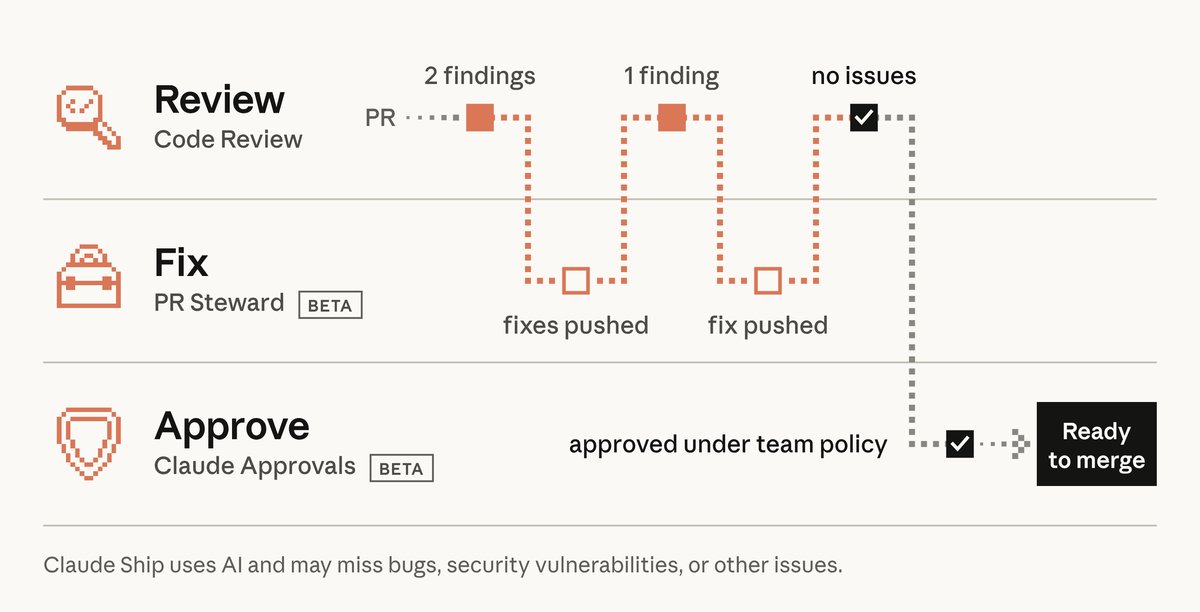
Anthropic’s Claude Ship, in beta for Team and Enterprise orgs on GitHub, reviews pull requests, fixes failing checks, and approves routine changes. It’s billed on tokens, with Enterprise credits.
Anthropic’s new Claude Ship can review a pull request, fix what breaks, and approve it without anyone touching it, as long as your team’s policy allows that. It’s the clearest sign yet that AI coding tools are moving beyond writing code and into deciding which code gets merged.
Anthropic announced Claude Ship in beta on November 23, for Claude Team and Enterprise organizations with repositories on GitHub. The company says the goal is to ship code as fast as teams write it. That’s a real problem now that coding agents can open pull requests faster than people can review them.
Introducing Claude Ship (beta): Claude can review your pull requests, work on fixes, and approve the ones your team’s policy allows. The goal is to help you ship code as fast as you can write it. https://t.co/b9OBAhEBmr
— ClaudeDevs (@ClaudeDevs) November 23, 2026
Claude Ship is made of three agents. Teams can turn each one on separately, one repository at a time:
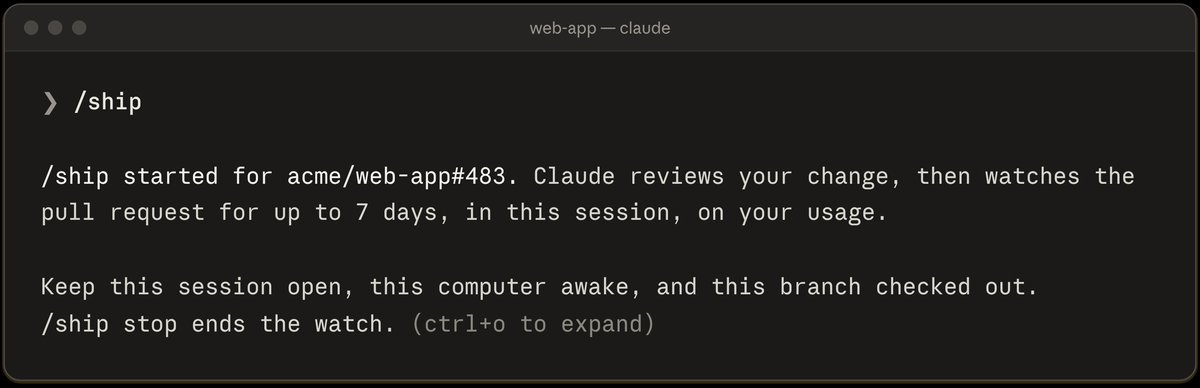
Developers also get a shortcut. The new /ship command in Claude Code pushes your change, opens the PR, reviews it, and works through feedback and failing checks. It joins Claude’s other slash commands and is rolling out in the Claude Code CLI and desktop app now. Whether it can merge depends on your permissions and the repo’s branch rules. It counts as regular Claude Code usage, so it uses the same allowance as the rest of your Claude plan.
Claude Ship is limited to Claude Team and Enterprise plans, and GitHub is the only supported code host. Organizations that use Zero Data Retention, the HIPAA configuration, or customer-managed encryption keys can’t use it. That leaves out many of the regulated companies that care most about strict approval rules.
You pay by usage, billed in tokens. Your bill depends on how many PRs go through Claude Ship, how big they are, and how deep the reviews go. Admins can set spending caps for Code Review and PR Steward. Approvals has no base charge, but its classifiers are billed on tokens. A policy that relies on Claude’s review also triggers a paid Code Review, even in observe-only mode.
Eligible Enterprise organizations can claim at least $10,000 in Claude Ship credits until January 15, 2027, and must use them within 30 days of claiming.
Anthropic says its Claude Code team more than doubled its merged PRs between June and September, while the share of reverted PRs fell by over 40%. Those numbers come from the team that builds the product, and Anthropic calls Claude’s review just one layer of a wider process. Anthropic also warns that Claude Ship can miss bugs and security vulnerabilities.
That warning is why the suggested rollout matters. Anthropic recommends starting Approvals in observe mode, where Claude posts its decision but approves nothing. You enforce it only once its calls match your human reviewers. Claude Ship follows Claude Duet, Anthropic’s assistant that keeps working after you close your laptop, and applies the same hands-off idea to code review.
If you run a GitHub org on Team or Enterprise, try it on one repo first. Set a spending cap and keep Approvals in observe mode until you’re ready to let Claude’s approval count toward branch protection.

As an Amazon Associate, iGeeksBlog earns from qualifying purchases.