FaceTime Like a Pro
Get our exclusive Ultimate FaceTime Guide 📚 — absolutely FREE when you sign up for our newsletter below.

FaceTime Like a Pro
Get our exclusive Ultimate FaceTime Guide 📚 — absolutely FREE when you sign up for our newsletter below.


From rugged protection to slim premium designs, these are the cases worth considering for your new iPhone Duo.
I’ll be honest: when Apple finally announced the iPhone Duo, the first thing I started thinking about was the case. A foldable iPhone changes what I expect from a case.
With a regular iPhone, I mostly care about drop protection, grip, camera protection, and MagSafe compatibility. With the iPhone Duo, I also have to consider the hinge, folding mechanism, dual displays, thickness, magnets, and how the case behaves when the phone is opened and closed.
That makes choosing an iPhone Duo case considerably more complicated than picking a case for an iPhone 18 Pro. So, if you’re already planning to buy the iPhone Duo, these are the six cases I would put on my shortlist right now.
Quick note: The iPhone Duo will be available on October 23. My recommendations below are based on the manufacturers’ published specifications, designs, materials, protection features, and compatibility information available at launch. I’ll update the list once these cases are actually in hand.
The iPhone Duo has a completely different set of mechanical demands, so I would check these things first.
The hinge is one of the most important moving parts on a foldable phone, and it is also one of the areas I don’t want exposed to unnecessary scratches or impacts. A good iPhone Duo case should protect the hinge without preventing the phone from opening completely or making the folded phone unnecessarily thick.
Apple is making a big deal about how thin the iPhone Duo is when unfolded. I don’t want to spend $1,999 on a remarkably thin foldable phone and then turn it into a chunky brick with a case.
I’m looking for a case that protects the phone while keeping the Duo comfortable enough to carry and use.
MagSafe compatibility is another feature I wouldn’t compromise on. The iPhone Duo supports wireless charging, and Apple’s own case uses built-in magnets specifically designed to align with the phone and support MagSafe and Qi2 charging.
However, there’s an important distinction between having magnets and having a case that works properly with every charger or accessory. For example, Spigen itself warns that some magnetic or wireless chargers may be affected by certain Duo case designs.
I want a visible lip around the displays and camera area, especially because the Duo has two screens. In case I lay my phone on the table, I don’t want the display glass or the camera area to touch the surface first.
A foldable phone can feel awkward when folded because of its unusual proportions. A slippery case is therefore a deal-breaker for me.
I prefer textured fabric, TPU, or other materials that give me enough grip without feeling sticky.
This sounds obvious, but it matters more on the Duo than on a conventional iPhone.
The case has to accommodate the hinge movement and both folded and unfolded positions. A case that looks fantastic in product photos but fights the hinge when I open the phone isn’t worth buying.
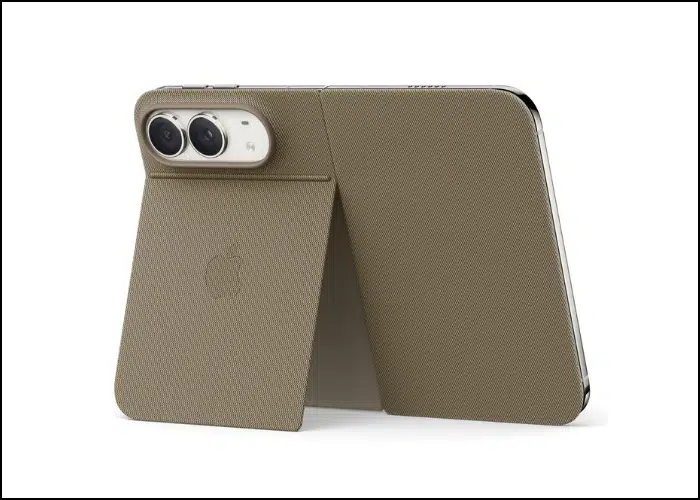
If I were buying an iPhone Duo on launch day and wanted the least complicated case choice, this is where I’d start.
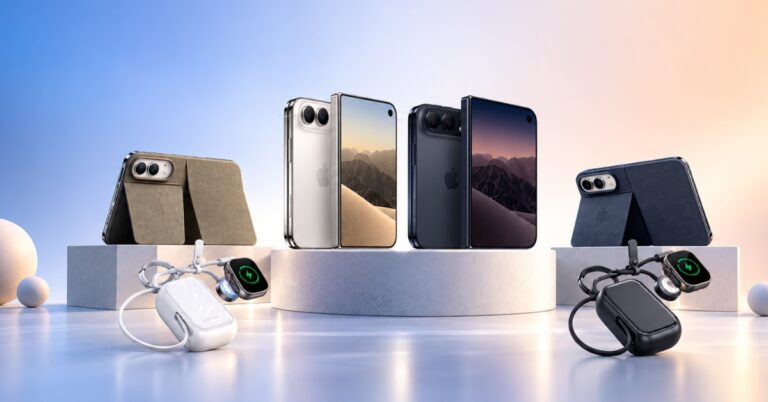
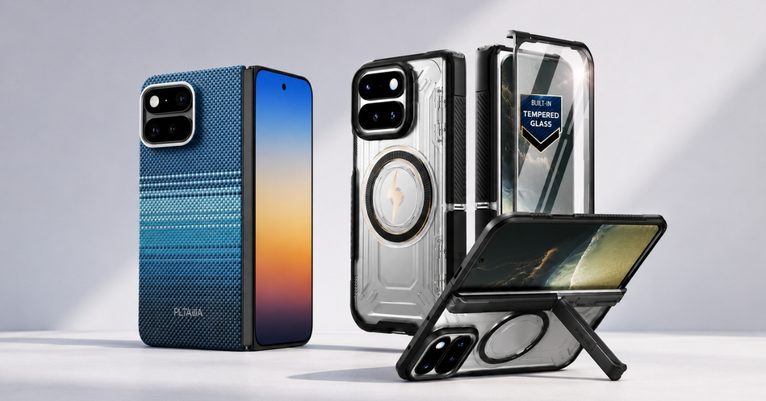
Apple’s iPhone Duo Folio with Kickstand is designed specifically for the Duo and uses Apple’s TechWoven material, making it thin and lightweight. The special highlight of this case is a kickstand, which will help to keep the device at an angle suitable for reading, watching video or making FaceTime calls.
What I particularly like is that the kickstand folds back into the case when I don’t need it. That makes considerably more sense to me than carrying a separate stand around. The case also has built-in magnets to support MagSafe, Qi2 25W, and Qi-certified wireless charging while the case remains attached.
Pros
Cons
Best for: If I were buying just one case without wanting to experiment with third-party options, this would be my pick.
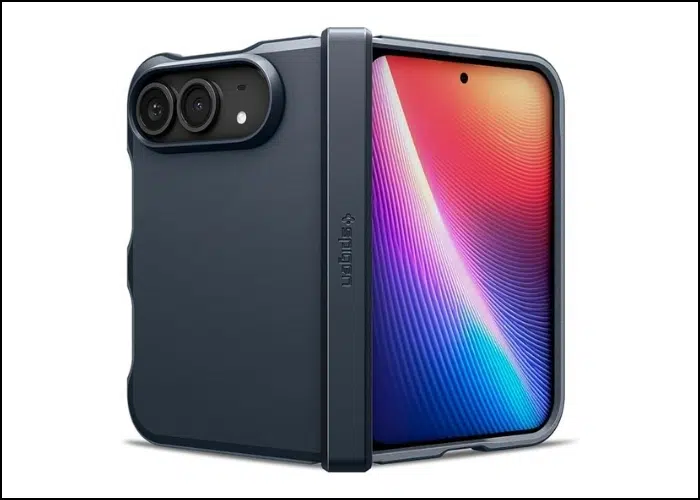
Spigen is probably the first brand I’d look at if my biggest concern were accidentally dropping a $1,999 foldable phone.
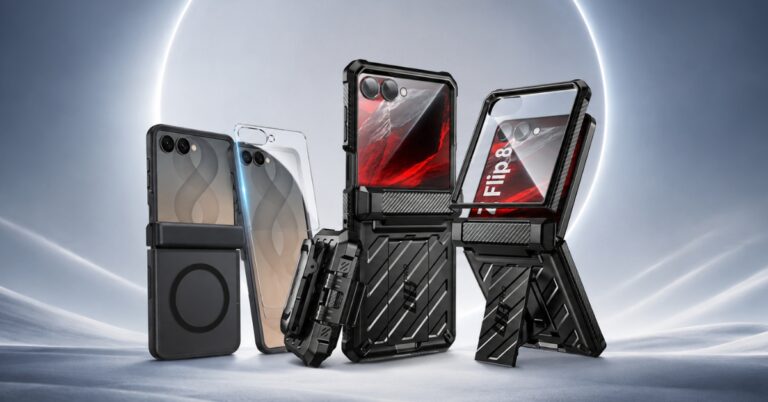
The Tough Armor Pro uses a PC and TPU construction with Air Cushion Technology, raised edges around the screen and camera, and dedicated hinge protection. Spigen says the new Pro hinge protector is slimmer and can lie completely flat when the phone is open.
That’s exactly the sort of engineering I want from a foldable case. The case also has an integrated magnetic ring system for MagSafe accessories and wireless charging, although Spigen warns that the hinge cover can make some accessories incompatible.
Pros
Cons
Best for: This is the case I’d recommend to someone who is more worried about drops than keeping the Duo ultra-thin.
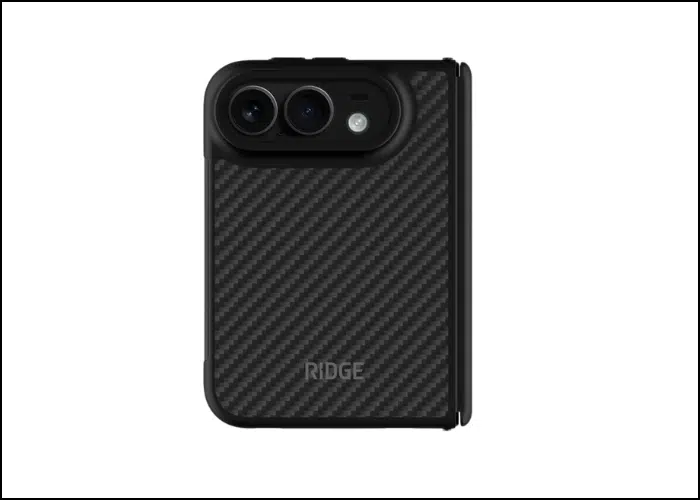
The Ridge case is the one I’d choose if I wanted something that feels more like a premium accessory than traditional rugged phone armor.
The iPhone Duo version uses lightweight Kevlar fiber construction with TPU bumpers and is designed around an 8-foot drop-protection rating. It also has raised edges around the screen and camera and supports MagSafe and Qi wireless charging without removing the case.
I particularly like the idea of pairing this with the Duo because the phone itself is such a design-focused product. A huge protective case would hide much of what makes it interesting. Ridge also provides full access to the camera control area and offers a lifetime warranty and a 99-day risk-free trial.
Pros
Cons
Best for: For my taste, this is one of the most attractive options on the list.
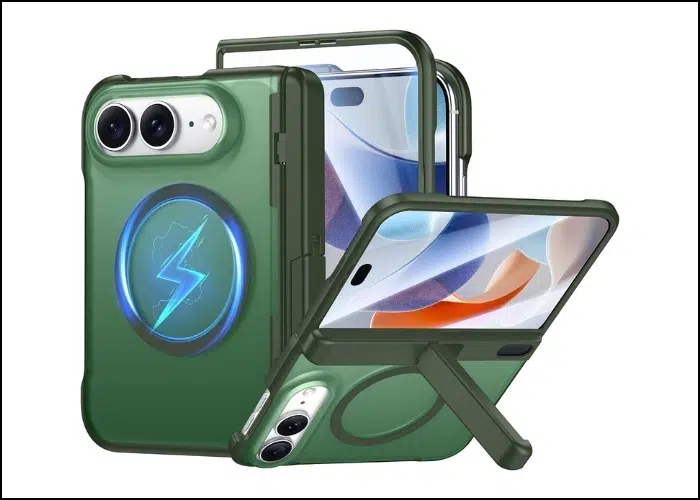
SPIDERCASE is the option I’d consider when I don’t want to spend $70–$130 on my first iPhone Duo case.
Its appeal is straightforward: 15ft drop protection, built-in screen protector, auto-closing hinge protector, magnetic functionality, and a more practical design with a kickstand rather than a luxury finish.
That’s important because I wouldn’t necessarily recommend spending $129 on a case before I even know how I personally use the Duo. A less expensive case can be a smart way to live with the phone first and figure out what I actually need.
Pros
Cons
Best for: Anyone who wants affordable protection while keeping the initial accessory cost under control.
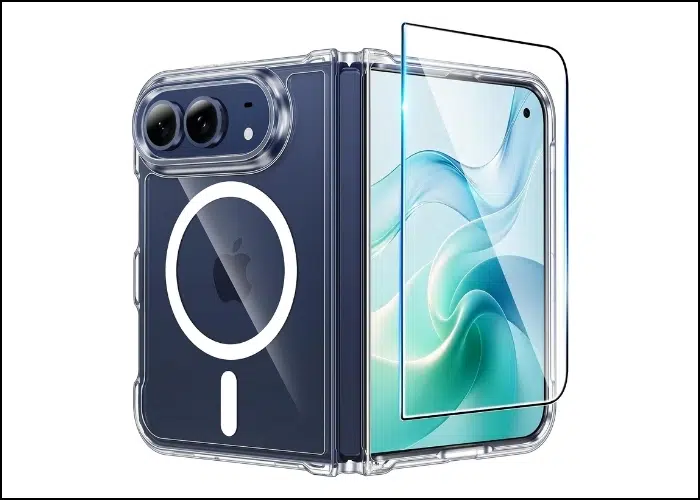
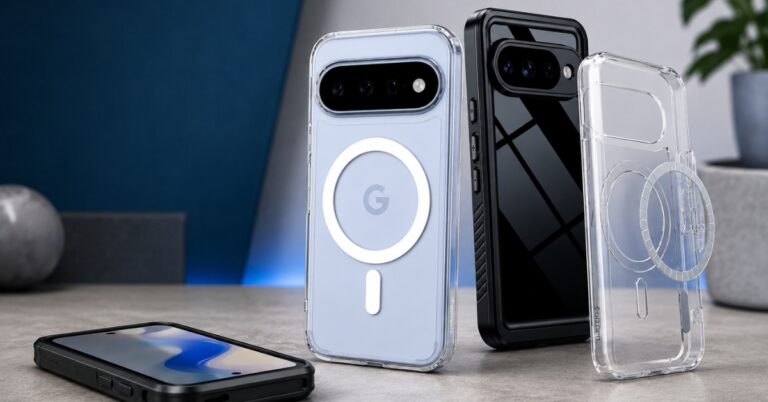
I understand the appeal of a clear case here. Apple is giving the iPhone Duo a very distinctive foldable design, and I wouldn’t necessarily want to cover it all with a black rugged case. The FNTCASE option is aimed at buyers who want transparent protection while keeping the phone’s design visible.
It offers a clear PC/TPU construction, magnetic compatibility, anti-yellowing treatment, raised screen and camera protection, and a screen protector included in the package. The case also offers decent drop protection, with flexible TPU bumpers and a rigid polycarbonate back, plus corner air cushions designed to absorb impacts.
Pros
Cons
Best for: People who don’t want to hide the iPhone Duo’s design behind a bulky case.
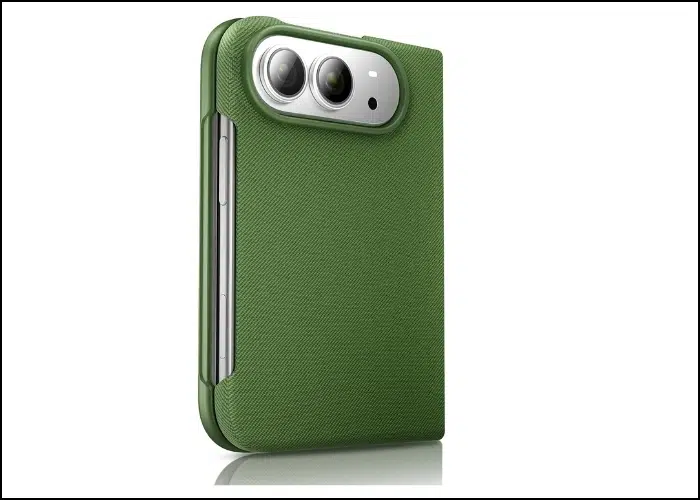
The Mkeke case caught my attention because it takes a similar general direction to Apple’s TechWoven case but at a different price point.
The Duo version uses a high-density tech-woven material with a soft-touch finish. It also includes MagSafe compatibility, raised camera and screen protection, and drop protection. Mkeke says the woven surface is designed to resist abrasion, fingerprints, stains, pilling, fraying, and discoloration.
I like this approach because fabric cases can make a foldable phone feel much more comfortable in the hand than hard plastic.
Pros
Cons
Best for: People who want the Apple-style fabric experience without automatically buying Apple’s $129 case.
This is the biggest thing I learned from looking through the first wave of Duo cases. On a conventional iPhone, I can get away with treating MagSafe compatibility as a simple yes-or-no feature. With the Duo, the hinge changes the equation.
Spigen’s own documentation makes this clear: its Tough Armor Pro supports MagFit, but some accessories may be incompatible due to the hinge cover.
So I will be careful to check if the specific case works with the MagSafe charger, stand, wallet, and accessories I already use.
The iPhone Duo is unlike any iPhone Apple has made before, so I’m not surprised that choosing a case is already proving more complicated than choosing one for a conventional iPhone.
The good news is that there are already some genuinely interesting options.
So, which iPhone Duo case would you pick for your new foldable iPhone? Let me know in the comments below!
Must Like: