FaceTime Like a Pro
Get our exclusive Ultimate FaceTime Guide 📚 — absolutely FREE when you sign up for our newsletter below.

FaceTime Like a Pro
Get our exclusive Ultimate FaceTime Guide 📚 — absolutely FREE when you sign up for our newsletter below.


I compared the top Galaxy Z Fold8 Ultra screen protectors to find the ones actually worth buying before your new foldable arrives.
Foldable phones have changed the way I think about screen protection. On a regular flagship, it’s possible to use the phone bare for a few weeks. However, I don’t even consider it for my expensive Galaxy Fold. While Samsung includes a factory film on the inner screen, the cover display is still exposed to everyday scratches, fingerprints, and accidental drops.
To help you find the right protection, I compared some of the most popular screen protectors available for the Galaxy Z Fold8 Ultra. In this guide, you’ll find my top recommendations, along with the pros, cons, and who each one is best suited for.
The Galaxy Z Fold8 Ultra is one of Samsung’s most expensive smartphones ever. That alone is enough reason to protect it.
Foldables introduce challenges that traditional phones don’t. The cover display is constantly exposed when the phone is closed. Even if you baby your phone, micro scratches appear surprisingly fast.
The inner display is a different story. Samsung already applies a factory-installed Ultra-Thin Glass (UTG) protective film. I generally don’t recommend replacing or removing it as it will void your warranty. For an extra layer of defense against scratches, only look for thin, flexible TPU or PET films that are specifically designed to adhere over the pre-installed factory layer.
Another reason I always install a protector is fingerprint resistance. Foldable OLED displays look incredible until they’re covered in smudges. A good oleophobic coating keeps the phone looking cleaner throughout the day.
Instead of chasing flashy marketing claims, I looked for the things that actually matter in daily use.
After years of using foldables, I’ve learned that a bad screen protector is often worse than having none at all. Poor adhesive, weak oleophobic coatings, reduced touch sensitivity, and annoying lifting around the edges can completely ruin the premium experience.
That’s why I focused on products from brands I have tested personally instead of simply picking the cheapest option.
I compared Samsung’s own film against popular options from Spigen, TOCOL, and more to see which ones actually make sense for different buyers.
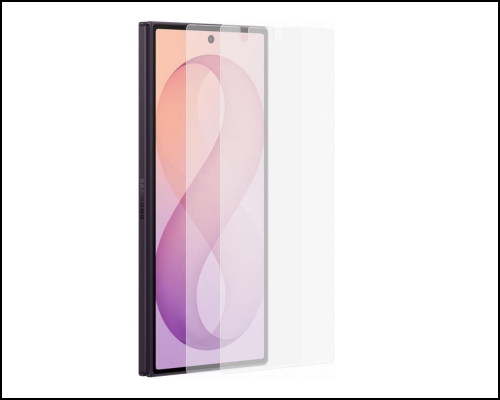
If I were buying only one screen protector today, this would probably be my first choice.
Samsung knows its own display better than anyone else. The official anti-reflective film is designed specifically to preserve the premium viewing experience rather than simply adding another plastic layer on top. You can protect the cover screen from scratches, dust and fingerprint smudges.
The biggest advantage is outdoor visibility. Anti-reflective coatings genuinely make a difference, especially under direct sunlight. Instead of increasing brightness, they reduce glare, making everything easier to read. This protector also maintains the smooth touch response Samsung intended for the phone.
Pros
Cons
Best for: Users who want the closest experience to Samsung’s original display.
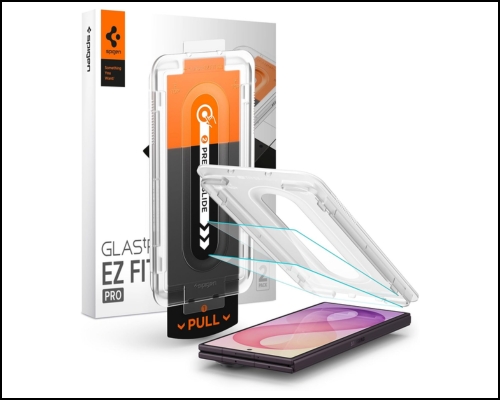
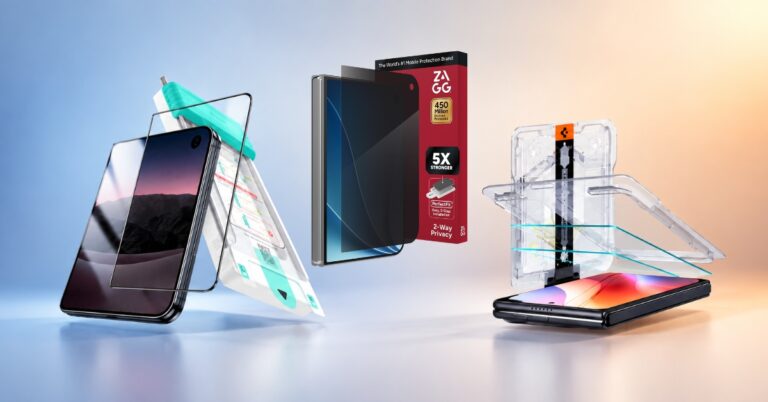
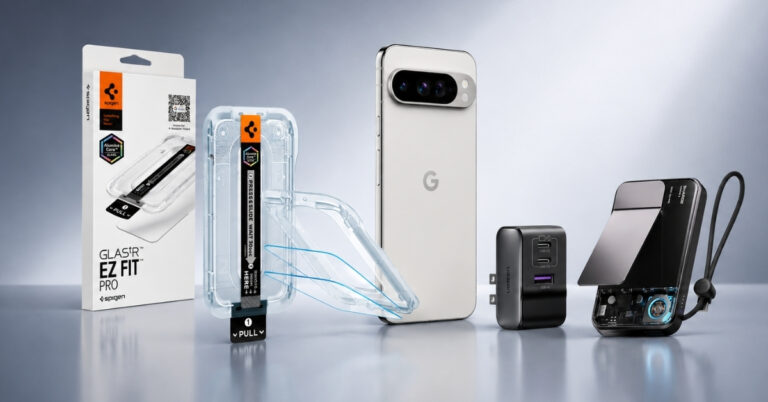
Spigen has earned my trust over the years. Their EZ FIT installation system removes most of the frustration that comes with applying tempered glass. If you’ve ever ruined a protector because it went on crooked, you’ll appreciate the alignment tray.
The screen protector has multi-layered defense built with 9H+ alumina-silicate tempered glass, shatter-proof film, OCA layer, and silicon resin for military-grade drop protection. Spigen also delivers excellent oleophobic coatings that resist fingerprints better than many cheaper alternatives.
Pros
Cons
Best for: Buyers who prioritize scratch resistance and easy installation.
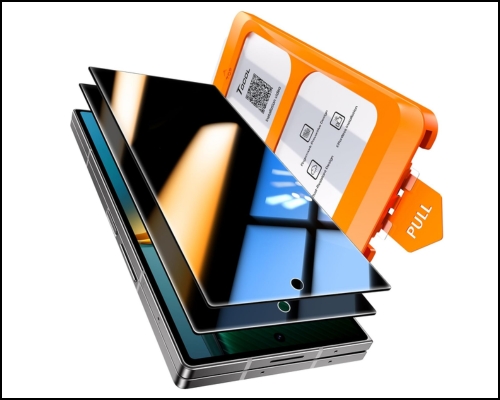
Privacy protectors aren’t for everyone. They slightly reduce brightness while narrowing viewing angles. However, if you frequently work in airports, trains, cafés, or offices, they’re incredibly useful.
TOCOL combines privacy protection with solid scratch resistance, making it a practical choice for professionals. You get a 25° anti-spy privacy filter, which keeps your display visible only when you’re looking at it straight on.
Beyond privacy, it focuses on everyday usability. The nano-coated surface is used to make the protector feel responsive and comfortable while resisting fingerprints, smudges, and water. TOCOL also mentions that the 9H+ tempered glass is 8 ft drop-tested.
Pros
Cons
Best for: Professionals and frequent travelers.
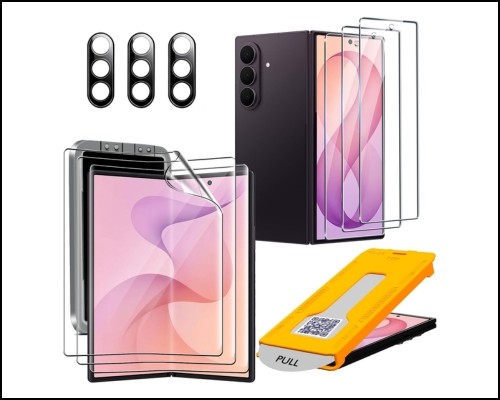
This is the option I’d recommend for users specifically looking for an inner display protection film that’s designed for foldables. Unlike the Pixel 10 Fold Pro, you can apply the flexible film for peace of mind.
Ferilinso uses aerospace-grade materials infused with nano-ceramics, which the company claims deliver up to 10× stronger protection. The kit also stands out by including three sapphire camera lens protectors, designed to shield the large rear camera lenses without affecting photo quality.
For the back glass, the 9H+ tempered glass features 2.5D rounded edges for a comfortable feel and an oleophobic nano-coating that helps reduce fingerprints and oil smudges. Installation is beginner-friendly as the package includes all the necessary tools, and Ferilinso provides a step-by-step installation video to make the process even easier.
Pros
Cons
Best for: Users replacing a worn factory film or those wanting additional compatible inner-screen protection.
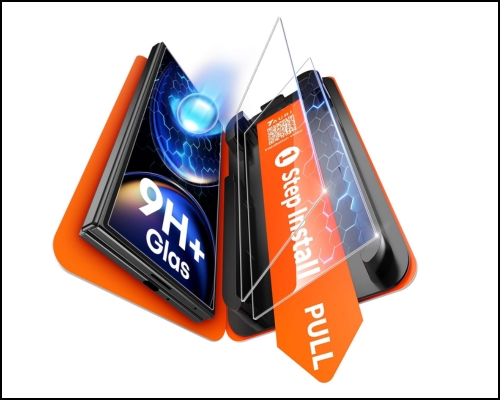
Not everyone wants to spend premium money on accessories. TAURI offers surprisingly good value without cutting too many corners. The key feature of this protector is a one-step application tray, which makes applying the protector quick and dust- and bubble-free.
You get full edge-to-edge coverage to protect the entire cover display from scratches and minor impacts. The 9H tempered glass provides protection against everyday hazards like keys, coins, and accidental drops.
Pros
Cons
Best for: Budget-conscious buyers.
I realized that paying a little more usually saves frustration later. Cheap protectors often promise the same hardness ratings and features; however, their adhesion capabilities, edge design, and anti-fingerprint coating are inferior to those of premium alternatives.
Another takeaway is that installation matters almost as much as the protector itself. A premium protector installed poorly will look worse than a budget protector installed correctly.
Finally, my accessories list now includes the official ones. Years ago, I always skipped manufacturer-made screen protectors because they were expensive. Now, especially with foldables, Samsung’s official film deserves serious consideration because it’s designed to preserve one of the phone’s biggest strengths—its display quality.
If someone asked me today which protector to buy before their Galaxy Z Fold8 Ultra arrives, my recommendations would be simple.
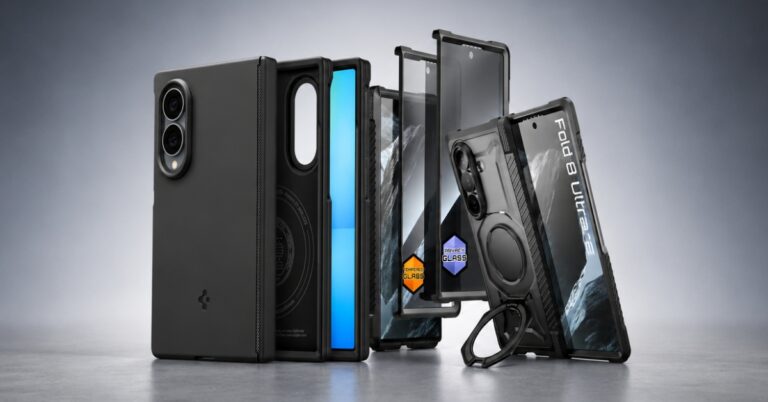
No matter which one you choose, installing a screen protector along with a good protective case before using your Galaxy Z Fold8 Ultra is a smart investment. They can help prevent scratches, keep the display looking new, and save you from costly repairs in the future.
You may like to read: