FaceTime Like a Pro
Get our exclusive Ultimate FaceTime Guide 📚 — absolutely FREE when you sign up for our newsletter below.

FaceTime Like a Pro
Get our exclusive Ultimate FaceTime Guide 📚 — absolutely FREE when you sign up for our newsletter below.


With Snap's newly launched Specs smart glasses challenging traditional AR devices, here's how they compare to industry-leading Apple Vision Pro.
Wearable technology is entering a new phase, and after looking closely at Apple Vision Pro and Snap’s new Specs, I realized we’re finally seeing two very different visions of that future.
Apple Vision Pro is a mixed-reality headset designed for immersive entertainment, productivity, and spatial computing. On the other hand, Snap Specs are lightweight augmented reality glasses to keep you connected to the real world while layering digital content on top of it.
Because both devices sit on your face, they’re often compared. However, Apple and Snap aren’t solving the same problem. Here’s how Apple Vision Pro and Snap Specs compare across design, performance, AR experiences, software, and overall value.
| Feature | Apple Vision Pro | Snap Specs |
|---|---|---|
| Device type | Mixed Reality headset | Augmented Reality smart glasses |
| Display | Dual micro-OLED (23 million pixels) | Transparent Waveguide displays |
| Field of View | Not officially disclosed (approx. 100 degrees) | 51° |
| Processor | Apple M5 + R1 chip | Dual Snapdragon processors |
| Weight | Approx. 750-800g | Approx. 132-136g |
| Battery | External battery pack (Up to 2.5 hours) | Integrated battery in glasses (Up to 4 hours) |
| Cameras | 12 cameras with 5 sensors | Two full-color + two infrared computer vision cameras |
| Tracking | Eye, hand, head and voice tracking | hand tracking and six-degrees-of-freedom spatial tracking |
| Operating System | visionOS (Apple ecosystem) | Snap OS (Snapchat and Lens Studio ecosystem) |
| Starting Price | $3,499 | $2,195 |
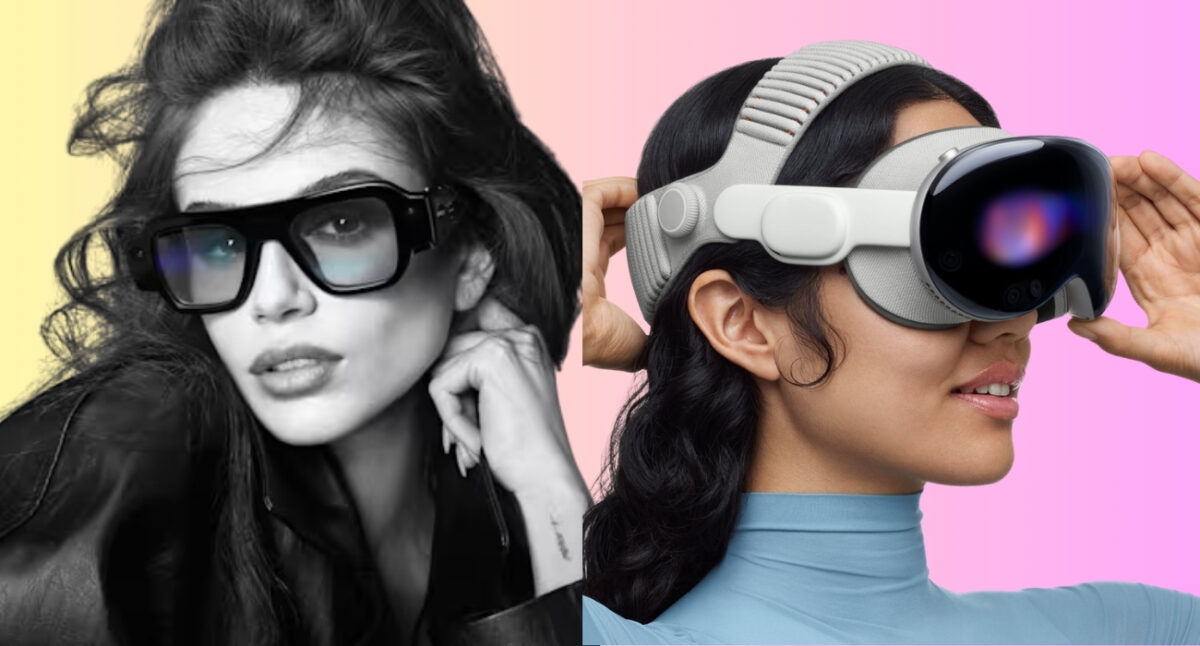
This is where the biggest difference becomes obvious within seconds.
Apple Vision Pro is like a face-worn computer. It’s large, heavy, covers your eyes completely, and relies on a tethered external battery pack. The hardware is impressive, but it’s not something you’d casually wear the whole day and wander around. Though Apple upgraded the latest M5 model with new comfort band, it’s for immersion first and portability second.
Snap Specs take the opposite approach. They’re actual glasses you will wear on the go. Thick glasses with Swiss TR90 frames, admittedly, but still glasses. At roughly 132 grams, they’re dramatically lighter than Vision Pro and include their battery inside the frame rather than requiring an external pack.
That sounds like an easy win for Snap, but there’s a catch. One of the biggest criticisms surrounding Specs has been comfort. Several early observers noted that the thick arms appear to press heavily against users’ ears, raising questions about long-term wearability.
Vision Pro delivers one of the most advanced display systems ever in a consumer product. Its dual Micro-OLED 3D displays pack roughly 23 million pixels and support up to 120Hz refresh rate, making the content feel closer to looking at reality than looking at a screen.
Thanks to 7.5‑micron pixel pitch and Spatial audio, watching immersive movies and playing games on Vision Pro feels transformative. I feel like carrying a personal 3D movie theater on my face. Moreover, the Spatial photos and videos let you relive your memories.
Snap Specs aren’t trying to compete there. Instead of replacing your view, they use transparent waveguide displays that project digital content directly into your real-world environment. For example, navigation arrows float on a sidewalk, information hovers above objects, AR games appear on your coffee table, and more.
Vision Pro wins on display quality. Specs win on staying connected to reality.
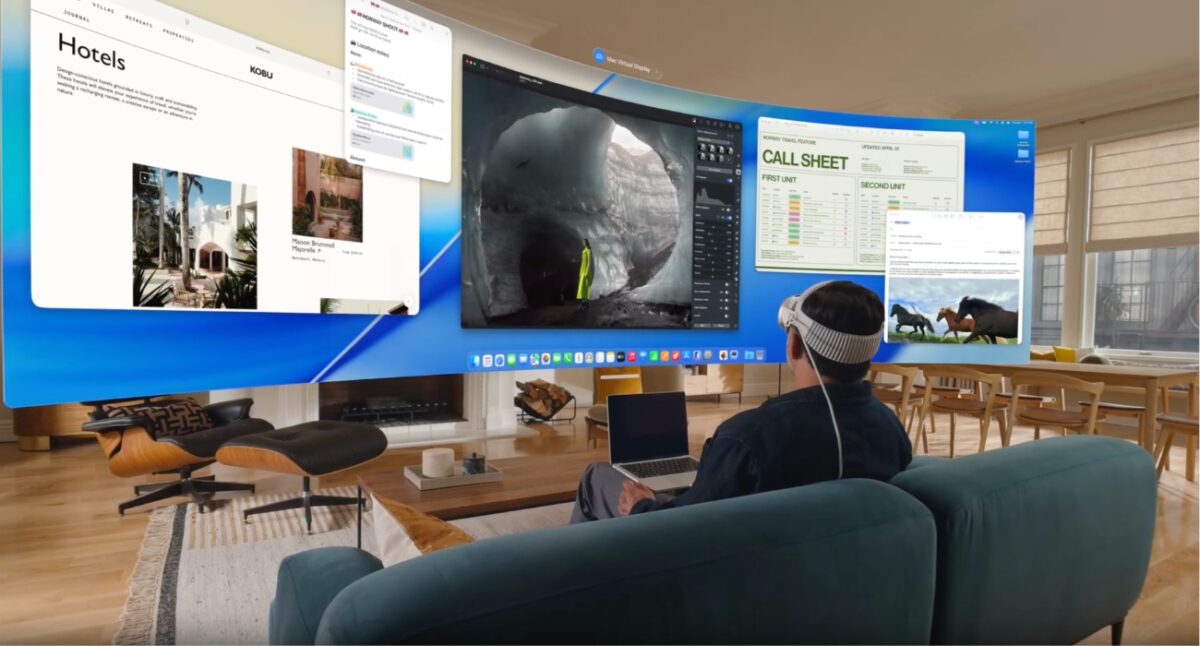
This is where I stopped thinking of them as competitors, as they’re solving different problems.
Vision Pro is a high-spec VR headset like the Samsung Galaxy XR. Apple’s cameras rebuild the world around you and blend virtual objects into that reconstructed space. The result is incredibly immersive, but you’re always looking through a layer of technology.
Snap Specs feel more natural. It brings digital elements on top of the real world. For everyday navigation, real-time insights, live translations, taking measurements, and outdoor experiences, that approach feels more sustainable.
Also, you can view and edit your photos and videos, cast a second screen for your phone or laptop, watch your favorite movies or shows, stream music, browse the web, and play games on the go. The open-ear dual stereo speakers make everything enjoyable.
For gaming, entertainment, and deep immersive experiences, Vision Pro remains in a completely different league.
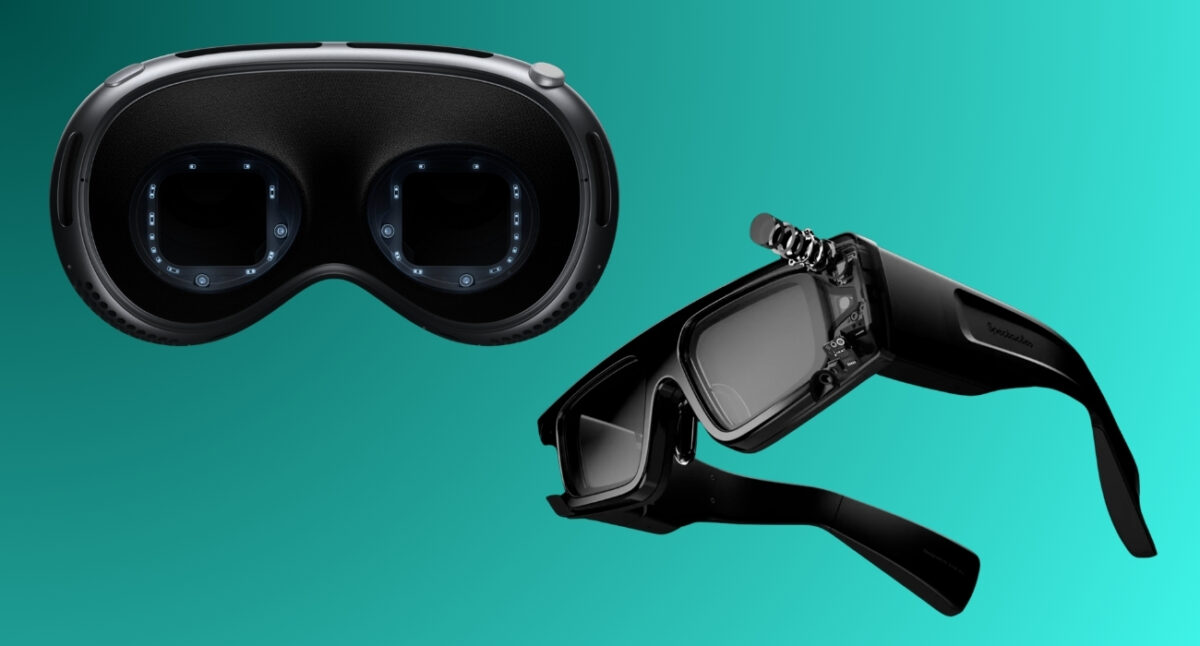
Apple’s hardware advantage is obvious. Vision Pro combines Apple’s M5 chip with its dedicated R1 processor, delivering workstation-level performance in a wearable device. With the right accessories, it’s a powerhouse. You can run multiple apps simultaneously, create massive virtual workspaces, and handle complex spatial computing tasks with ease.
Snap Specs use dual Snapdragon processors and focus their power on real-time AR interactions, hand tracking, and low-latency experiences. Motion-to-photon latency is reportedly as low as 7 milliseconds, which helps AR objects feel anchored to the real world.
If you’re a professional looking for a spatial computer, Apple wins. However, for lightweight AR interactions while walking around town, raw computing power matters less.
This may be the category that determines the winner long-term.
Apple already has a growing ecosystem with access to Apple services, productivity apps, entertainment platforms, and tight integration with Macs, iPhones, and iPads. That’s a huge advantage. Moreover, the latest visionOS 27 brings Siri AI, better spatial experiences, and enhanced multitasking.
However, Snap excels at something else. Its entire platform is built around augmented reality creation. For social media creators, AR developers, and people who enjoy interactive experiences, Snap’s software DNA feels far more experimental and playful.
Battery life tells an interesting story.
Vision Pro delivers around 2.5 hours of general usage through its external battery pack. On the other hand, Snap Specs offer roughly four hours of mixed use and can be extended significantly through their charging case.
On paper, Snap wins. But battery life alone doesn’t tell the whole story. While Vision Pro is meant for work sessions, movies, and immersive experiences, Specs are created for activity. The batteries correspond to these purposes.
This category surprised me.
Vision Pro’s spatial video capabilities remain one of its standout features. Capturing memories in three dimensions creates a level of immersion that traditional photos simply can’t replicate.
For creators, however, Snap may have a unique advantage. AR content is Snap’s entire identity. The company’s platform revolves around lenses, effects, interactive experiences, and social engagement. Specs naturally extend that ecosystem into the physical world.
For capturing immersive personal memories, Vision Pro is stronger. If you’re building AR experiences for audiences, Snap has a compelling edge.
Neither device is cheap.
Vision Pro starts around $3,499 for the 256GB model, whereas Snap Specs is available for pre-order at $2,195 with a $200 refundable deposit. Snap is expected to start shipping it this fall in the United States, the United Kingdom, and France.
At first glance, Snap looks like the better value, but I’m not convinced. Vision Pro is considerable because it’s attempting to replace multiple devices at once: monitor, TV, workspace, entertainment system, and communication platform.
Specs feel expensive because they’re still proving their category. Both products are early-adopter devices. But Apple’s value proposition feels easier to understand today.
Buy Vision Pro if you:
For professionals and power users, Vision Pro feels less like a gadget and more like the first generation of a new computing platform.
Buy Snap Specs if you:
Specs feel closer to the form factor that many people imagine as the future. They’re just not fully there yet.
The biggest thing I learned from comparing these devices is that everyone keeps asking the wrong question. The question is not whether Snap Specs can beat Apple Vision Pro. The correct question is about which technology will be used in the future: headsets or glasses.
Apple believes the path forward starts with immersion. Build the most powerful spatial computer possible today, then gradually shrink it over time. Rumors suggest Apple is working on an AI-powered smart glasses slated for late 2027.
Snap believes the future starts with wearability. Put AR into a pair of glasses people can actually leave the house wearing and improve the experience from there. Personally, I think Apple has the better product today with the most advanced glimpse of tomorrow. But Snap Specs feel like the first rough draft of what everyone may eventually wear.
And that’s why this comparison surprised me. I expected to find a winner. Instead, I found two companies solving completely different problems while racing toward the same destination.
You may like to read: