FaceTime Like a Pro
Get our exclusive Ultimate FaceTime Guide 📚 — absolutely FREE when you sign up for our newsletter below.

FaceTime Like a Pro
Get our exclusive Ultimate FaceTime Guide 📚 — absolutely FREE when you sign up for our newsletter below.


Trying to decide between the Samsung Galaxy Watch 9 and Apple Watch Series 11? Compare their design, battery life, health features, performance, and pricing to find the right smartwatch.
 ByVikhyat
With the Galaxy Watch 9 joining Samsung’s wearable lineup, buyers shopping for a premium smartwatch now have two standout choices: Samsung’s latest flagship or Apple’s Apple Watch Series 11. Both deliver a polished smartwatch experience, but they take different approaches to design, software, health tracking, and battery life.
If you’re upgrading from an older smartwatch, either model will feel like a significant improvement. The better choice, however, depends less on the watch itself and more on the smartphone you already own.
Here’s how the Samsung Galaxy Watch 9 and Apple Watch Series 11 compare across pricing, design, performance, battery life, health features, and overall value.
| Feature | Samsung Galaxy Watch 9 | Apple Watch Series 11 |
|---|---|---|
| Starting Price | $349 | $399 |
| Operating System | Wear OS with One UI Watch | watchOS |
| Phone Compatibility | Android | iPhone |
| Available Sizes | 40mm, 44mm | 42mm, 46mm |
| Display | Super AMOLED | LTPO OLED |
| Battery Life | Up to 2 days | Up to 24 hours |
| Storage | 32GB | 64GB |
| AI Features | Google Gemini | Workout Buddy |
| Health Features | ECG, Blood Oxygen, Body Composition | ECG, Blood Oxygen, Sleep Apnea Detection, Hypertension Notifications |
Samsung once again undercuts Apple on price, making the Galaxy Watch 9 the more affordable flagship smartwatch.
Starting at $349, Samsung includes premium features such as ECG, Body Composition analysis, dual-frequency GPS, and the latest Wear OS experience.
The Apple Watch Series 11 starts at $399, continuing Apple’s premium pricing strategy. While it costs more, iPhone users benefit from an unmatched level of integration with Apple’s ecosystem, making the higher price easier to justify if you already own other Apple devices.
If value for money is your priority, Samsung has the edge.
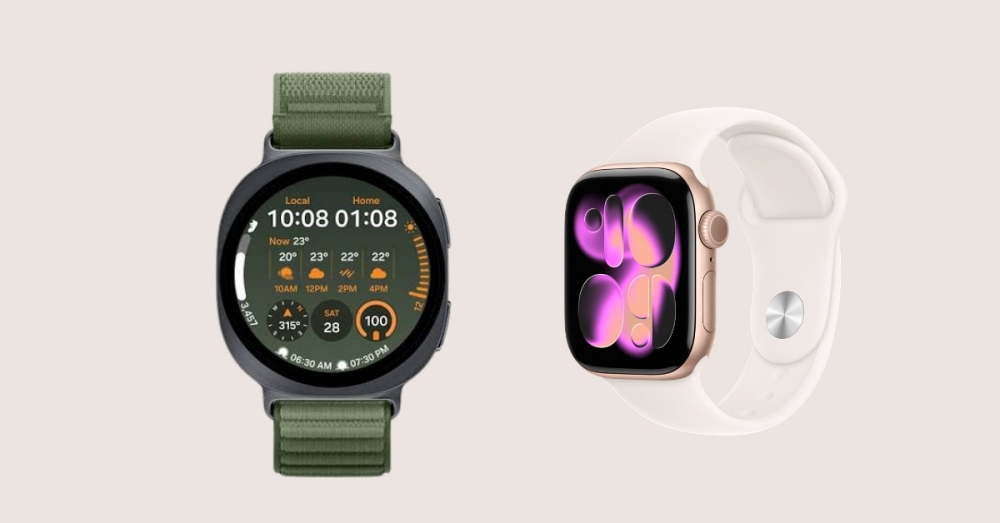
Neither company has dramatically changed its design philosophy.
The Galaxy Watch 9 retains its classic circular design with a clean, minimalist appearance. It looks more like a traditional wristwatch, making it equally suitable for workouts, business meetings, or formal occasions.
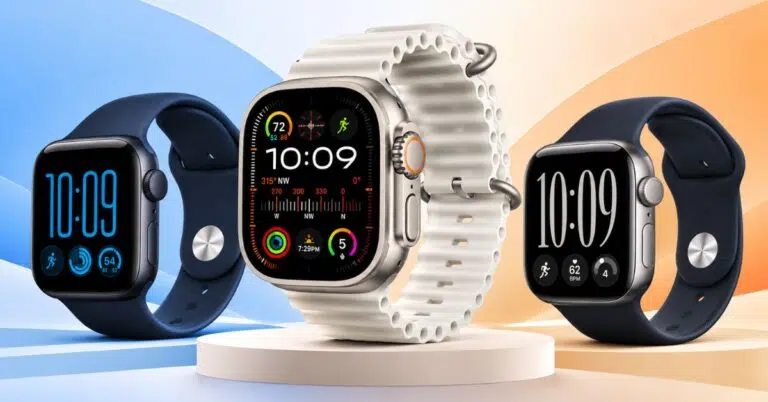
The Apple Watch Series 11, meanwhile, continues with Apple’s familiar rectangular case. Rather than mimicking a conventional watch, Apple prioritizes usability by maximizing screen space for notifications, widgets, messaging, and apps.
Ultimately, the better design comes down to personal preference.
If you prefer the look of a traditional watch, Samsung’s circular design is likely to appeal more. If you value readability and touch interaction, Apple’s rectangular display offers a practical advantage.
Display quality is no longer a major differentiator because both companies have reached an exceptionally high standard.
Samsung’s Super AMOLED display delivers vibrant colors, deep blacks, and excellent outdoor visibility. Combined with Samsung’s watch face designs, the circular screen looks sharp and premium in virtually every lighting condition.
Apple’s LTPO OLED display is equally impressive. While Apple doesn’t emphasize peak brightness figures as heavily, the Series 11 remains easy to read outdoors. Its rectangular layout also displays more information at once, reducing the need to scroll through messages, emails, and menus.
Whichever smartwatch you choose, you’re getting one of the best smartwatch displays available today.
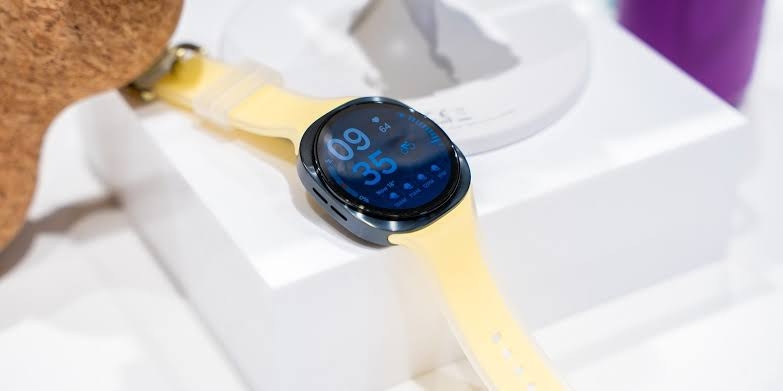
For years, Apple dominated smartwatch performance, but Samsung has significantly narrowed the gap with the Galaxy Watch 9.
Powered by the new Snapdragon Wear Elite processor, the Galaxy Watch 9 launches apps faster than previous Galaxy Watches, and Wear OS feels smoother and more responsive throughout the interface.
The Apple Watch Series 11 still feels slightly more refined, particularly when switching between apps or navigating watchOS. However, the performance advantage isn’t nearly as noticeable as it once was.
Unless you’re upgrading from a smartwatch that’s several generations old, both watches deliver the speed and responsiveness expected from a modern flagship wearable.
This is arguably the most important category because your smartphone determines which watch makes the most sense.
The Galaxy Watch 9 runs Wear OS with Samsung’s One UI Watch, giving you access to Google Maps, Google Wallet, Gemini, Google Play, Samsung Health, and SmartThings. If you pair it with a Samsung Galaxy phone, you’ll also unlock several Samsung-exclusive features.
The Apple Watch Series 11 is designed exclusively for the iPhone. Services like Apple Pay, Find My, Apple Health, Fitness+, Home, and seamless AirPods integration work together without any additional setup. Apple’s ecosystem remains one of the biggest reasons people continue choosing the Apple Watch.
In short:
Trying to use either watch outside its intended ecosystem means missing out on many of its best features.
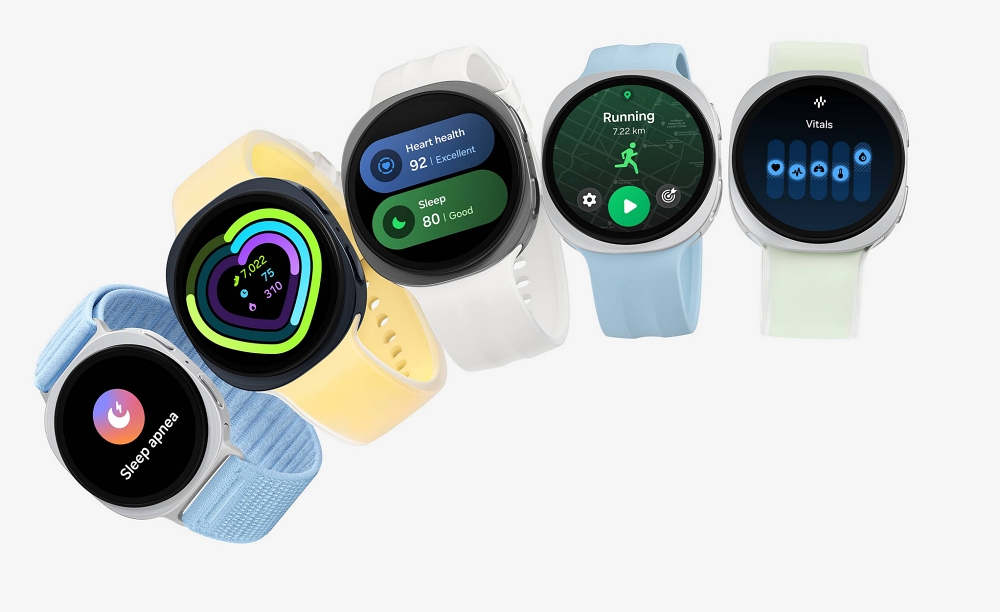
Both smartwatches cover virtually every essential health and fitness feature.
They each offer:
Where they differ is in their advanced health capabilities.
Samsung’s standout feature remains Body Composition analysis, allowing users to estimate body fat percentage, skeletal muscle, and other body metrics directly from the wrist.
Apple, meanwhile, places a greater emphasis on preventative health with features such as Sleep Apnea Detection, hypertension notifications, wrist temperature tracking, and Crash Detection.
For everyday fitness tracking, both perform exceptionally well. If you’re specifically interested in body composition metrics, Samsung has an advantage. If advanced health monitoring is your priority, Apple offers the more comprehensive package.
Battery life continues to be one of Samsung’s strongest advantages.
The Galaxy Watch 9 can comfortably last up to two days on a single charge, making overnight sleep tracking much more practical without constantly worrying about battery life.
The Apple Watch Series 11, while improved, still generally requires daily charging. That’s been Apple’s trade-off for years—prioritizing advanced features and deep ecosystem integration over multi-day endurance.
If longer battery life matters to you, Samsung remains the clear winner.
Smart Features
Both watches include the smartwatch essentials:
The difference lies in the ecosystem surrounding those features.
The Galaxy Watch 9 fits naturally into Google’s services with Gemini, Google Maps, Google Wallet, Gmail, Google Calendar, and thousands of apps available through the Play Store.
The Apple Watch Series 11 excels within Apple’s ecosystem. Features like unlocking your Mac, locating Apple devices through Find My, controlling HomeKit accessories, and syncing health data across your Apple devices all happen effortlessly.
Your day-to-day experience depends far more on the phone in your pocket than the watch on your wrist.
Buy the Samsung Galaxy Watch 9 if you:
Buy the Apple Watch Series 11 if you:
The Samsung Galaxy Watch 9 and Apple Watch Series 11 are two of the best smartwatches you can buy, but they’re built for different ecosystems.
Samsung delivers stronger value, significantly better battery life, and a traditional watch design, making it an excellent choice for Android users.
Apple continues to lead in ecosystem integration, software polish, and advanced health features, making the Apple Watch Series 11 the obvious choice for iPhone owners.
Neither smartwatch is objectively better than the other—the right choice depends on the phone you already use. If you’re on Android, go with the Galaxy Watch 9. If you’re invested in Apple’s ecosystem, the Apple Watch Series 11 remains the smartwatch to beat.
Read More: