FaceTime Like a Pro
Get our exclusive Ultimate FaceTime Guide 📚 — absolutely FREE when you sign up for our newsletter below.

FaceTime Like a Pro
Get our exclusive Ultimate FaceTime Guide 📚 — absolutely FREE when you sign up for our newsletter below.


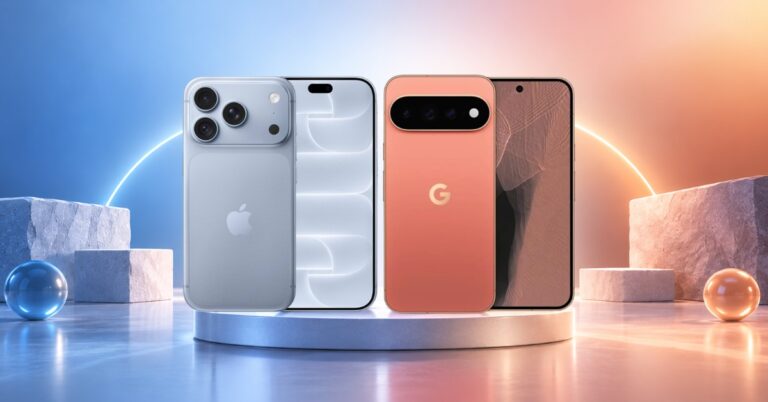
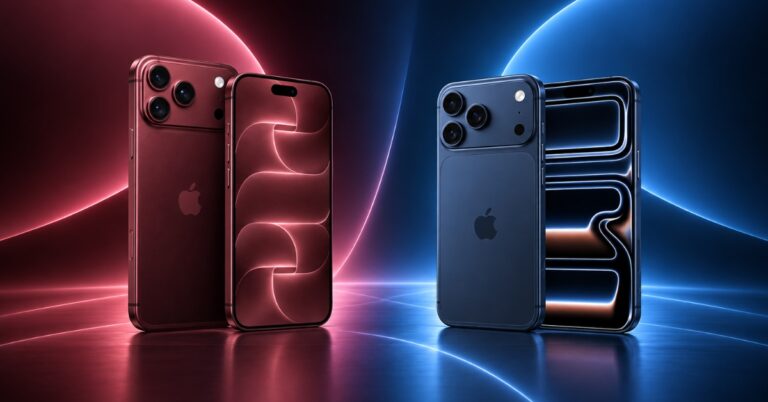
The iPhone 18 Pro adds a variable-aperture camera, new video controls, faster wired charging, and a longer battery rating. See how it compares with iPhone 17 Pro on display, performance, software, durability, storage, and price before you upgrade.
The iPhone 18 Pro improves the camera, battery life, and sustained performance, but it is not a major redesign. Its biggest change is a variable-aperture main camera, followed by new video controls, a smaller Dynamic Island, and a 2TB storage option. The display size, optical zoom, front camera, materials, and core iOS experience remain familiar.
If you own an iPhone 17 Pro, the iPhone 18 Pro makes sense if you will use its camera controls, need more battery, or regularly game and edit video on your phone. Otherwise, the iPhone 17 Pro still has a sharp 120Hz display, three 48MP rear cameras, and support for the same current iOS features. iPhone 18 Pro pre-orders are open, with sales starting September 18, so the comparison below uses Apple’s published specifications and claims rather than independent head-to-head testing.
| Feature | iPhone 18 Pro | iPhone 17 Pro |
|---|---|---|
| Starting price, 256GB | $1,199 in the U.S.; ₹1,64,900 in India | $1,099 U.S. launch price; ₹1,34,900 India launch price |
| Display | 6.3-inch OLED, 120Hz, 3,000-nit outdoor peak; smaller Dynamic Island | 6.3-inch OLED, 120Hz, 3,000-nit outdoor peak |
| Rear cameras | Three 48MP cameras; variable-aperture main lens | Three 48MP cameras; fixed ƒ/1.78 main lens |
| Front camera | 18MP Centre Stage | 18MP Centre Stage |
| Chip | A20 Pro; 7-core GPU | A19 Pro; 6-core GPU |
| Battery rating, U.S. eSIM model | Up to 36 hours of video; 33 hours streamed | Up to 33 hours video; 30 hours streamed |
| Wired charging | 50% in around 15 minutes with a 60W-capable adapter | 50% in around 20 minutes with a 40W-or-higher adapter |
| Storage | 256GB, 512GB, 1TB, 2TB | 256GB, 512GB, 1TB |
| Dimensions and weight | 71.9 × 150 × 8.75mm; 211g | Same dimensions; 206g in the U.S., 204g in India |
| Durability | Aluminium body, Ceramic Shield 2 front, IP68 | Same listed materials and IP68 rating |
Apple’s India ratings for the nano-SIM/eSIM models differ from its U.S. eSIM figures: the 18 Pro is rated for up to 34 hours of video playback and 31 hours streamed, while the 17 Pro is rated for 31 and 28 hours. These are maximum playback estimates, not typical screen time.
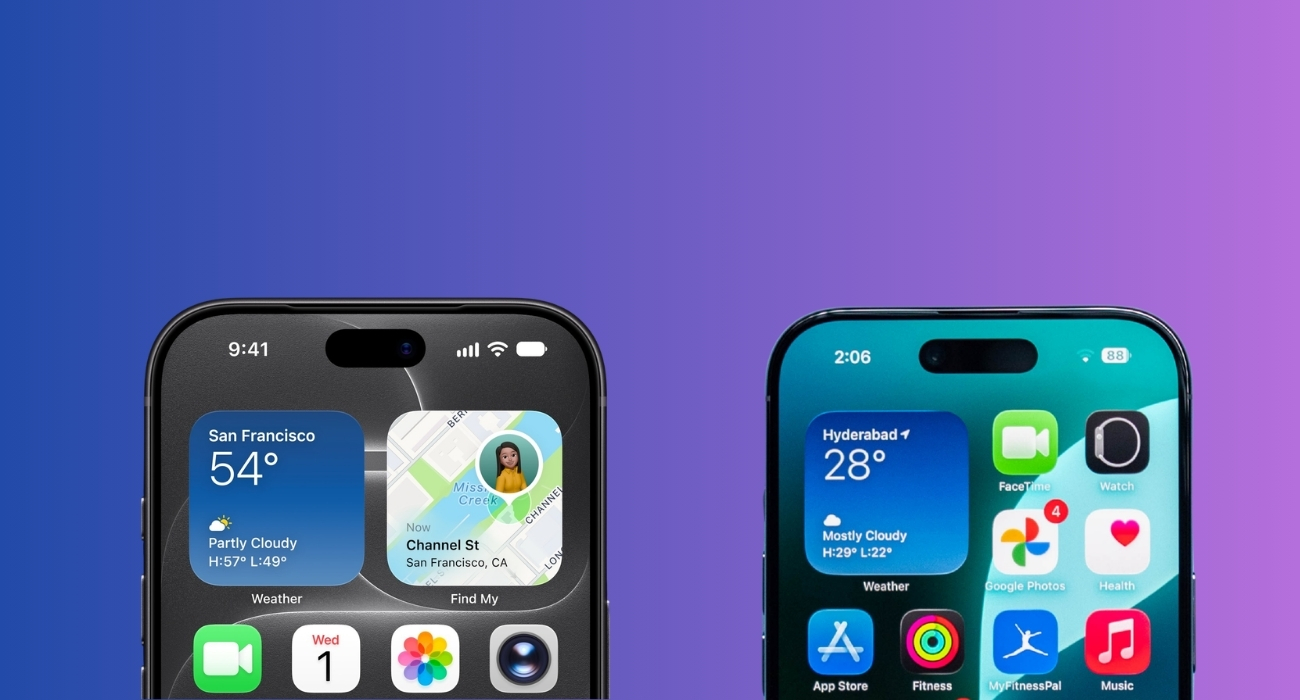
The two Pro models have the same dimensions and a 6.3-inch OLED display with 2622 × 1206 resolution, 460ppi, Always-On support, and ProMotion up to 120Hz. Both reach up to 3,000 nits outdoors and have an anti-reflective coating. You do not get a larger panel, sharper text, or a higher refresh rate by choosing the 18 Pro.
The main front-facing change is a smaller Dynamic Island. Apple says it can show up to three Live Activities at once, making timers, deliveries, and rides easier to check at a glance. The display itself remains the same size and resolution.
The 18 Pro uses the same aluminium unibody style as the 17 Pro and is available in black, silver, glacier, and burgundy. The 17 Pro comes in silver, Cosmic Orange, and Deep Blue. Both phones measure 71.9 × 150 × 8.75mm, but the 18 Pro weighs 211g. That is 5g more than the U.S. 17 Pro or 7g more than the India version, so the new model is slightly heavier in the hand despite matching its predecessor’s size.
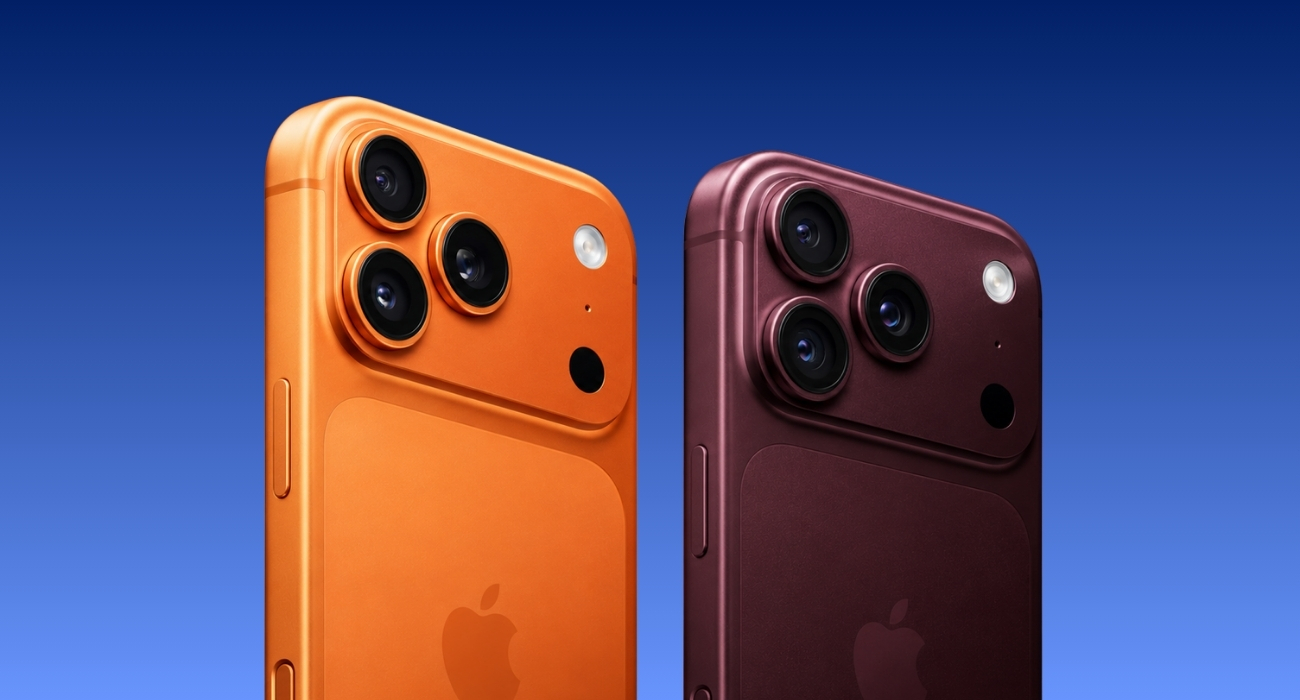
The 48MP main camera is the biggest upgrade. The iPhone 18 Pro can change its aperture between ƒ/1.48, ƒ/1.8, ƒ/2.8, and ƒ/4. Its six-blade iris can open wider in dim light and narrow down when you want more of a group in focus. The camera can make that adjustment automatically, or you can choose an aperture yourself in the new Pro controls.
The iPhone 17 Pro has a 48MP main camera with a fixed ƒ/1.78 aperture. It still takes detailed photos and uses Night mode and computational photography, but it cannot physically change how much light the lens lets in or offer the same direct control over depth of field. Apple also says the 18 Pro uses a new main-camera sensor and processing pipeline for better low-light photos and detail; we will need retail camera comparisons to know how large that difference looks in everyday shots.
The other cameras are largely carried over. Both phones have a 48MP ultra-wide camera with a 120-degree field of view, a 48MP telephoto camera with 4× optical zoom and 8× optical-quality zoom, and an 18MP Centre Stage front camera. In other words, the 18 Pro does not give you a longer optical zoom or a better selfie camera. The 17 Pro already has a capable triple-48MP setup, as we explain in our guide to iPhone 17 Pro camera features.
The 18 Pro’s Camera app adds manual settings for aperture, shutter speed, and white balance, plus a histogram for checking exposure. Photographic Styles gain texture and grain controls alongside colour adjustments.
For video, Cinematic mode now records up to 4K Dolby Vision at 60fps, compared with 30fps on the 17 Pro, and you can apply Cinematic effects after capture to clips shot at up to 60fps. The 18 Pro also adds stabilised 4K Dolby Vision Time-lapse recording and raises the maximum digital video zoom from 15× to 24×. That extra zoom is digital cropping, not a new optical lens. The 17 Pro is still capable: both phones record regular 4K Dolby Vision video at up to 120fps with the main camera and support formats such as ProRes RAW and Apple Log 2.
For photographers who need to verify an image’s origin, the 18 Pro also adds opt-in Apple Reference Image capture, which stores signed sensor data with a reference image. Apple says capture will not be available at launch in China or the EU, making it a specialised tool rather than a mainstream upgrade reason.
The iPhone 18 Pro ships with iOS 27, but the 17 Pro is also on Apple’s iOS 27 compatibility list. Both phones can use the current software and stay in the same Apple ecosystem for features such as AirDrop, iCloud, and Apple Watch pairing.
Siri AI is not an 18 Pro exclusive. Apple’s supported-device list includes iPhone 16 models and later, which covers the 17 Pro. Siri AI is rolling out in beta, and some features vary by language and region, but buying the newer phone is not necessary just to get Apple’s latest assistant.
The 18 Pro’s faster Neural Engine may process supported on-device AI tasks more quickly, but that is a hardware-performance advantage rather than access to software the 17 Pro cannot run. For most owners, iOS and ecosystem features will feel more alike than different.
The iPhone 18 Pro runs on A20 Pro, while the 17 Pro uses A19 Pro. Both chips have a six-core CPU, but the 18 Pro moves from a six-core to a seven-core GPU and uses a dual 16-core Neural Engine. Apple says A20 Pro is built on a 2-nanometer process, has 50% more memory bandwidth, offers up to 40% faster graphics, and doubles AI processing power compared with A19 Pro, according to its launch announcement.
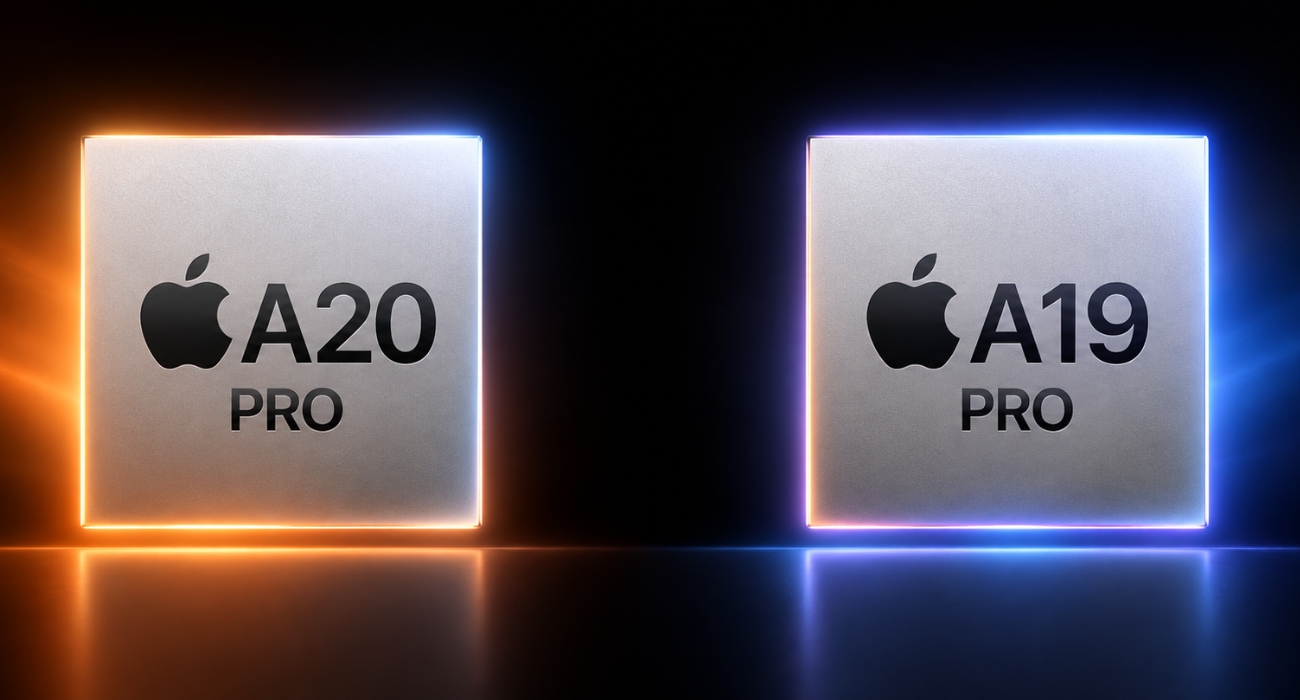
Thermal management changes as well. The 17 Pro already has a vapour chamber; the 18 Pro’s redesigned chamber has three times the surface area, and Apple claims it enables up to 40% higher sustained performance. That could matter during long gaming, video-editing, or AI sessions, where heat can slow a phone down. It does not mean everyday tasks such as messaging or opening social apps will be 40% faster. These are Apple figures; independent retail-phone tests are still needed.
Wireless basics are similar: both use Apple’s N1 chip for Wi-Fi 7, Bluetooth 6, and Thread, and both support 5G. The cellular modem changes. An iFixit teardown identifies a Qualcomm modem in the 17 Pro, while Apple says the 18 Pro introduces its C2 modem with AI-assisted network-quality improvements. Apple’s faster-upload and lower-energy comparisons are against its C1X modem, not a direct 17 Pro test, so they do not establish how much better reception or battery life will be in real-world use. Wait for network tests before choosing between the phones on that basis.
Both retain USB-C with USB 3 data rates up to 10Gbps, plus MagSafe and Qi2 wireless charging up to 25W. There is no major change to the ports or wireless-charging ceiling.
Apple rates the U.S. eSIM version of the 18 Pro for up to 36 hours of video playback and 33 hours of streamed video. The equivalent 17 Pro ratings are 33 and 30 hours. In India, Apple lists 34 and 31 hours for the nano-SIM/eSIM 18 Pro, versus 31 and 28 hours for the 17 Pro. The like-for-like gain is three hours in both comparisons.
Those numbers come from Apple’s playback tests, so they do not mean the 18 Pro will last exactly three hours longer during your normal day. Screen brightness, gaming, camera use, signal strength, and other factors affect battery life. Independent battery tests are still needed to show how much the rating difference translates to everyday use.
Wired charging is a clearer change: Apple estimates the 18 Pro can reach 50% in around 15 minutes with a 60W-capable adapter, while the 17 Pro needs around 20 minutes with a 40W-or-higher adapter. Both adapters are sold separately. Wireless charging is essentially unchanged: both phones support MagSafe and Qi2 up to 25W and can reach 50% in about 30 minutes with the required adapter and MagSafe charger.
Both phones use an aluminium unibody, Ceramic Shield 2 on the front, and Ceramic Shield on the back. They also carry the same IP68 rating: up to 6 meters for 30 minutes in controlled conditions. The 18 Pro is not a durability upgrade over the 17 Pro. Apple notes that water resistance can decline with normal wear, and liquid damage is not covered under warranty, so treat the rating as protection against accidents rather than permission to take either phone swimming.
Apple says the 18 Pro uses 40% recycled material overall, including 85% recycled aluminium in its enclosure. The 17 Pro’s launch materials listed 30% recycled content. That is a manufacturing difference, not a claim that one phone is tougher or easier to repair.
Both phones can run iOS 27 today. In its EU product information, Apple lists a minimum of five years of operating-system security, corrective, and functionality updates for the 18 Pro and 17 Pro. The period is measured from when Apple stops placing each model on the market. That is not a promise of five major iOS releases, and Apple does not give a calendar end date for either phone’s support. The more concrete ownership advantage is storage: the 18 Pro adds a 2TB option for large photo and video libraries, while the 17 Pro tops out at 1TB.
In the U.S., the 256GB iPhone 18 Pro starts at $1,199, compared with the 17 Pro’s $1,099 launch price. In India, Apple’s current store listing starts at ₹1,64,900, while the 17 Pro launched at ₹1,34,900. The 17 Pro’s current price depends on retailer offers, so compare the quote you can actually get rather than treating its launch price as today’s price.
Pre-orders for the 18 Pro began on September 12, 2026, and availability begins September 18. The 17 Pro’s current price depends on the retailer, so compare the quote you can actually get. A substantial discount makes the older model attractive if you do not need variable aperture, the new video controls, or the 2TB tier. For more buying context, see our iPhone buying guide.
Keep the iPhone 17 Pro if its battery still gets you through the day, you like its camera, and you do not need the 2TB option. Its display, zoom cameras, front camera, iOS 27 support, and Pro video features remain current.
Choose the iPhone 18 Pro if you will use the variable aperture for low-light or group photos, want the new video controls, need faster wired charging and a longer battery rating, or often push the phone with games and editing. The modem may become another reason after independent testing, but Apple’s current claims do not provide a direct 17 Pro comparison.
For most iPhone 17 Pro owners, the 18 Pro is a worthwhile camera and endurance upgrade, not an urgent one. If you are buying your first Pro iPhone, the 18 Pro is the better-equipped model; a discounted 17 Pro can still be the better value for everyday use.
You may like to read: