FaceTime Like a Pro
Get our exclusive Ultimate FaceTime Guide 📚 — absolutely FREE when you sign up for our newsletter below.

FaceTime Like a Pro
Get our exclusive Ultimate FaceTime Guide 📚 — absolutely FREE when you sign up for our newsletter below.


The iPhone Duo has two very different displays, making screen protection more complicated. These five protectors cover everything from premium glass to privacy and budget options.
When I first looked at the iPhone Duo, the screen protector was one of the accessories I immediately started thinking about. With a regular iPhone, you can just pick a good tempered glass protector and move on. The iPhone Duo is different because it has two displays of different sizes, so protecting it requires a little more thought.
Fortunately, there are a few screen protectors for the iPhone Duo that are available right now. Below, you will find my top picks that stand out for different reasons, from premium tempered glass and privacy protection to matte and budget-friendly choices.
iPhone Duo availability: Pre-orders start October 16, 2026, and the phone becomes available October 23, 2026.
I wouldn’t buy an iPhone Duo screen protector based only on its advertised hardness rating. The foldable design changes what I would look for.
Compatibility is the first thing I would check before placing an order.
The iPhone Duo has a 5.4-inch outer display and a 7.6-inch folding display. The two screens aren’t interchangeable, and a protector designed for the outer display obviously cannot be used on the folding panel.
Some products are designed for the outer screen, while others are for the inner display. For example, the ZAGG option below is explicitly listed as an outer/front screen protector, while Ferilinso offers an inner-screen protector.
Apple says the inner display uses multiple ultra-thin layers and adhesives designed to let the layers move as the phone folds. That makes me more cautious about applying a generic tempered-glass protector to the folding display.
If I were to get a screen protector for the iPhone Duo, I would look specifically for a flexible film designed for its inner display, not one meant for other foldable phones.
A slightly crooked protector is much more noticeable on a large display. Dust trapped underneath is also annoying, especially when you’re spending this much on a phone.
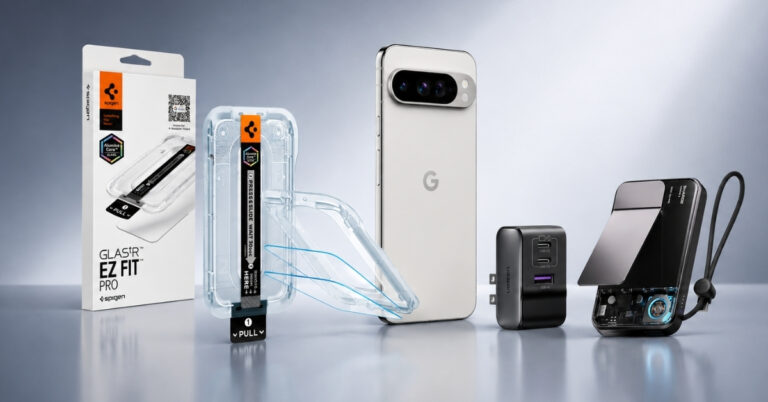
This is why I like installation trays. Spigen’s GlasTR EZ FIT Pro, for example, includes an auto-alignment tray designed to make installation easier.
I would choose the screen protector based on how I actually use my phone.
The iPhone Duo’s inner screen already has a nano-texture finish designed to reduce glare, so I would be particularly careful about adding another layer that changes the display’s appearance.
A screen protector shouldn’t make the iPhone Duo feel noticeably different.
Apple’s displays support ProMotion up to 120Hz and Haptic Touch, so it would be preferable to have a screen protector that does not interfere with the touch input.
I always check this before buying a screen protector because a perfect installation can still become a problem if the phone case pushes against the edges.
This is particularly important with the iPhone Duo because the device has a completely different folding construction from a traditional iPhone.
Here are the five iPhone Duo screen protectors I would put on my shortlist right now.
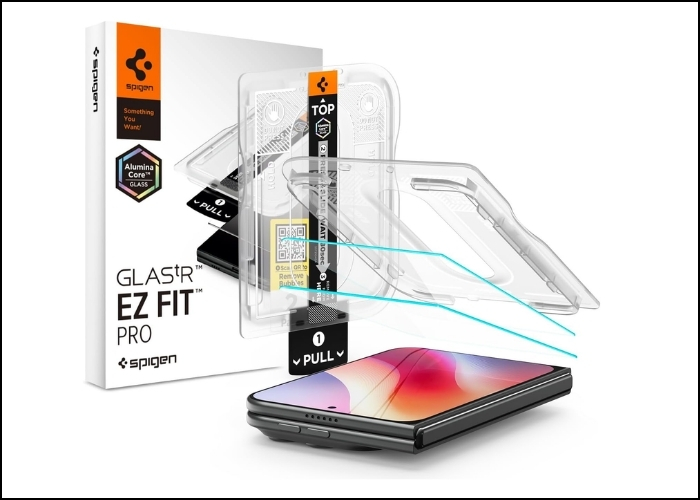
If you are looking for a simple, tempered-glass protector without experimenting too much, Spigen GlasTR EZ FIT Pro would be one of my first choices.
It uses its AluminaCore glass construction, advertises 10H+ surface hardness, and comes as a two-pack. It also includes the company’s EZ FIT Pro alignment tray.
What I particularly like here is the installation system. For a premium phone like the iPhone Duo, I’d rather spend a little more and get a protector that is easier to align than fight with bubbles and crooked edges.
Pros
Cons
My take: This is the one I’d consider first if your priority is clear protection and easy installation.
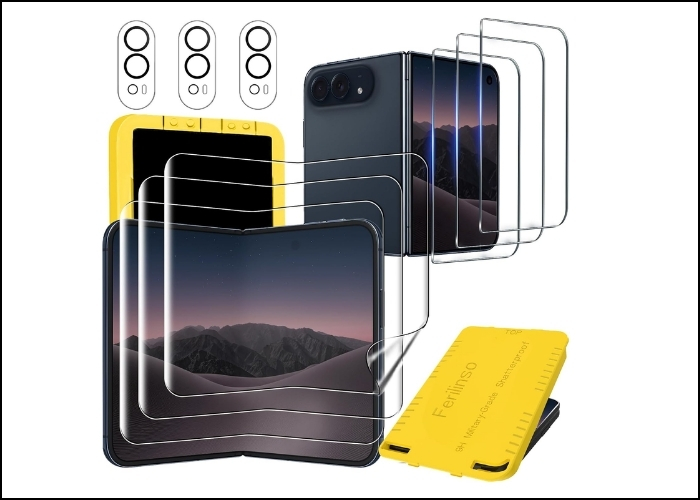
The Ferilinso Inner Screen Protector is essential in my iPhone Duo accessories list because it targets the iPhone Duo’s inner display. I find it interesting that the film is claimed to withstand rigorous folding tests and to auto-repair minor scratches.
You also get three 9H+ tempered-glass protectors for the outer display, featuring 2.5D rounded edges, laser-cut precision, scratch-resistant construction, and an oleophobic nano-coating. The company says the coating reduces fingerprints and oil residue by up to 98%.
The bundle also includes a camera lens protector, which is useful if you want to protect several parts of the phone at once.
Pros
Cons
My take: Get this if protecting the inner display is your main concern.
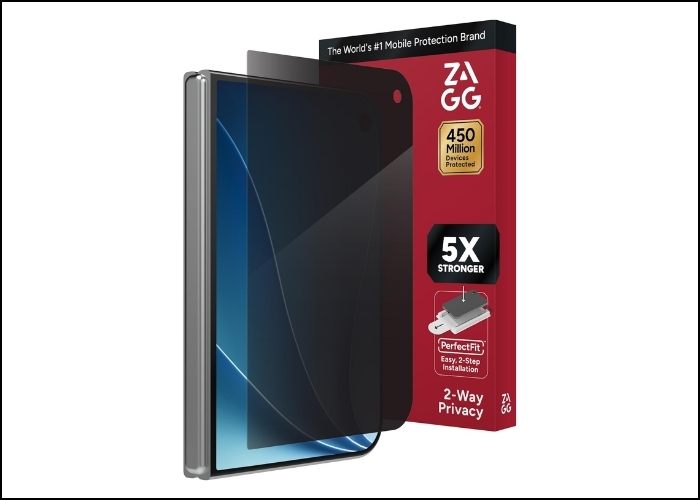
If you use your iPhone in cafes, airports, trains or offices, a privacy screen protector can be more useful than simply buying the hardest possible glass.
The ZAGG Glass Elite Privacy is designed specifically for the iPhone Duo’s front/outer screen. It uses a two-way privacy filter that limits viewing from side angles. ZAGG also claims up to five times stronger impact protection than basic glass, along with scratch resistance and its ClearPrint smudge-resistant coating.
Pros
Cons
My take: I’d choose this if privacy is more important than maximum display brightness and clarity from every angle.
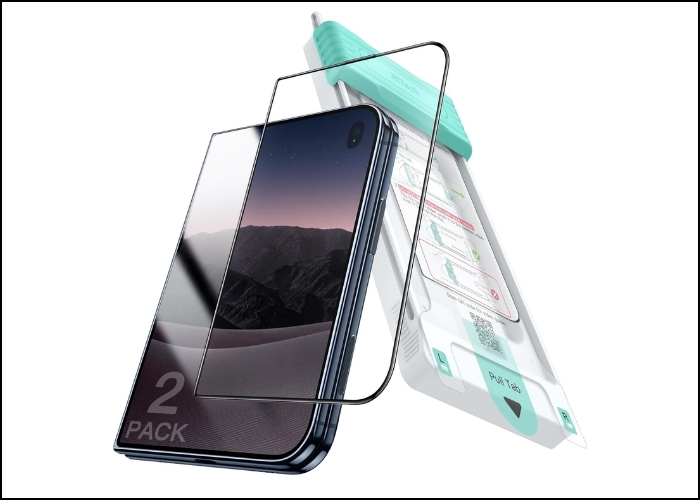
The JETech 3D 9H+ Anti-Reflective Front Screen Protector takes a different approach. Instead of focusing primarily on privacy, it features a magnetron-sputtered optical coating to reduce reflections and glare, making the display easier to see in bright light.
The screen protector offers full-screen coverage, including the curved edges. Moreover, the 9H+ tempered glass resists everyday scratches, wear, bumps, and accidental drops.
JETech also adds an electroplated anti-fingerprint coating that repels oil and water, making smudges easier to wipe away while maintaining responsive touch.
Pros
Cons
My take: This is the one I’d keep in mind if reflections annoy me more than privacy concerns.
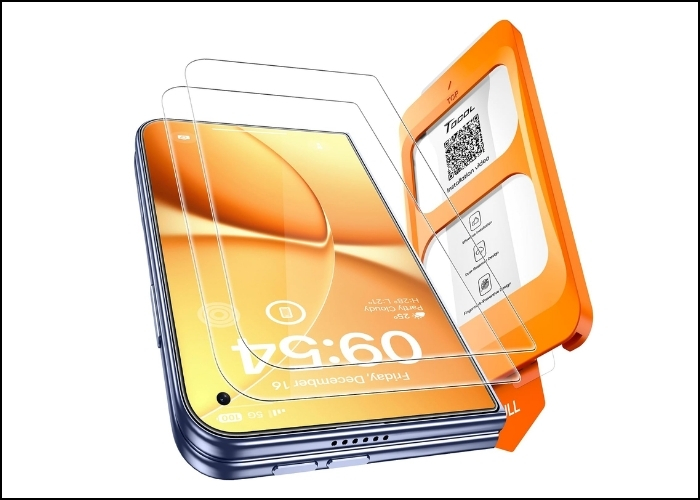
Finally, there’s TOCOL, which I’d consider if I don’t want to spend too much on a screen protector.
The iPhone Duo version is advertised as a two-pack with 9H+ tempered glass, 8-foot military-grade shatterproof protection, anti-scratch treatment, and a case-friendly design. It also uses a bubble-free installation system designed specifically for the Duo.
Pros
Cons
My take: Go for this one when you want basic protection without spending too much.
If I were buying my iPhone Duo on launch day, I wouldn’t automatically choose the same type of protector for both displays.
My approach would be:
| Screen protector | What I’d choose it for |
|---|---|
| Spigen GlasTR EZ FIT Pro | Clear, premium outer-screen protection |
| Ferilinso Inner Screen | Dedicated inner/folding display protection |
| ZAGG Glass Elite Privacy | Privacy in public places |
| JETech Anti-Reflective | Reducing reflections on the outer display |
| TOCOL | Budget-friendly protection |
There’s one mistake I would avoid with the iPhone Duo: treating its folding display exactly like the screen on an ordinary iPhone.
Apple has engineered the inner display specifically for folding. It uses a custom nano-texture finish, multiple thin layers, and adhesives designed to enable movement while folding.
So before installing an aftermarket protector, you should check three things:
I’d also clean the screen carefully before installation. On a large display, even a tiny speck of dust can be the first thing I notice every time I unlock the phone.
Also, don’t press aggressively around the fold or attempt to flatten, peel, or manipulate the inner display beyond the manufacturer’s instructions.
The iPhone Duo is an unusual phone, so I don’t think there’s a one-size-fits-all answer for screen protectors.
Apple has already given the Duo substantial built-in protection: Ceramic Shield 2 on the outer display, a scratch-resistant coating and a nano-texture surface on the inner display.
That’s why I wouldn’t buy a screen protector just for the sake of having one. Always choose it based on which part of the phone you want to protect and whether you’re willing to change how the display looks or feels.
Are you planning to use a screen protector on your iPhone Duo, or trust Apple’s built-in protection?