FaceTime Like a Pro
Get our exclusive Ultimate FaceTime Guide 📚 — absolutely FREE when you sign up for our newsletter below.

FaceTime Like a Pro
Get our exclusive Ultimate FaceTime Guide 📚 — absolutely FREE when you sign up for our newsletter below.


iFixit's iPhone 18 Pro teardown confirms eSIM battery sizes, shows the 6-blade variable aperture up close, larger vapor chamber cooling, and a new display-frame cracking flag.
iFixit has torn down the iPhone 18 Pro and iPhone 18 Pro Max and the inside tells the same story Apple did on stage, plus a few caveats, according to the iFixit teardown published September 20.
The teardown confirms battery sizes for the eSIM-only models sold in the U.S. and several other countries, gets close to the new variable aperture camera, and flags a repairability issue iFixit hasn’t seen this badly before.
iFixit read the labels directly:
Those numbers apply to eSIM-only units sold in the U.S., Canada, Mexico, Japan, Saudi Arabia, UAE, Qatar, Oman, Bahrain and Kuwait. Models with a physical SIM tray in other regions have smaller cells, as earlier filings suggested. The iPhone 18 Pro still relies on Apple’s own playback claims for real-world battery life, so capacity alone doesn’t tell you how long it lasts.
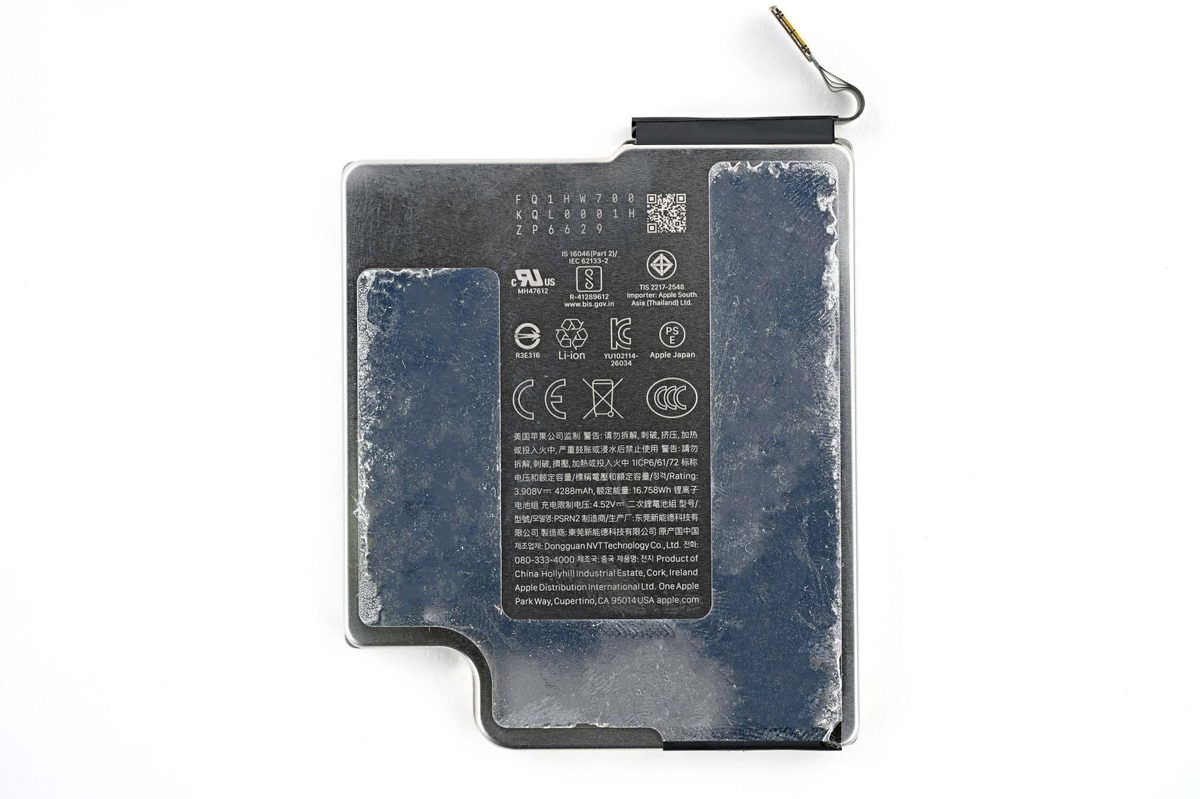
Once you get past the display, the battery is actually a bright spot. Apple kept the screwed-in metal battery tray from last year. You remove the tray and battery together with 13 screws and no wrestling with strong adhesive. The cell itself uses electrically releasable adhesive, about 90 seconds at 12 volts, and lifts cleanly.
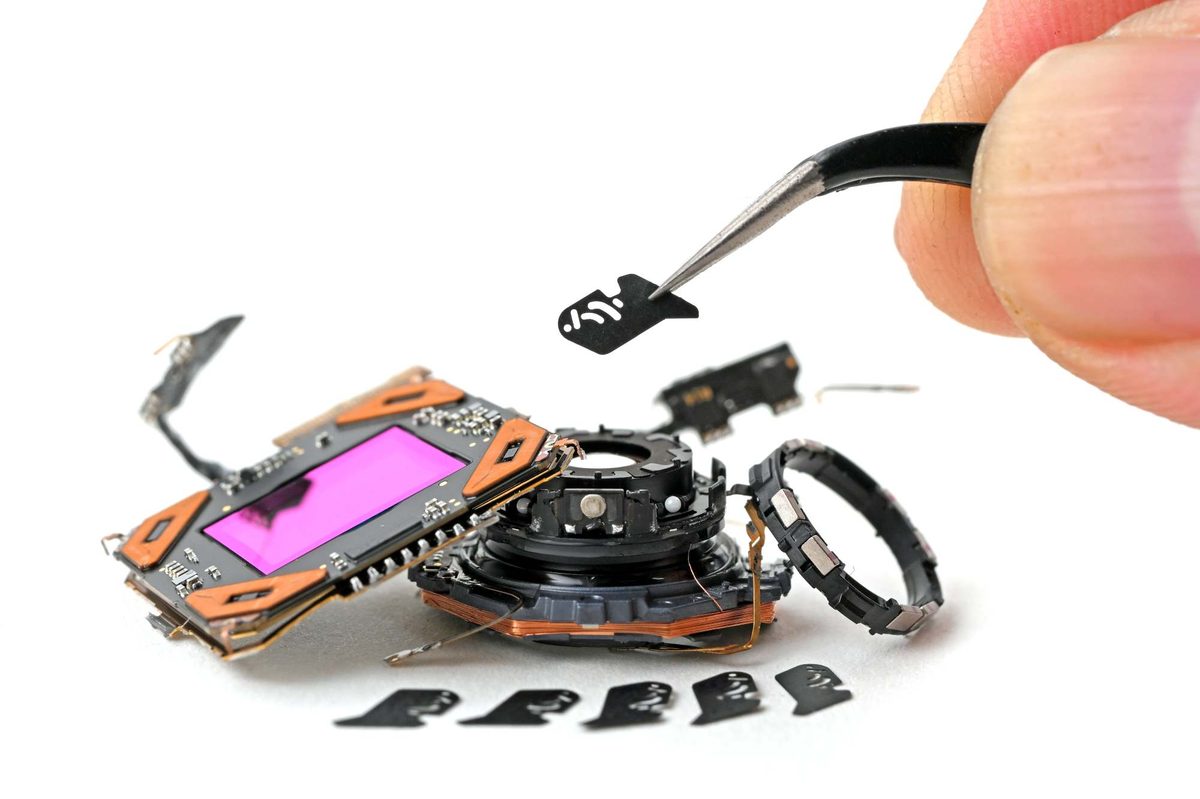
Apple’s biggest camera change this year is a mechanical variable aperture on the main 48MP camera. iFixit found six polymer-composite blades, each about as thin as a human hair and barely more than a millimeter at the tip, driven by electromagnets independent of optical image stabilization.
One blade flew across the room while iFixit pried the lens stack open. That says a lot about repairability. The blades pivot and slide on pins with almost no tolerance, and the glues are gummy. iFixit calls component-level repair as close to impossible as it gets, if the aperture sticks, you’ll be replacing the entire main camera assembly. The module itself is modular and easy to swap, but Apple hasn’t posted parts pricing yet. The iPhone 17 Pro camera assembly was $249, so expect more this year.
For photographers, iFixit is also skeptical about the benefit. On a 1/1.3-inch-type sensor with a 6.8mm focal length, the four presets, f/1.48, f/1.8, f/2.8 and f/4.0, give you about 7.3x more light at the widest versus f/4.0, but not the big background blur you’d get from a full-frame camera at the same f-number. Their test shots show legible background even at f/1.48. It’s real control, but subtle on a phone sensor.
The A20 Pro has moved to the outside of the dual-layer logic board, sitting directly against a vapor chamber Apple says is three times larger by surface area than before. A spongy thermal interface pad helps conduct heat evenly, and the chamber spreads it across the body. That move should help sustained performance for gaming and on-device AI.
It comes with a cost. The NAND storage now sits inside the board sandwich, so any storage-level or deep board repair starts with separating the layers, more heat, more labor, and more risk before you even reach the fault. Data recovery is also harder because the data is encrypted to that NAND.
Here’s the surprise. The plastic frame around the display cracked or pulled away on three of the four phones iFixit opened. The phones still worked, but a damaged frame won’t sit flush after reassembly and could compromise water resistance.
iFixit is cautious here. The same frame has been used since iPhone 15 Pro without this much trouble, and other teardowns haven’t reported the same damage. Four phones is too few to call it a trend. Adhesive strength, heating time, iFixit heated one intact unit for 25 minutes at 70-72°C, technique, or a change in plastic could all be factors. The larger vapor chamber may also be pulling heat away from the seam, making the adhesive harder to soften.
The teardown is otherwise front-entry only. The rear glass opens, but there’s nothing serviceable inside aside from the wireless charging coil. The USB-C port is a separate part but buried under screws and adhesive, a step back from the more accessible layout on the iPhone 16 Pro.
iFixit gives both phones a provisional 7 out of 10 for repairability. The score credits the tray-mounted battery and modular camera, but docks points because almost every repair still goes through that glued display. For now, the display frame issue doesn’t drag the score down further, iFixit wants more data.
All versions now carry Apple’s C2 modem except the U.S. iPhone 18 Pro Max, which still uses Qualcomm’s Snapdragon X80. iFixit notes this is likely the tail end of Apple’s prior agreement to use Qualcomm chips through 2026. Apple put it in the model with the largest battery, so extra power draw is less noticeable. This will likely be the last iPhone to ship with a Qualcomm modem.