FaceTime Like a Pro
Get our exclusive Ultimate FaceTime Guide 📚 — absolutely FREE when you sign up for our newsletter below.

FaceTime Like a Pro
Get our exclusive Ultimate FaceTime Guide 📚 — absolutely FREE when you sign up for our newsletter below.


WhatsApp is testing Guest Chats, a feature that lets users message people without WhatsApp accounts using a secure invite link and a temporary browser chat.
WhatsApp is testing a new feature called Guest Chats that allows users to message people who do not have a WhatsApp account. The feature lets users generate a secure invite link that opens a temporary conversation in a web browser, allowing recipients to reply without installing the app or creating an account.
The feature is currently rolling out to a limited number of beta users on Android and iOS. If widely released, it could lower the barrier to starting conversations with people who are not already on WhatsApp.
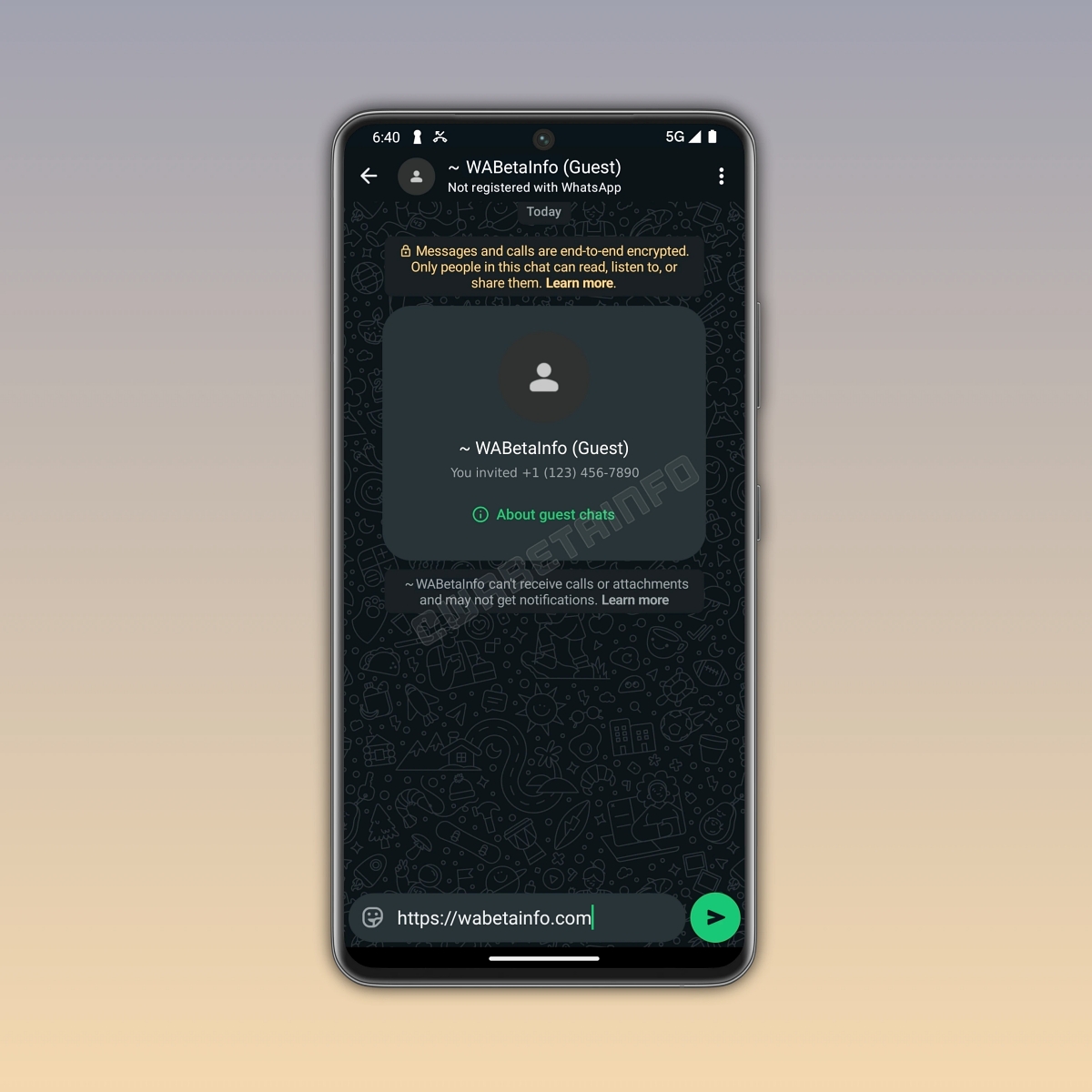
Guest Chats allow a WhatsApp user to create an invitation link from the app’s “Invite a Friend” section or from the contacts list. The link can be shared through SMS, email, or other messaging platforms.
When the recipient opens the link, it launches WhatsApp Web in a browser. The person can choose to install the app or continue the conversation as a guest. If they continue as a guest, they are asked to enter a display name and can begin messaging immediately.
The chat interface clearly labels the participant as a “Guest” to indicate that the person is not using a registered WhatsApp account.
WhatsApp says Guest Chats maintain the same end-to-end encryption used in regular conversations. When a guest joins the chat, WhatsApp Web generates a unique identifier that creates the encryption key used to secure the messages.
Because of this encryption model, WhatsApp says only the participants in the conversation can read the messages.
Guest Chats are designed as temporary conversations rather than full WhatsApp accounts. As a result, the feature supports only basic text messaging.
Media sharing is not supported, including photos, videos, GIFs, documents, stickers, or voice messages. Voice and video calls are also unavailable. The feature also does not support group chats and is limited to one-on-one conversations.
Guests may also not receive notifications for new messages, meaning they may need to manually check the browser conversation.
Guest Chats automatically expire after 10 days of inactivity. If a conversation expires, the user who created the invitation must generate a new link to restart the chat.
WhatsApp also allows users to block guest participants in the same way they would block a regular account.
The company notes that guest identities are not verified. If an invite link is shared widely or intercepted, someone other than the intended recipient could join the chat. WhatsApp highlights this risk within the interface and clearly labels guest participants.
The feature is still in testing and is currently available only to a limited number of beta users. WhatsApp has not announced when Guest Chats will be released to all users.