FaceTime Like a Pro
Get our exclusive Ultimate FaceTime Guide 📚 — absolutely FREE when you sign up for our newsletter below.

FaceTime Like a Pro
Get our exclusive Ultimate FaceTime Guide 📚 — absolutely FREE when you sign up for our newsletter below.


YouTube is automatically labeling realistic AI-generated videos and expanding personalized AI-powered content feeds to improve transparency and content discovery.
 ByVikhyat
YouTube is rolling out automatic AI labeling for videos alongside a new customizable feed feature focused on personalized recommendations.
The company says the new system will automatically identify videos containing “significant photorealistic AI use” and apply visible AI labels to them.
According to YouTube, the updated labeling system is mainly focused on photorealistic AI-generated or manipulated videos that could realistically confuse or mislead viewers.
For long-form videos, the label will appear below the player and above the description. On Shorts, the label will appear directly as an overlay on the video itself.
YouTube says creators are still expected to disclose when realistic AI tools are used in videos, even with the new detection system in place. However, if creators believe a video has been incorrectly identified as AI-generated, they can change the disclosure setting through YouTube Studio.
Some disclosures, however, cannot be removed. Videos created using YouTube tools like Veo and Dream Screen will permanently display AI labels. The same applies to content carrying C2PA metadata for generative AI.
YouTube also clarified that unrealistic, animated, or lightly edited content will still receive smaller disclosures inside the expanded video description.
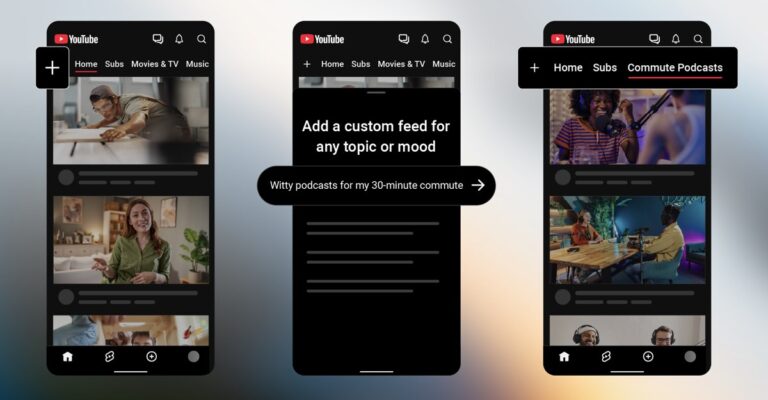
Alongside the AI labeling rollout, YouTube is also expanding a customizable feed feature that lets users generate content feeds based on moods, interests, or specific topics.
Users can type prompts describing the kind of videos they want to watch, and YouTube will generate a personalized feed around those interests.
The feature has been in testing since November and is now rolling out to signed-in users in the United States across the YouTube mobile app and desktop website.
YouTube says watch and search history need to be enabled for personalized feeds to work properly.
These additions reflect YouTube’s broader push toward AI-powered moderation, transparency, and personalized content discovery across the platform.
Do you think AI labels on videos are enough to prevent misinformation, or should platforms take stricter action against realistic AI-generated content? Share your thoughts in the comments below.
Don’t miss these related reads: