FaceTime Like a Pro
Get our exclusive Ultimate FaceTime Guide 📚 — absolutely FREE when you sign up for our newsletter below.

FaceTime Like a Pro
Get our exclusive Ultimate FaceTime Guide 📚 — absolutely FREE when you sign up for our newsletter below.


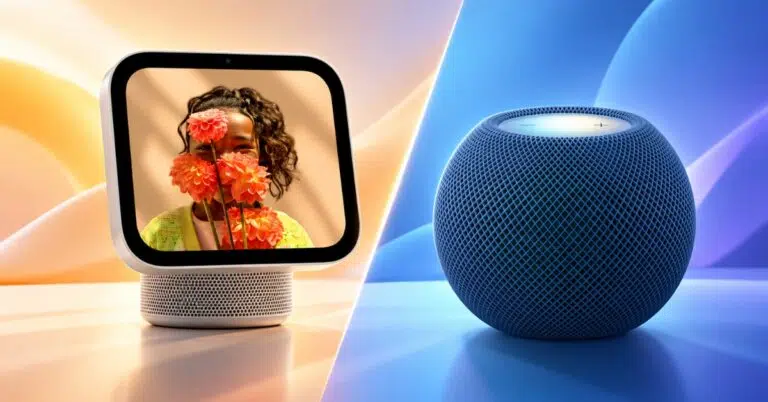
Apple's $299 HomeView brings a sharper display and deeper Apple integration, but Amazon's Echo Show 8 offers a larger screen, broader compatibility, and a lower price.
A smart display should do more than show the weather or respond to voice commands. It should make everyday tasks easier, help manage connected devices, and give everyone in the household quick access to useful information.
That’s what makes Apple’s new HomeView interesting. It combines a touchscreen, Siri AI, FaceTime, and Apple Home controls in a compact device designed for shared spaces. However, Amazon’s Echo Show 8 (4th Gen) already offers many of the same features, along with Alexa+, a larger screen, and broader smart home connectivity.
HomeView starts at $299, while the Echo Show 8 launched at around $179.99 in the US. That leaves Apple with a sizeable price disadvantage. So, what does its more expensive smart display actually offer, and is it worth paying extra?
Here’s how Apple HomeView and Amazon Echo Show 8 compare across design, display, voice assistants, smart home features, privacy, and entertainment.
Here’s how the two smart displays compare on paper.
| Specifications | Apple HomeView | Echo Show 8 (4th Gen) |
|---|---|---|
| Starting price | $299 | $199.99 |
| Display | 7-inch Liquid Retina IPS | 8.7-inch HD touchscreen |
| Resolution | 1,088 × 1,088 pixels, 220 PPI | 800 × 1,340 pixels, 179 PPI |
| Processor | Apple A18 | Amazon AZ3 Pro with AI Accelerators |
| Voice assistant | Siri AI | Alexa+ |
| Camera | 12MP Center Stage | 13MP auto-framing |
| Speakers | Two full-range drivers, down-firing woofer, dual passive radiators | 2.8-inch woofer and two full-range drivers |
| Connectivity | Wi-Fi 6E, Bluetooth 6, Thread | Wi-Fi 6E, Bluetooth 5.4, Zigbee, Thread |
| Smart home | Apple Home, HomeKit, Matter | Alexa, Matter, Zigbee, Thread |
| Video calling | FaceTime | Alexa Calling, Zoom |
| Mounting | Tabletop and wall-mounted versions | Tabletop |
| Colours | Silver, Starlight, Rose Pink, Space Gray | Glacier White, Graphite |
The specifications reveal two different priorities. Apple focuses on display sharpness, personalisation, and ecosystem integration, while Amazon offers a larger screen and more extensive smart home connectivity.
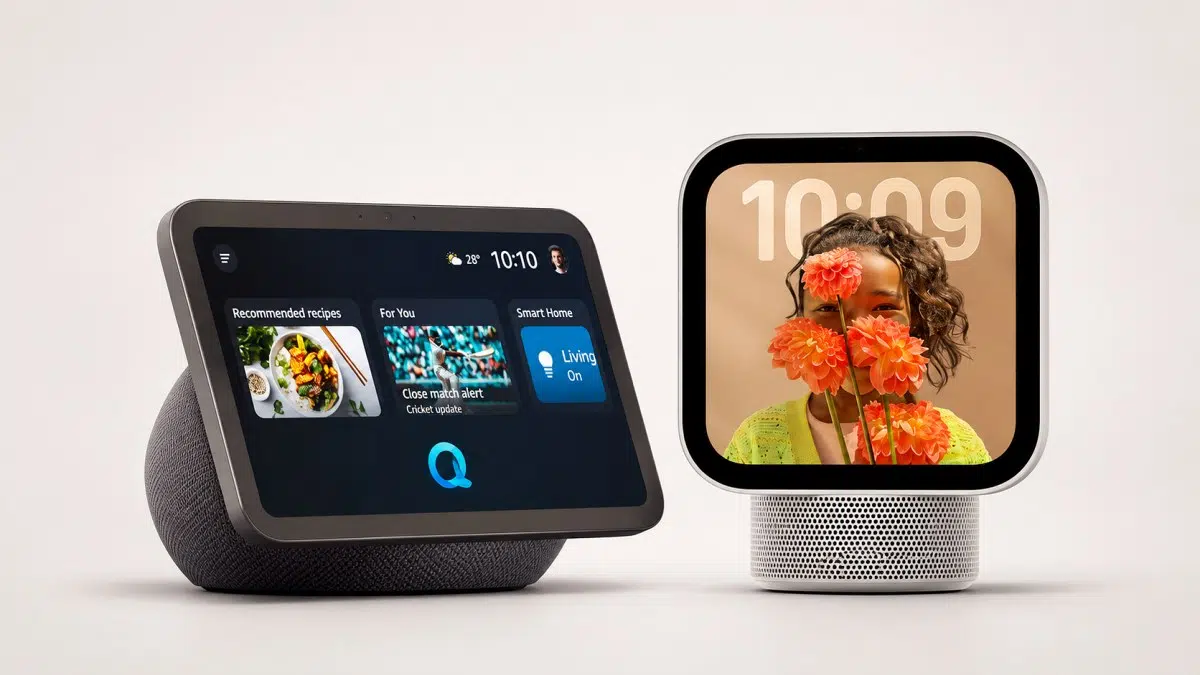
Apple HomeView has a more distinctive appearance. Its 7-inch square touchscreen sits on a domed aluminium speaker base connected through a stainless-steel hinge. I like its adjustable display, which lets me change the viewing angle as needed. Apple also offers a wall-mounted model.
Amazon takes a more familiar approach. The Echo Show 8 has a larger landscape display attached to a rounded, fabric-covered speaker base. Its screen lacks the adjustable hinge mechanism as HomeView, though Amazon sells a separate adjustable stand.
| Design specifications | Apple HomeView (Tabletop) | Amazon Echo Show 8 (4th Gen) |
|---|---|---|
| Height | 5.38–6.82 inches | 5.9 inches |
| Width | 5.73 inches | 8.3 inches |
| Depth | 3.78–5.13 inches | 5 inches |
| Weight | 2.1 lbs (952 g) | 2.3 lbs (1.04 kg) |
| Display orientation | Square | Landscape |
| Wall-mounted option | Yes | No |
Therefore, HomeView has a more compact footprint and weighs slightly less, making it easier to fit on a bedside table or smaller counter.
My pick: Apple HomeView. Its aluminium construction, adjustable screen, and wall-mounting option make it more versatile. However, Echo Show 8’s larger landscape display makes more sense for watching videos and following recipes.
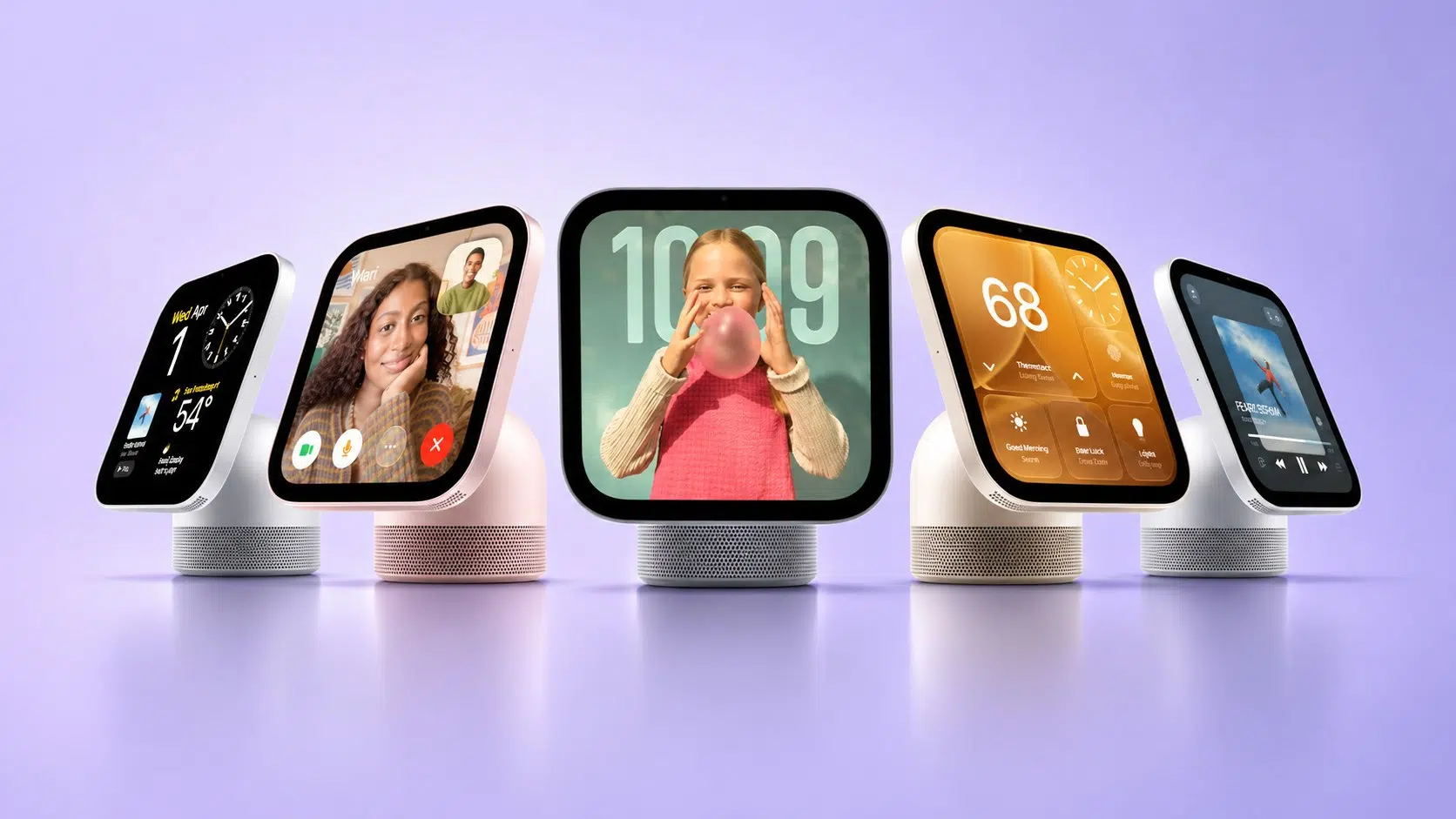
This is where the comparison gets interesting. HomeView has a smaller 7-inch square display, while Amazon gives me an 8.7-inch landscape touchscreen.
Apple’s Liquid Retina display has a resolution of 1,088 × 1,088 pixels and a pixel density of 220 PPI. It also supports True Tone, which adjusts the screen’s colour temperature according to the surrounding lighting. You can add playful faces like Snoopy, plus options like Calendar, Weather, and more.
On the other hand, Echo Show 8 has an HD panel with a resolution of 800 × 1,340 pixels and a lower pixel density of 179 PPI. That means HomeView should offer sharper text and interface elements.
My pick: It depends on how you use it. I’d choose HomeView for checking widgets, photos, everyday information and smart home controls. But if you regularly watch videos or follow recipes on a smart display, the Echo Show 8 is better. It gives more room to view information without scrolling or switching between screens.
A smart display becomes much more useful when I can interact with it naturally instead of remembering specific commands.
Instead of adding standard Siri, which uses basic voice commands, HomeView integrates the new Siri AI. The Apple Intelligence-powered assistant can understand follow-up requests, use personal context for relevant answers, and help manage everyday activities through natural conversation.
Amazon’s Alexa+ is also powered by generative AI and goes beyond traditional voice commands. It can hold more natural conversations with follow-ups, remember preferences to suggest content and recipes, manage schedules, play music, and connect with supported services like booking tickets, shopping, etc.
The best part is Alexa+ can use the camera to identify objects, recognise items, and provide useful information. Currently, HomeView can only recognize up to six household members. It lacks advanced on-device visual intelligence features.
My take: I prefer Siri AI as I already use Apple’s ecosystem. Its integration with personal information and smart home controls makes HomeView a more useful household assistant. However, Alexa+ remains appealing because it works with more smart home brands.
This is probably the most important consideration before buying either display.
HomeView integrates with Apple’s Home app and supports HomeKit-compatible accessories, Matter, and Thread. That makes it a natural choice if I’ve already invested in Apple’s smart home ecosystem and already manage compatible accessories through Apple Home.
The Echo Show 8 supports Alexa, Matter, Thread, and Zigbee. Its built-in Thread border router and established Alexa integrations give it an advantage when connecting accessories from different manufacturers. For example, someone who already owns Ring products will probably find the Echo Show 8 more convenient.
I also really like Amazon’s Omnisense technology, which combines the camera, ultrasound, Wi-Fi radar, and temperature sensing to understand what’s happening around the device. This allows Alexa to trigger smart home routines based on activity or presence, such as turning on compatible lights when someone enters a room.
Amazon wins this category for me because Alexa supports a wider range of smart home products and makes home automation feel more proactive.
Privacy matters when a camera- and microphone-equipped device stays connected in a shared living space.
Apple takes an interesting approach with HomeView. Its A18 chip uses Secure Enclaves to process camera and microphone data in a protected environment. Apple says the audio and visual information used for face and voice recognition isn’t accessible to Apple or other apps and isn’t recorded or stored.
HomeView can also recognise up to six household members, giving each person a separate profile with access to Messages, Calendar, and personal playlists. However, personal information appears only when the device recognises the person and their paired iPhone or iPad is nearby, connected to the same Wi-Fi network, and recently unlocked.
Amazon takes a more traditional approach. The Echo Show 8 has a physical button that disables its camera and microphones. I can also disable the camera separately and review or delete voice recordings through the Alexa app or directly on the device.
My pick: Apple HomeView. Its individual profiles are a meaningful advantage for a shared family display. Yet, Amazon should be praised for user-friendly physical control of the camera and microphone.
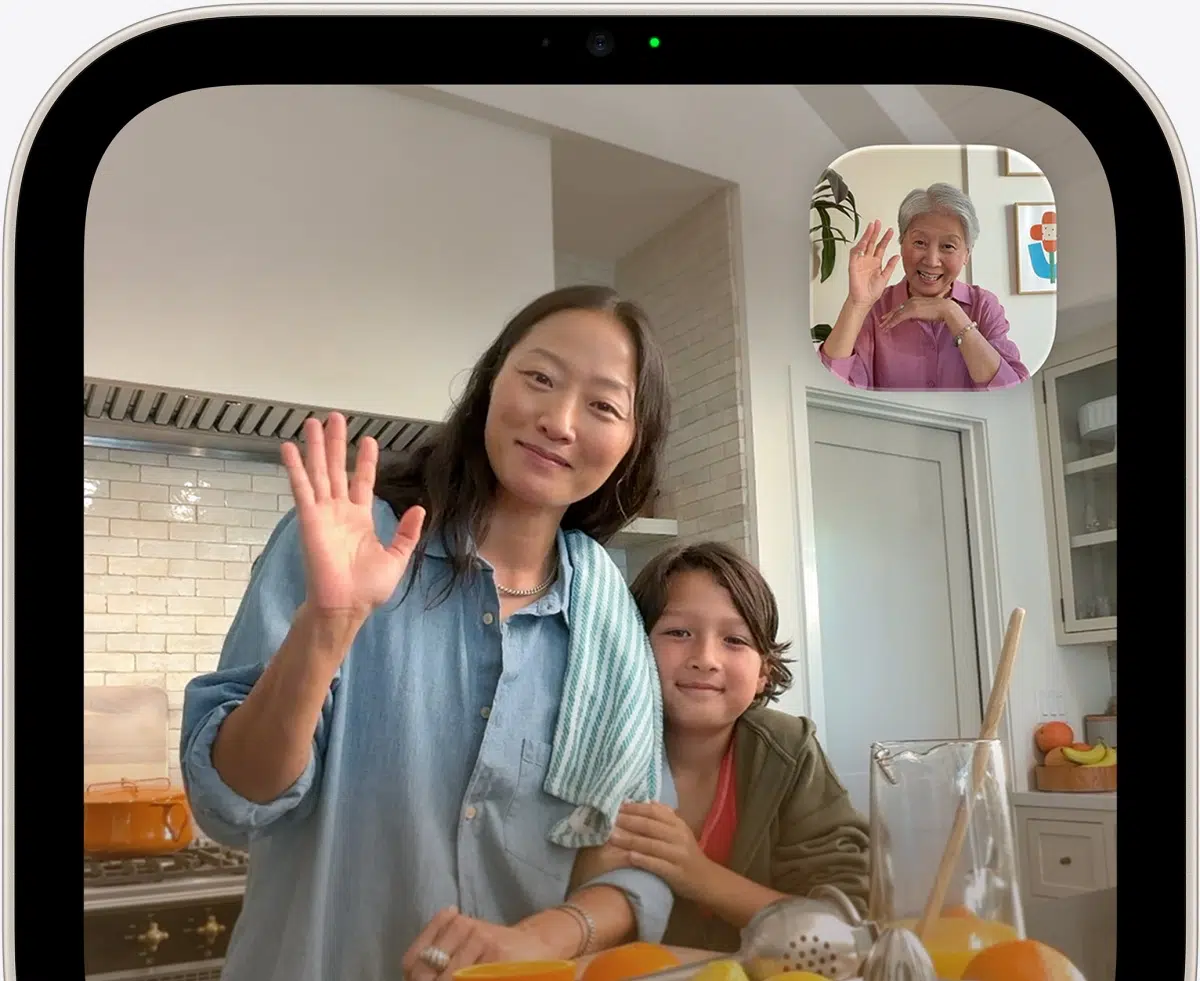
Both displays have capable cameras, but they rely on different calling platforms.
HomeView features a 12MP Center Stage camera that automatically adjusts framing during FaceTime calls. You can send messages from HomeView. The Echo Show 8 has a 13MP camera with auto-framing and supports Alexa Calling and Zoom.
I’d choose HomeView if most of my family uses Apple devices. FaceTime integration makes it a convenient option for that household. Echo Show 8 makes more sense if you prefer Alexa Calling or Zoom.
Entertainment is a different story, though.
HomeView has a capable speaker setup with two full-range drivers, a down-firing woofer, dual passive radiators, Dolby Atmos Spatial Audio, and AirPlay support. The wall-mounted version has a simpler two-driver configuration. You can enjoy music, podcasts, audiobooks, TV, and more via native apps.
The Echo Show 8 uses a 2.8-inch woofer and two full-range drivers for spatial audio. Its biggest advantage is video streaming. The device works with Netflix and Prime Video services, whereas HomeView does not have standalone video streaming apps yet.
My pick: Echo Show 8 for entertainment. HomeView has interesting audio hardware, but Amazon’s streaming support makes its display more versatile.
Apple HomeView starts at $299, compared with $199.99 for the Echo Show 8. That’s a considerable difference for devices that share many basic functions.
| Value consideration | Apple HomeView | Echo Show 8 |
|---|---|---|
| Starting price | $299 | $199.99 |
| Display | Sharper, smaller | Larger |
| Smart home compatibility | Apple-focused | Wider |
| Entertainment | More limited | More flexible |
| Mounting | Tabletop or wall-mounted | Tabletop |
| Personalisation | Individual household profiles | Alexa personalisation |
HomeView’s higher price buys a premium design, A18 processor, sharper display, FaceTime, deeper Apple Home integration, and individual household profiles.
But those features won’t matter equally to everyone. If you mainly want to control lights, set timers, listen to music, and watch videos, the Echo Show 8 already covers those needs for less money.
My take: Echo Show 8 offers better value, while HomeView offers a more premium experience.
If I had to choose between these two smart displays, I’d buy the Apple HomeView for an Apple-focused household. Its design, individual profiles, FaceTime integration, and wall-mounting option make it a more interesting addition to an Apple-powered home.
However, I wouldn’t recommend spending $299 simply because it’s an Apple product.
The Echo Show 8 is the more practical all-round purchase for someone who wants a larger screen, better entertainment options, wider smart home compatibility, and a lower price. It also makes more sense if the household already uses Alexa or Ring products. It’s ideal for most people, especially first-time smart display buyers.
Which smart display do you think is a better household assistant? Let us know in the comments below!

As an Amazon Associate, iGeeksBlog earns from qualifying purchases.