FaceTime Like a Pro
Get our exclusive Ultimate FaceTime Guide 📚 — absolutely FREE when you sign up for our newsletter below.

FaceTime Like a Pro
Get our exclusive Ultimate FaceTime Guide 📚 — absolutely FREE when you sign up for our newsletter below.


Google Messages is more powerful than it looks. Here are 9 hidden features and must-enable settings that make texting smarter, cleaner, and more useful.
I used to treat Google Messages like a boring SMS inbox where OTPs, bank alerts, delivery updates, and the occasional “where are you?” message piled up. But after spending time inside its settings, RCS options, and newer AI tools, I realized the app has quietly become one of the most useful productivity tools on Android.
The problem is that many of its best features are easy to miss. Some are tucked inside small menus, some rely on long-press gestures, and a few depend on your region, device, or RCS availability.
After testing them in daily use, these are the Google Messages hidden features and settings that actually make texting faster, cleaner, and more useful.
Here are the most useful Google Messages features I think every Android user should know about.
This is the feature that made me take Google Messages seriously.
Scheduling texts sounds simple until you start using it for birthday wishes, work follow-ups, bill reminders, or messages you think of late at night but don’t want to send immediately.
If something crosses my mind at midnight, I write it right away and schedule it for the next morning. That way, I don’t forget, and I also don’t become the person sending random work messages while everyone else is asleep.
Here’s how to schedule a message in Google Messages:
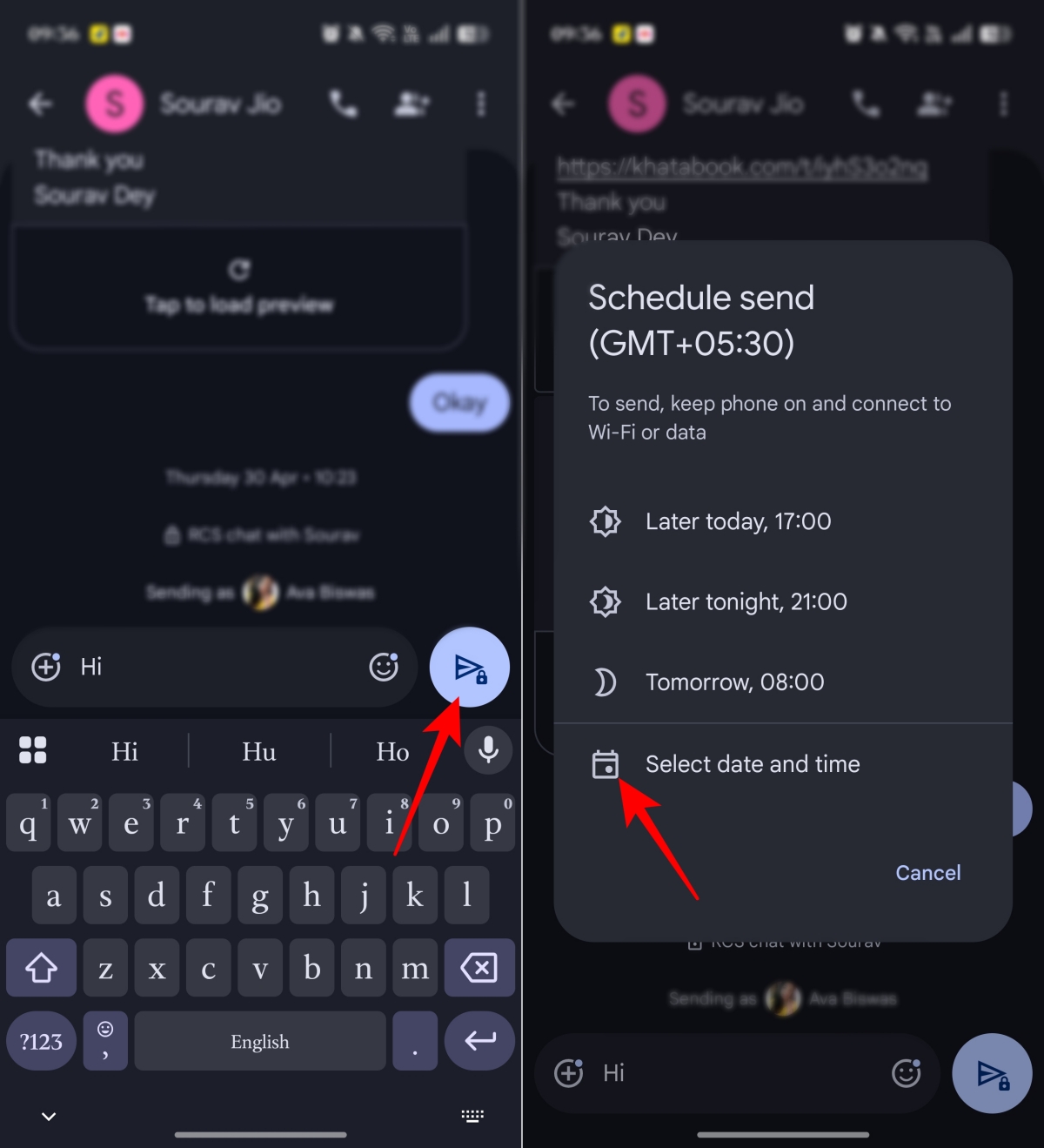
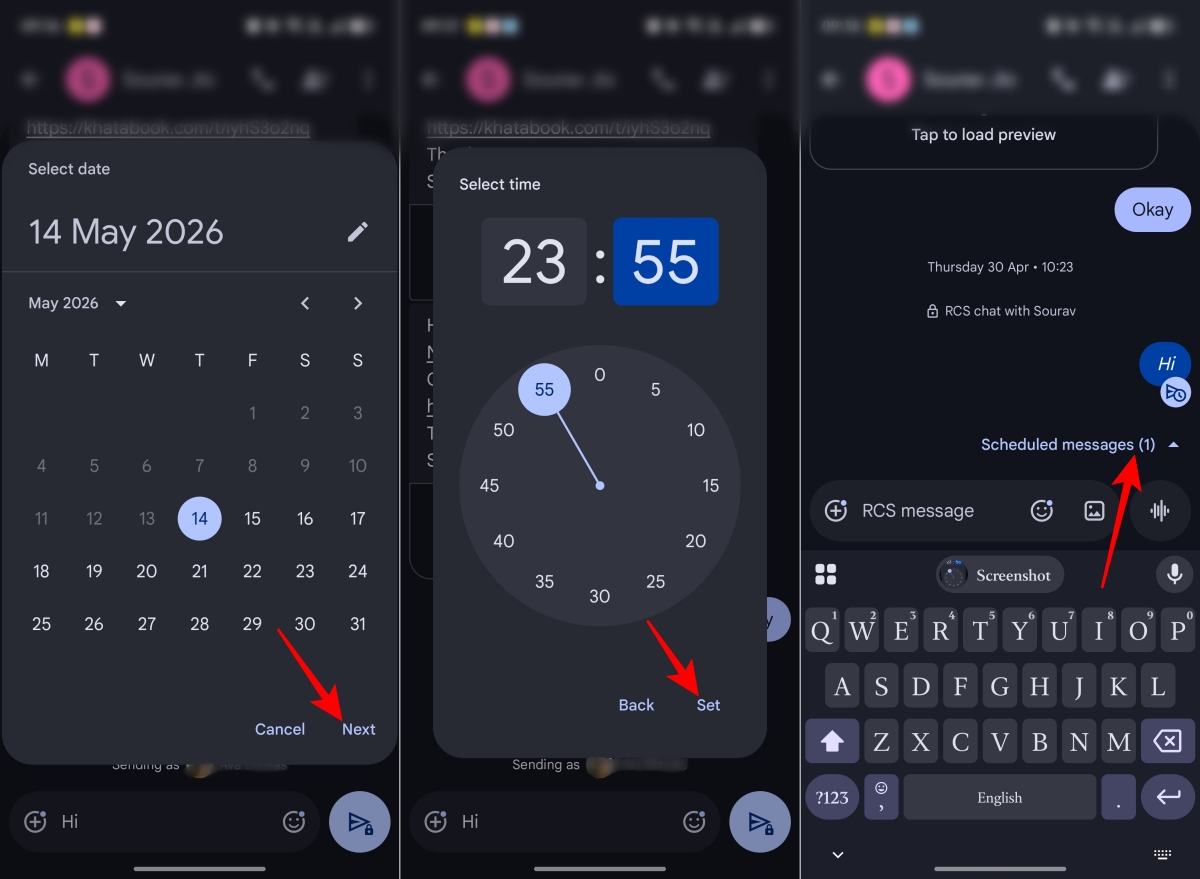
Your message will appear in the chat with a scheduled indicator. You can tap it to update the text or delete it.
One thing to remember: your phone must be turned on and connected to mobile data or Wi-Fi at the scheduled time for the message to send successfully.
This sounds almost too simple, but it has become one of my favorite Google Messages tricks.
Instead of opening a notes app, creating a new note, naming it, and deciding where it belongs, I just message myself.
I use it for:
It is not elegant, but it is fast. And fast usually wins.
The best part is that everything also syncs with Google Messages for Web, so those quick notes are available on your computer too.
Here’s how to message yourself:
I also recommend pinning this conversation to the top. Touch and hold the conversation, then tap the Pin icon.
Google Messages is not just plain text anymore.
Once I noticed it had iMessage-like screen effects, I started using it more for greetings, celebrations, and quick reactions.
Typing certain phrases can trigger full-screen animations. For example:
Depending on the phrase, you may see effects like balloons, confetti, fireworks, hearts, thumbs-up, laughter, or sunrise-style animations.
Here’s how to use message effects:
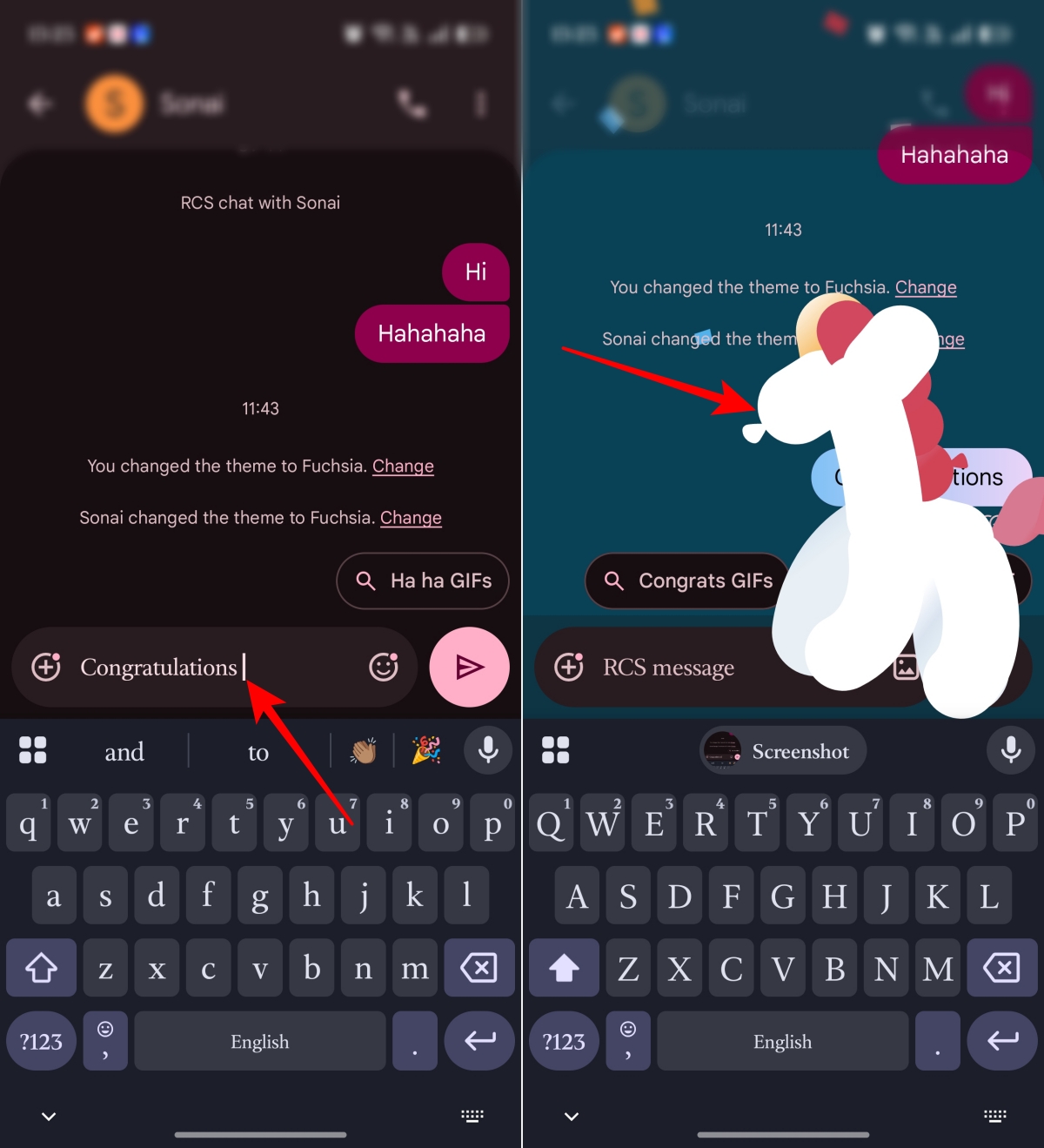
It is a small feature, but it makes simple messages feel more personal without needing stickers or extra apps.
Nudges are one of those features I ignored at first and now genuinely appreciate.
Google Messages can detect conversations you may have forgotten to respond to and gently bring them back to the top. It can also remind you to follow up when needed.
This is especially useful if your inbox is a mix of:
Important messages can get buried quickly. Nudges help reduce that mental load.
Here’s how to enable nudges:
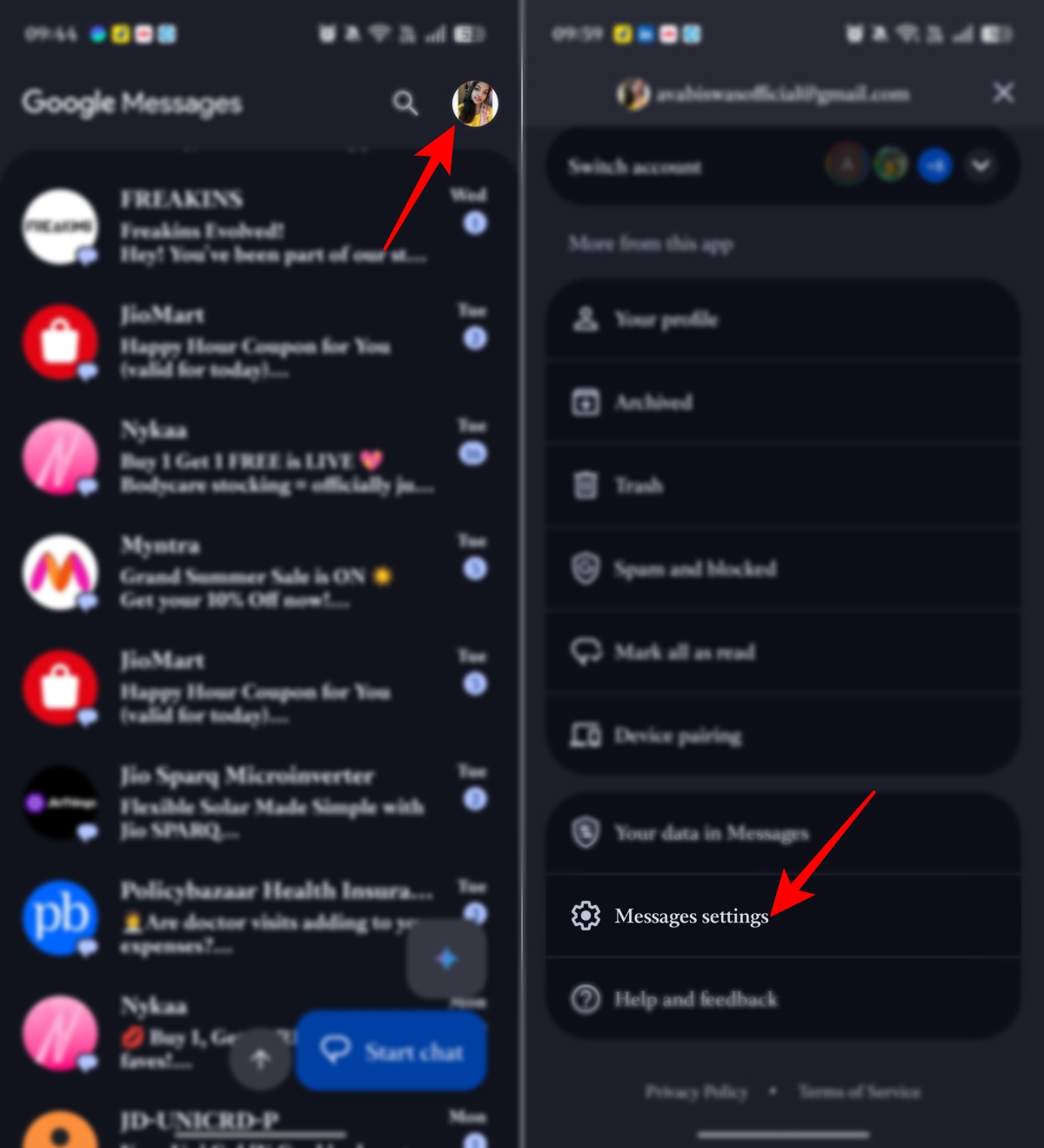
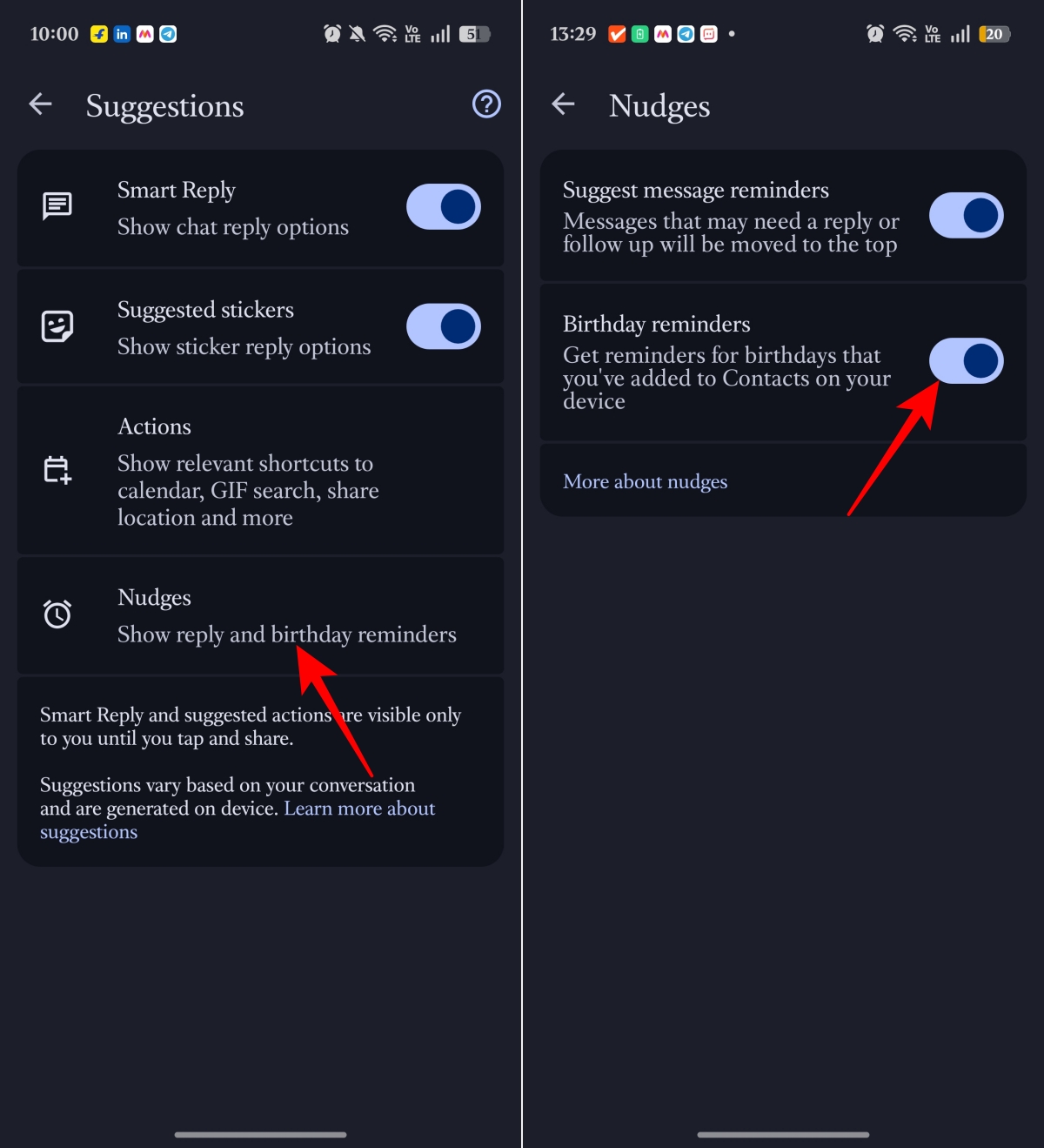
Once enabled, Messages will surface conversations that may need your attention.
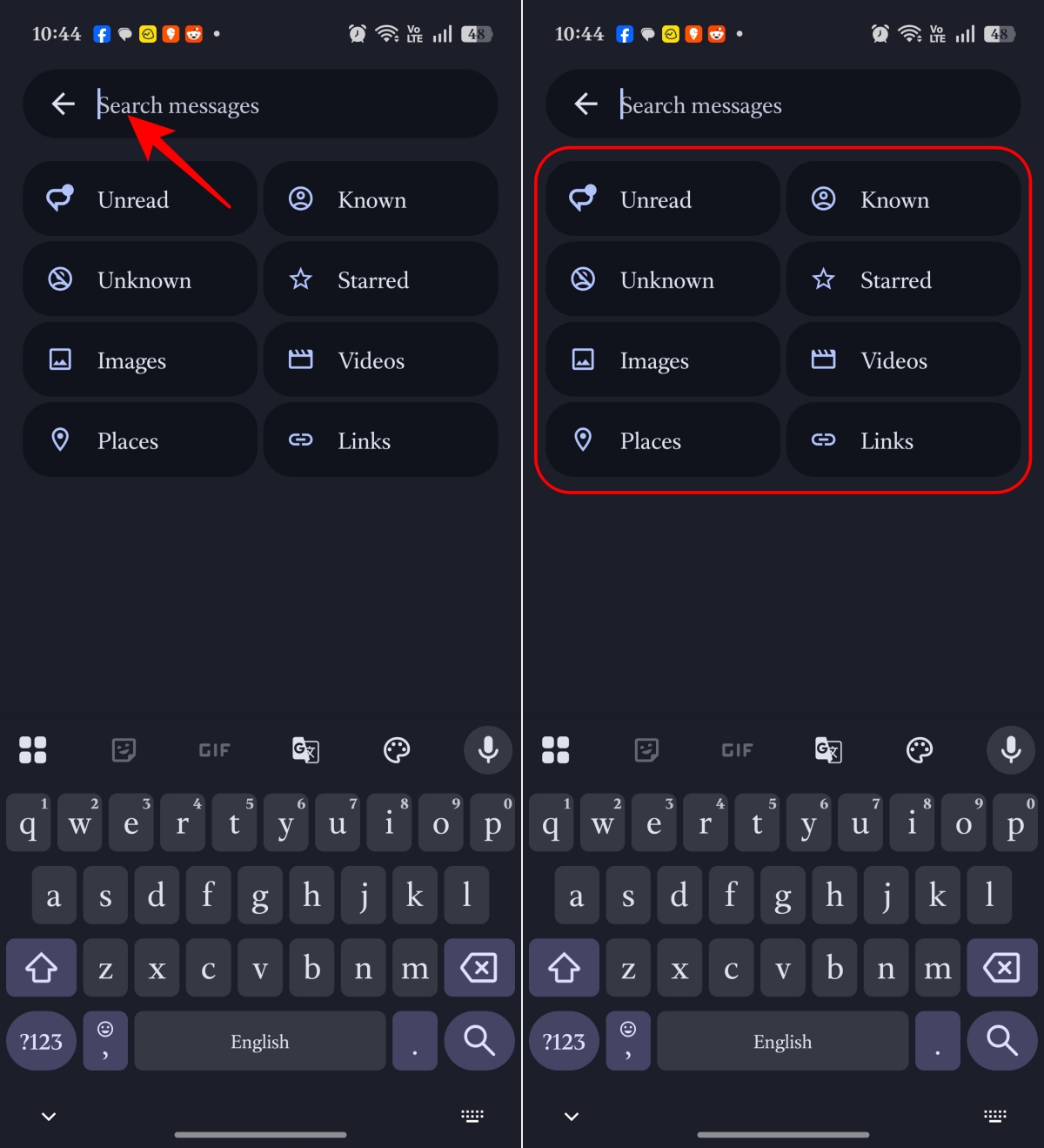
The search inside Google Messages is more powerful than you expect. Similar to iMessage smart search filters, it turns your old conversations into a searchable archive and lets you narrow results by different filters.
So, you can quickly find shared addresses, screenshots, travel details, OTP-related context, payment confirmation, and more within minutes. No more scrolling endlessly!
Not every conversation deserves your attention right now. Some group chats are useful but noisy. Some people send five messages when one would do. Muting them forever can feel too extreme, but letting them interrupt you constantly is worse.
That is where snooze helps. Here’s how to snooze a conversation:
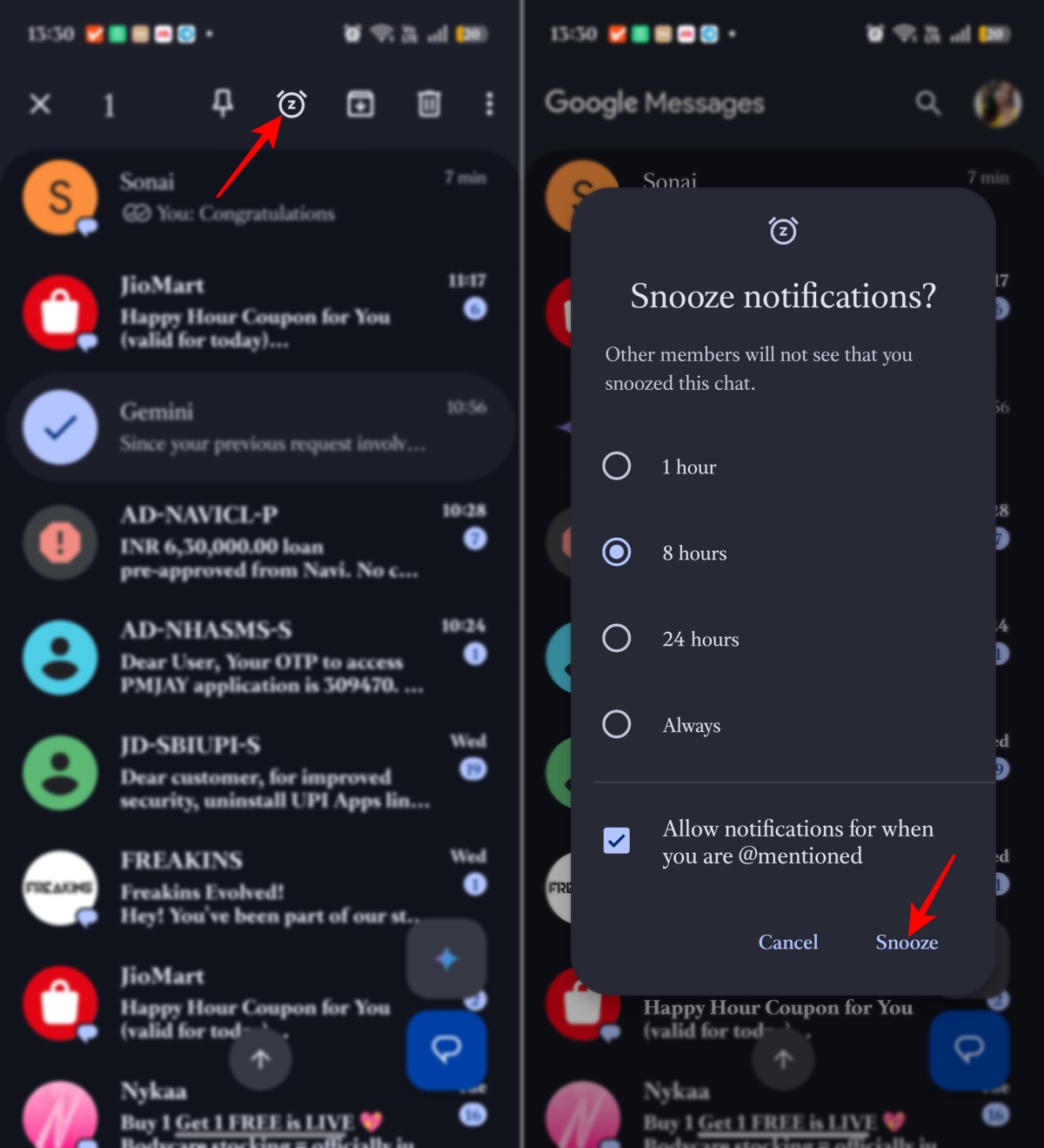
To remove snooze, touch and hold the conversation again and tap the snooze option.
I use this during work, dinner, and sleep. It is less about muting people and more about setting boundaries.
This is where things get interesting.
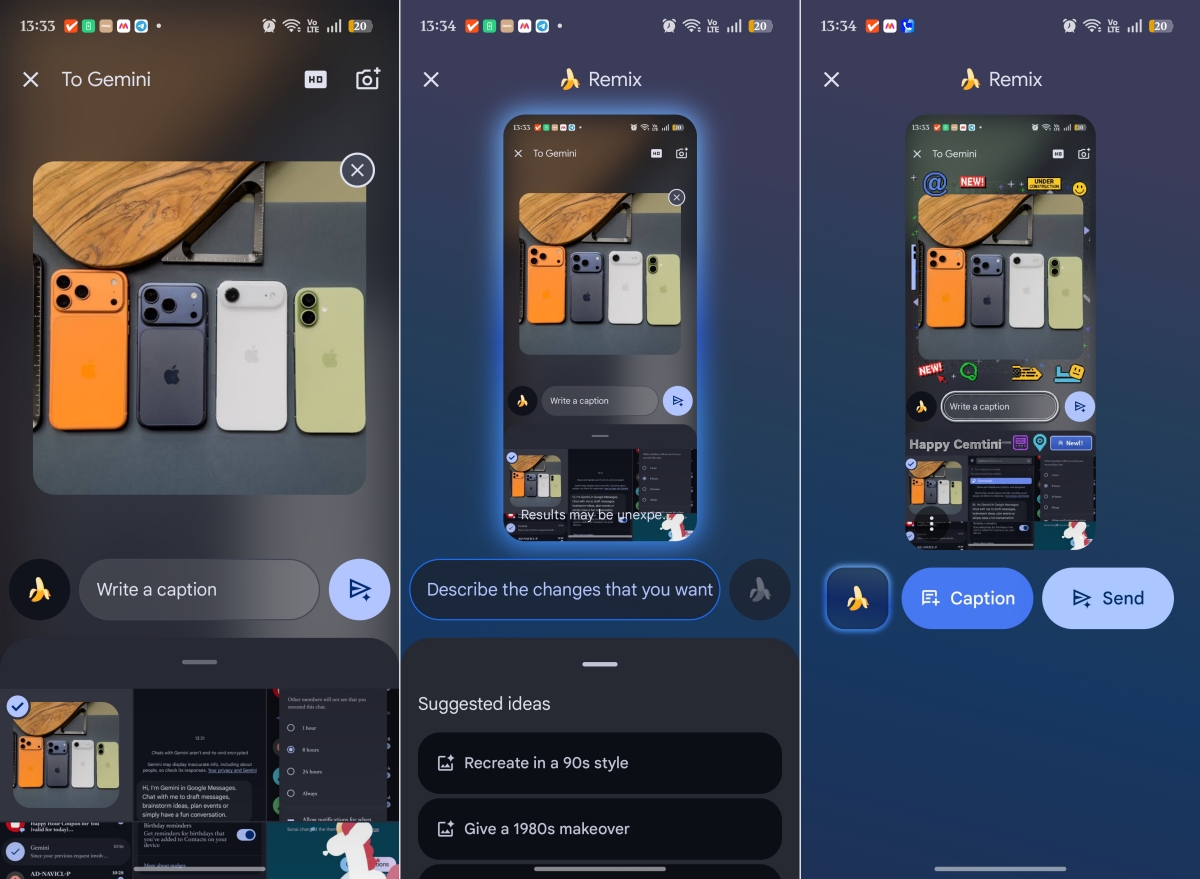
With Gemini inside Messages, you can start a chat with Google’s AI assistant directly from the app and ask for help writing replies, brainstorming plans, translating messages, or remixing images without switching to a separate app.
Google Messages lets you personalize chat bubbles and themes for individual conversations.
It is not as advanced as iMessage’s AI-powered background customization, but it is useful in a practical way. I like using different colors for important chats because it makes conversations easier to identify at a glance and helps avoid texting the wrong person.
Here’s how to change conversation colors:
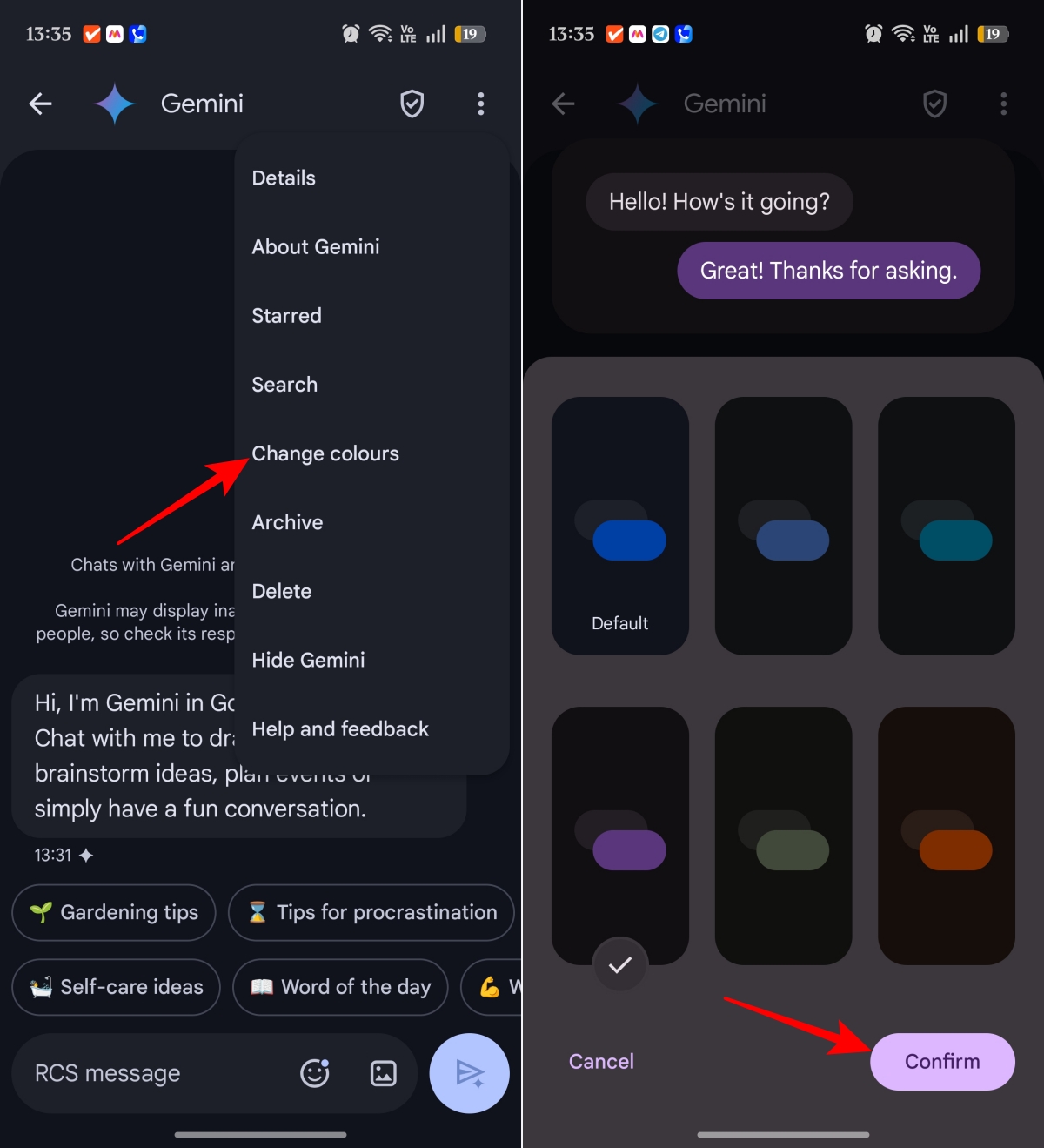
This works best with RCS chats, and availability may vary.
Location sharing is one of those features you do not think about until you need it quickly. I regularly send location pins via iMessage as it’s easier than explaining to someone. It works similarly on Android as well.
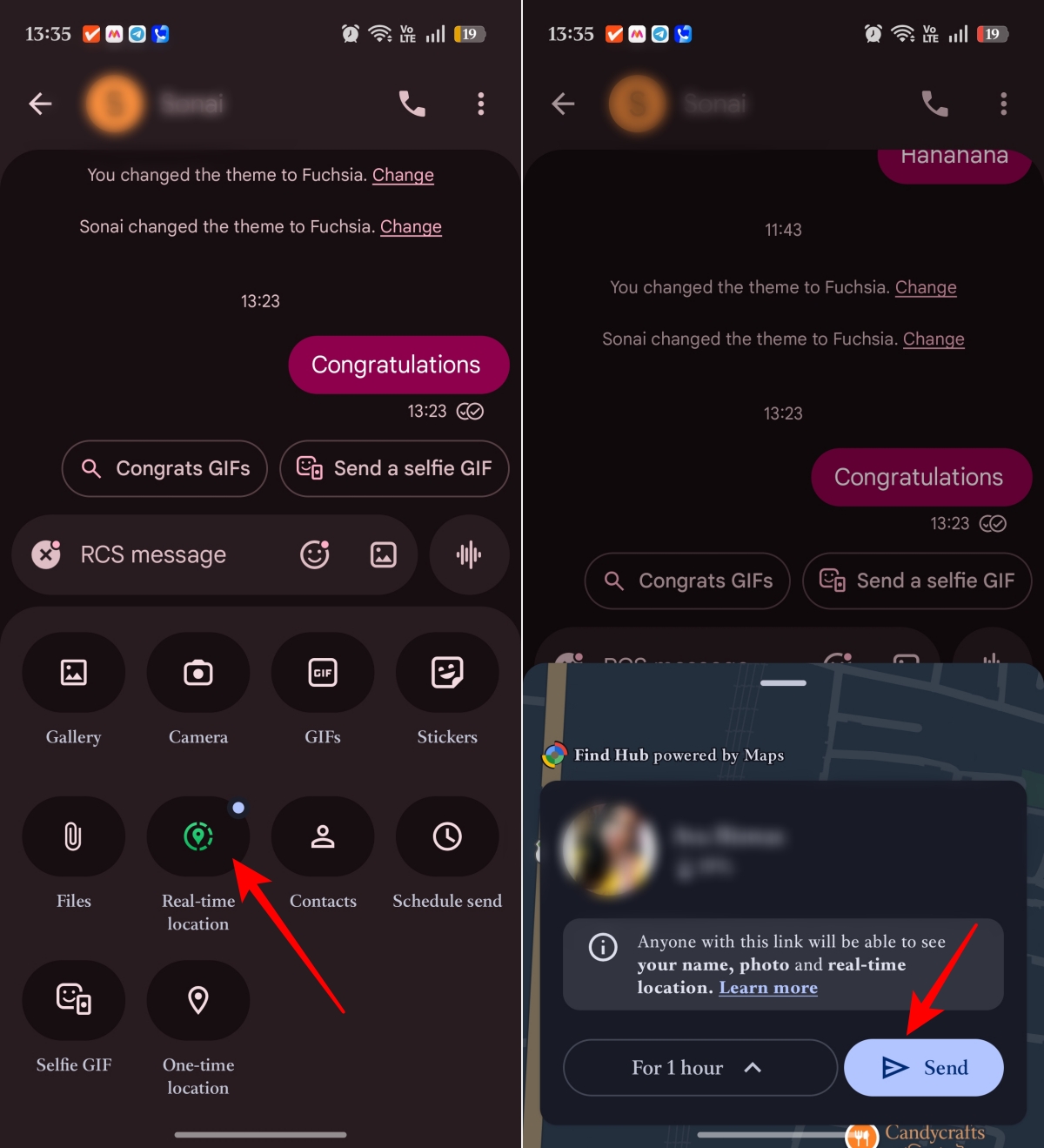
Whether you are guiding a delivery person, helping family find you, or sharing your current spot during travel, doing it from inside the chat is faster than opening a maps app separately.
Some Google Messages features are not just fun extras. They make the app cleaner, safer, and easier to manage. These are the settings I recommend turning on right away.
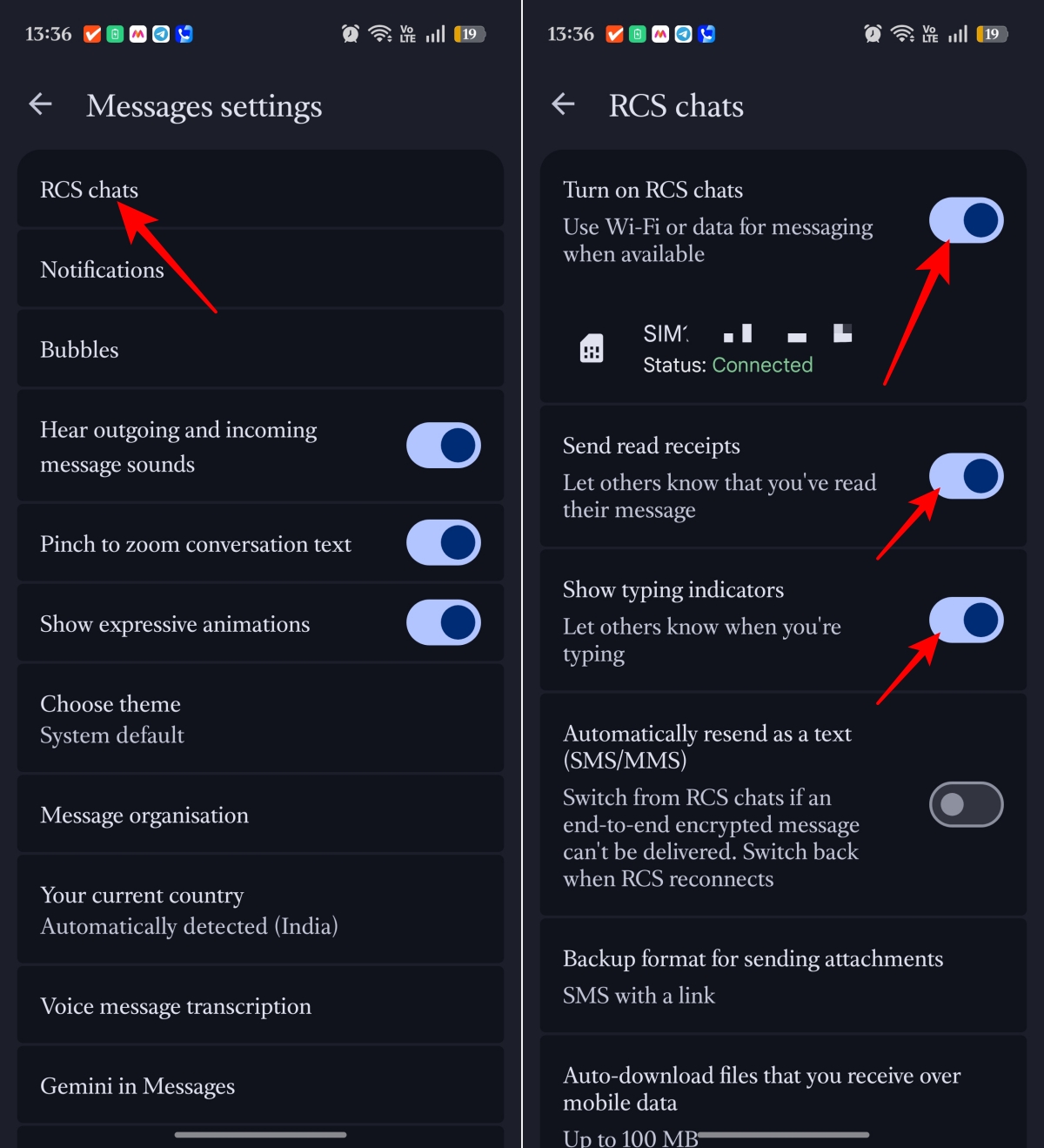
If you are using Google Messages without RCS, you are missing the main reason the app feels like a chat app like WhatsApp. When not enabled, you are basically in old SMS land.
RCS gives you richer messaging features like typing indicators, read receipts, share high-resolution photos and files, improved group chats, and more modern Android-to-Android messaging. Moreover, RCS supports texting between Android and iPhone with end-to-end encryption.
Spam SMS has become overly aggressive to deal with on its own. False delivery links, banking frauds, loan solicitations, phishing attacks, and random promotional offers fill up your inbox.
To enable spam protection:
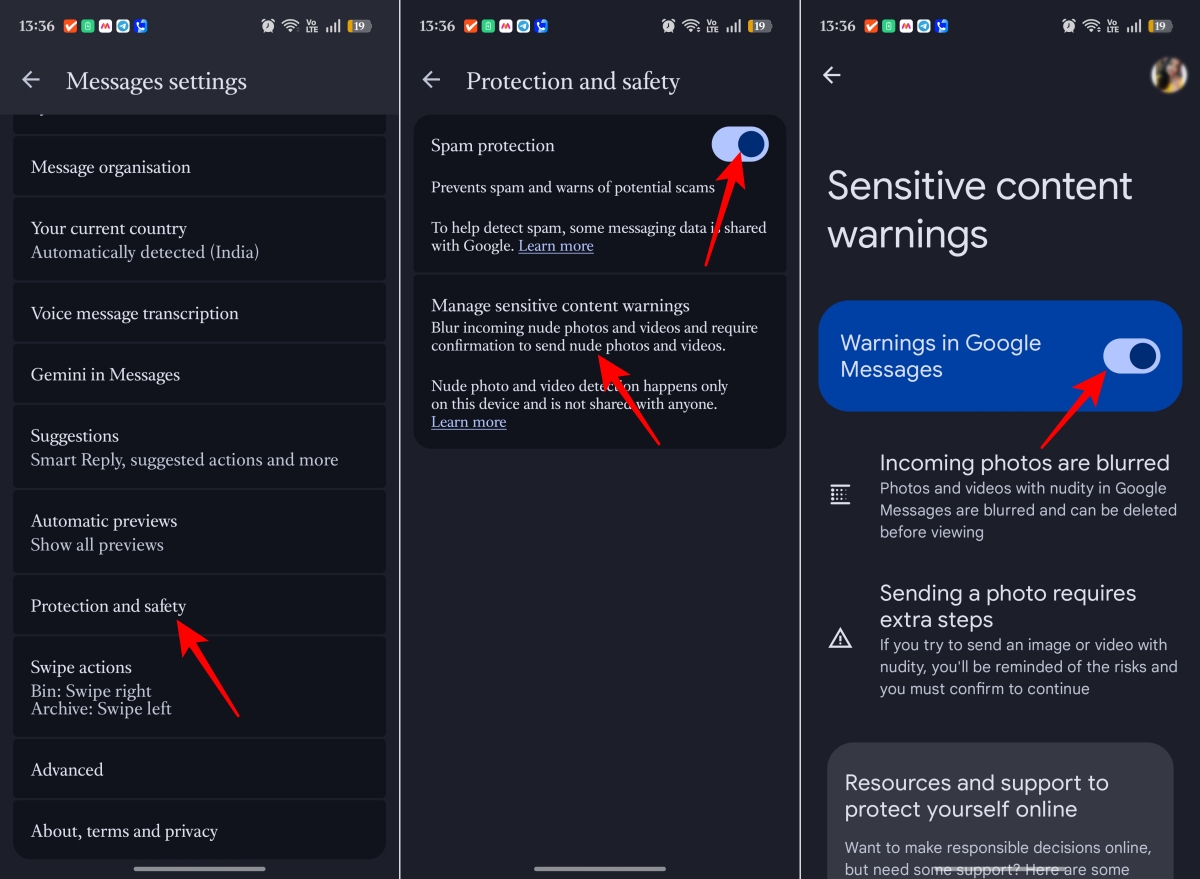
I still recommend checking the spam folder occasionally, just in case something important gets filtered by mistake.
OTP messages are useful for a few seconds and then become clutter.
Google Messages can automatically delete one-time password messages after 24 hours, keeping your inbox cleaner and reducing the amount of sensitive information sitting around.
Here’s how to enable it:
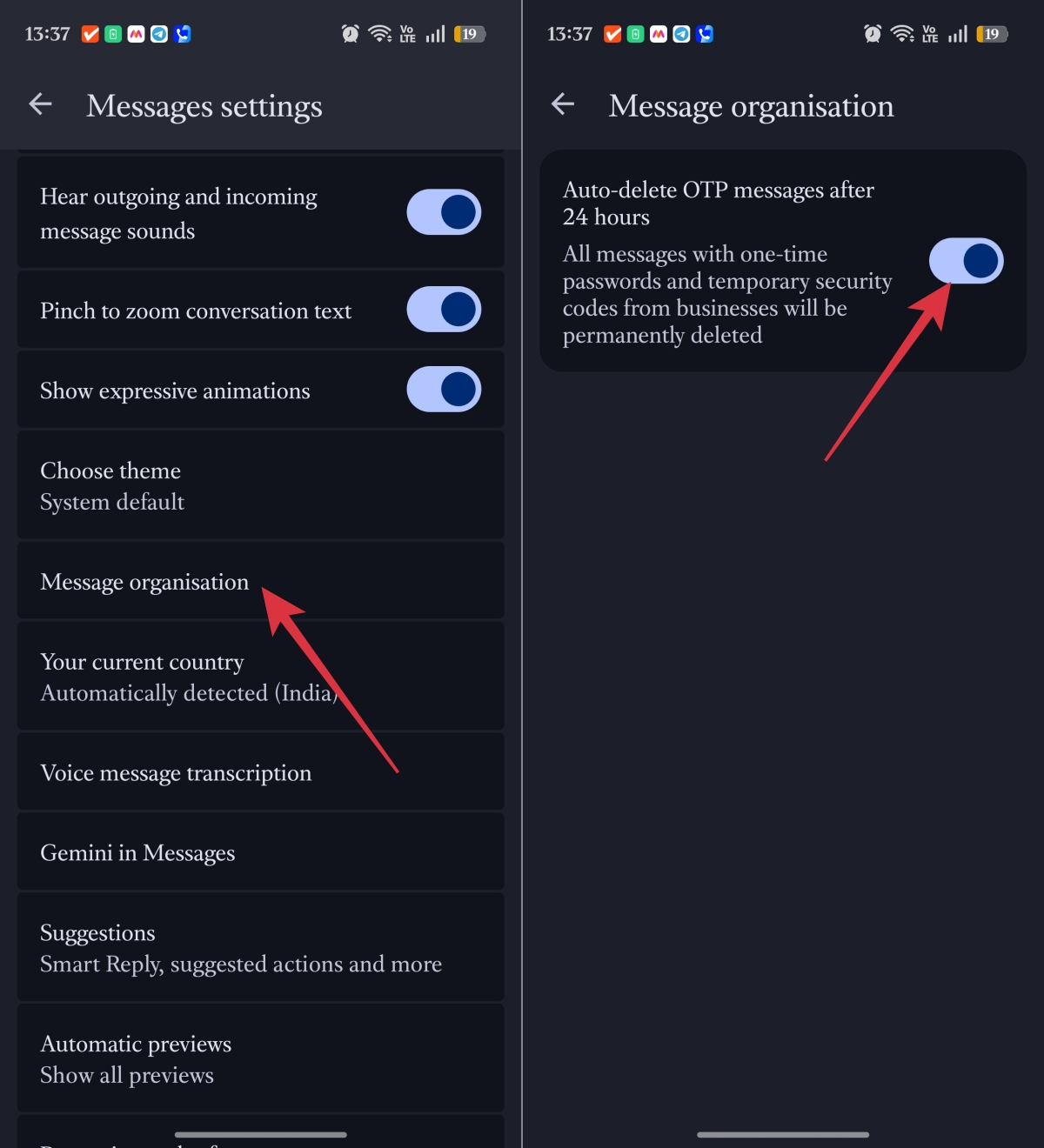
This is one of those settings you barely notice at first, but after a week, your inbox feels much cleaner.
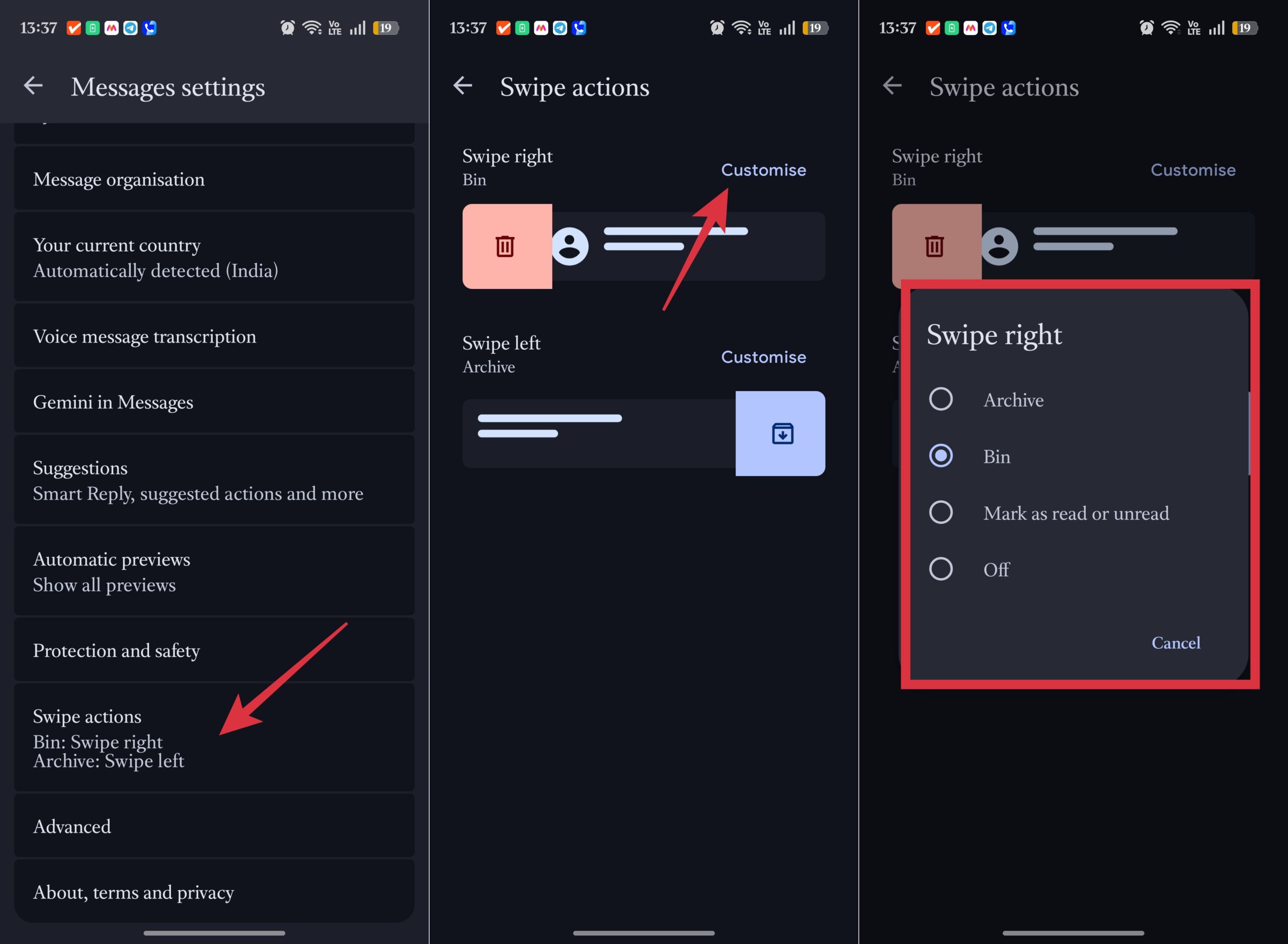
Swipe actions can save a lot of small taps throughout the day.
The default settings may not match how you use your inbox. If you archive more than delete, set swipe to archive. If you prefer clearing messages quickly, set it to delete.
Here’s how:
This is one setting too many people ignore. Your lock screen should not expose OTPs, private messages, bank alerts, or personal conversations to anyone standing nearby.
Here’s how to hide sensitive message previews:
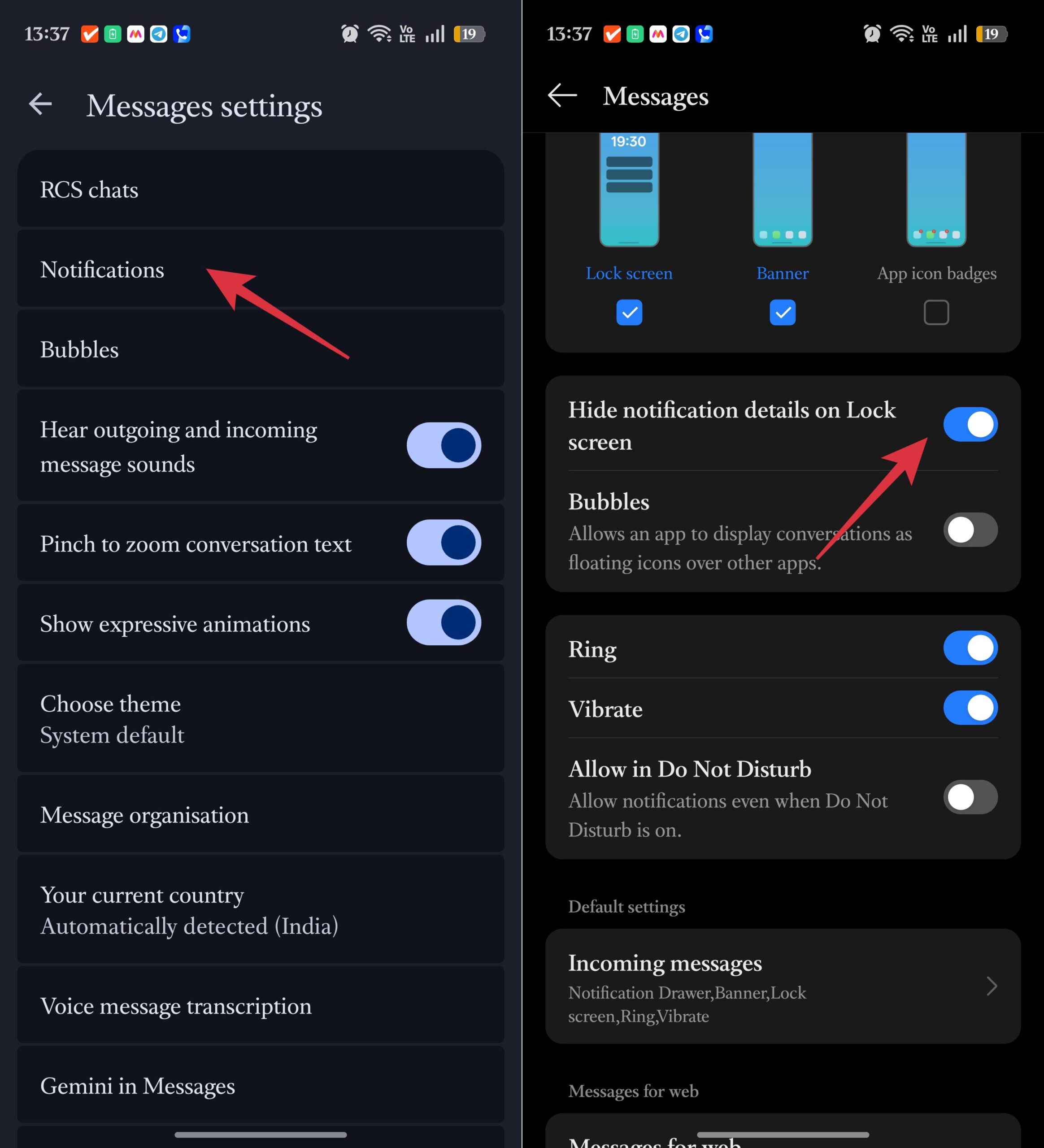
It is a small privacy change, but it makes a real difference.
After using these hidden Google Messages features regularly, I stopped thinking of the app as a basic SMS inbox.
Scheduled texts, self-messaging, nudges, smarter search, Gemini, RCS, spam protection, and OTP cleanup make it far more useful than it first appears.
If you already use Google Messages, spend a few minutes exploring the settings. Once you turn on the right features, the app feels cleaner, smarter, and much more modern.