FaceTime Like a Pro
Get our exclusive Ultimate FaceTime Guide 📚 — absolutely FREE when you sign up for our newsletter below.

FaceTime Like a Pro
Get our exclusive Ultimate FaceTime Guide 📚 — absolutely FREE when you sign up for our newsletter below.


Snapchat introduces Place Loyalty badges to reward visits and turn favorite places into status symbols. Learn how to use them.
 ByVikhyat
Along with helping you stay connected through Snaps and Stories, Snapchat also continues to expand what you can do on Snap Map. One of the latest additions is a feature called Place Loyalty, which tracks how often you visit certain locations and assigns badges based on that activity. Not just a marker, but a ranking based on how often you show up compared to others.
The places you visit regularly, your coffee shop, your gym, your usual hangout, are no longer just pins on a map. They now carry a kind of weight inside the app. You can think of it as a new kind of flex, based on where you actually go.
Place Loyalty is a Snap Map feature that tracks how often you visit a specific location over the past year and assigns you a badge based on how your visits compare with other Snapchatters.
Instead of one-time check-ins, it focuses on repeated visits, so places you go to regularly start reflecting your activity over time. This turns everyday spots like your usual café or gym into something that gets recognized inside the app.
The system is based on tiers, and it’s more competitive than it looks.
These rankings are calculated over the past year, so it’s not about showing up once or twice. It reflects how regularly you visit compared to others.
Your Place Loyalty badges are visible inside Snap Map when you open a place you visit often. Here’s how you can:
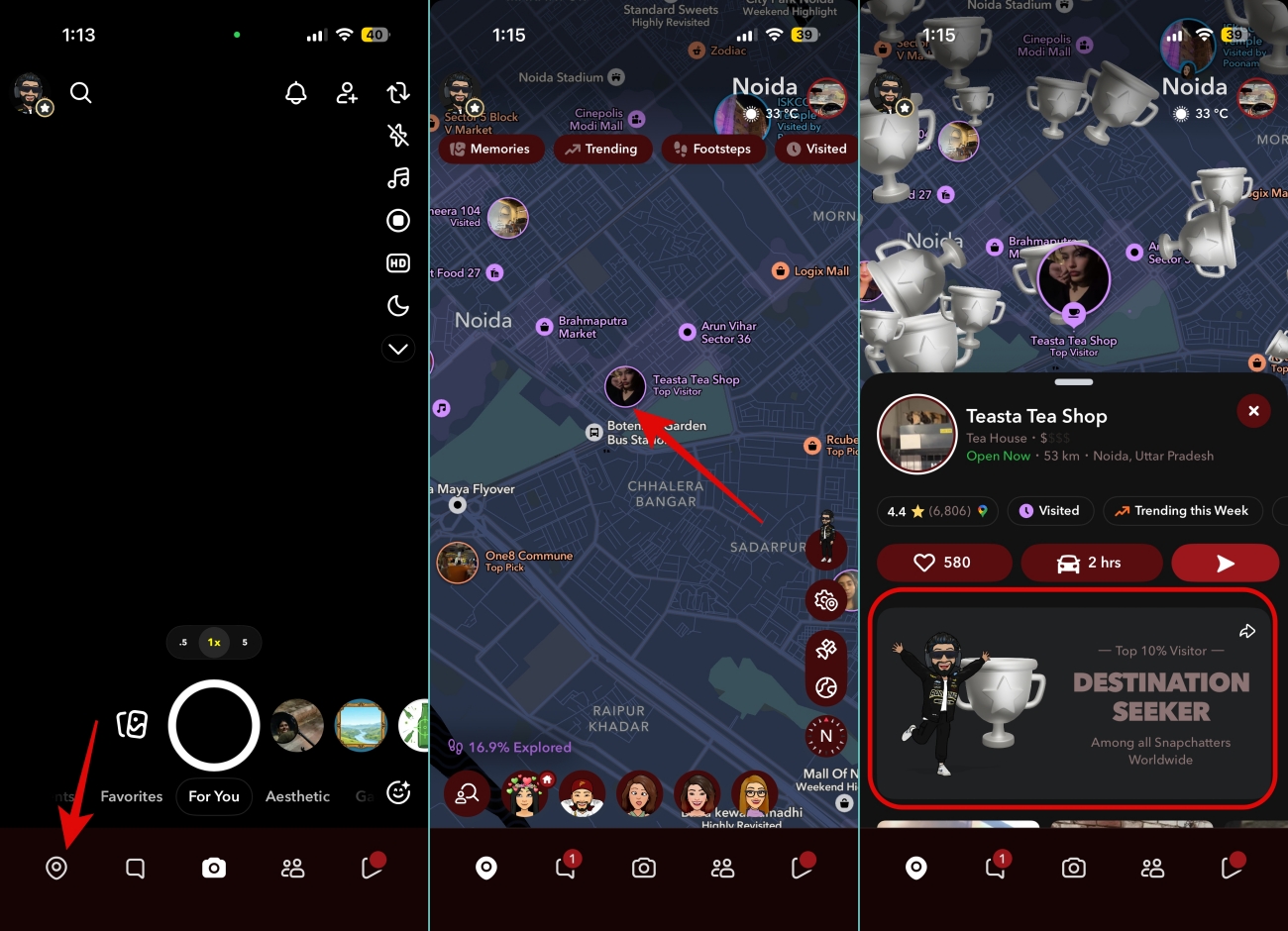
There’s no shortcut here. Snapchat tracks visits automatically, so the only way to move up is to keep visiting the same place consistently. The more often you go compared to others, the higher your ranking.
It’s less about effort and more about routine.
Place Loyalty works only if you’ve chosen to share your location on Snap Map. Snapchat doesn’t assign or update these badges in the background unless location access is enabled, so the feature is entirely tied to your existing location settings.
Your rankings are also private by default. The badge, your tier, and how often you visit a place are visible only to you inside the place card. They don’t show up on your public profile or get shared with friends automatically.
If you’re using Ghost Mode or have location sharing turned off, Snapchat won’t track your visits for this feature. And even when it’s enabled, you still control who can see your location through Snap Map settings.
This update reflects a shift in how people use social apps. It’s no longer just about what you post; it’s also about where you go and how often you return.
For users, this shows up as light gamification. Visiting the same place repeatedly can move you up in ranking, even if you’re not actively trying to.
For brands and physical locations, this turns repeat visits into something more actionable. Regular customers are no longer just part of foot traffic. They can be identified as top visitors based on actual behavior.
This also opens up new ways for brands to engage users. For example, businesses can run campaigns where top visitors share a screenshot of their badge and get discounts or perks in return. It turns regular customers into something more visible and gives them a reason to keep coming back.
With features like Promoted Places already part of Snap Map, this brings discovery, real-world visits, and engagement closer together.
And that’s it; this was all you needed to know about the “Place Loyalty” badges on Snapchat. While the feature might look like a small update, it changes how Snap Map works in everyday use. The places you keep going back to now carry context, and over time, that turns into a form of identity on the map. At the same time, it opens up new possibilities for how locations and brands interact with regular visitors.
Would you actually try to earn these badges or just ignore them? Tell us what you think in the comments below.
Also read: