FaceTime Like a Pro
Get our exclusive Ultimate FaceTime Guide 📚 — absolutely FREE when you sign up for our newsletter below.

FaceTime Like a Pro
Get our exclusive Ultimate FaceTime Guide 📚 — absolutely FREE when you sign up for our newsletter below.


Samsung's Galaxy Z Flip8 brings a lighter design, faster chip, and One UI 9, but most Flip7 owners should skip it. See what changed before you upgrade.
Most Galaxy Z Flip7 owners should not upgrade to the Galaxy Z Flip8. Samsung improved the processor, reduced the weight by 8g, and made the folded body 0.6mm thinner. It did not upgrade the displays, camera sensors, battery capacity, charging speeds, RAM, storage options, or IP rating.
The Flip8 is the better model for a new buyer, but it is a weak annual upgrade. For an existing Galaxy Z Flip7 owner, the decision comes down to three things: whether the Flip7’s performance limits your work, whether its battery or hinge already needs attention, and how little you would pay after trade-in.
The processor and dimensions are the only substantial hardware changes. Nearly every component that controls the screen, camera, battery, and day-to-day capacity remains the same.
| Specification | Galaxy Z Flip8 | Galaxy Z Flip7 |
|---|---|---|
| Main display | 6.9-inch Dynamic AMOLED 2X, 2520 x 1080, 1 to 120Hz | 6.9-inch Dynamic AMOLED 2X, 2520 x 1080, 1 to 120Hz |
| Cover display | 4.1-inch Super AMOLED, 1048 x 948, 60/120Hz | 4.1-inch Super AMOLED, 1048 x 948, 60/120Hz |
| Peak brightness | 2,600 nits | 2,600 nits |
| Processor | Exynos 2600; Snapdragon 8 Elite Gen 5 for Galaxy in the U.S. | Exynos 2500 |
| RAM and storage | 12GB; 256GB or 512GB | 12GB; 256GB or 512GB |
| Rear cameras | 50MP wide with OIS + 12MP ultra-wide | 50MP wide with OIS + 12MP ultra-wide |
| Front camera | 10MP | 10MP |
| Battery | 4,300mAh | 4,300mAh |
| Wired charging | 25W | 25W |
| Wireless charging | 15W | 15W |
| Folded dimensions | 85.7 x 75.4 x 13.1mm | 85.5 x 75.2 x 13.7mm |
| Unfolded thickness | 6.1mm | 6.5mm |
| Weight | 180g | 188g |
| Water and dust resistance | IP48 | IP48 |
| Launch software | Android 17 with One UI 9 | Android 16 with One UI 8 |
| Security support | Through July 2033 | Through July 2032 |
| U.S. launch price | $1,199.99 | $1,099.99 |
| India launch price | ₹1,24,999 | ₹1,09,999 |
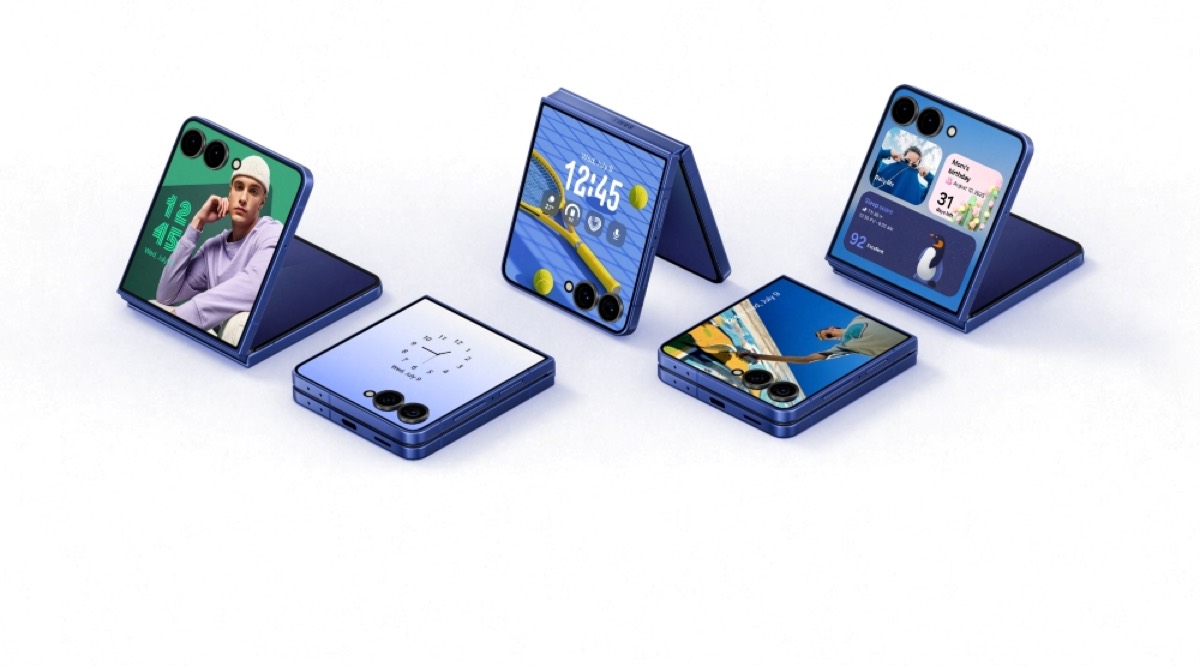
The Flip8 measures 13.1mm when folded, compared with 13.7mm for the Flip7. Unfolded thickness drops from 6.5mm to 6.1mm, and weight falls from 188g to 180g. The new phone is slightly taller and wider, but the reduced thickness and weight should make it easier to carry.
Samsung also revised the Armor FlexHinge and widened the gap around the inner bezel. The change gives your fingers more room to separate the two halves when opening the phone. It improves the mechanism’s usability, but Samsung has not increased the official resistance rating.
Both phones retain an IP48 rating. The “8” provides strong freshwater resistance under Samsung’s test conditions, but the “4” is not a dust-tight rating. Fine sand and dust remain a concern. Both models also use an Armor Aluminum frame and Gorilla Glass Victus 2, so the Flip8 does not offer a clear durability reason to replace a healthy Flip7.
The Flip7 was already the generation that helped Samsung’s foldables feel ready for mainstream buyers. The Flip8 improves portability and opening, not the fundamental design.
Samsung’s global specification sheet lists the Exynos 2600 for the Flip8, and the Indian model uses that chip. The U.S. model gets the Snapdragon 8 Elite Gen 5 for Galaxy instead. Samsung lists the Exynos 2500 for the Flip7.
Samsung claims the Exynos Flip8 delivers 30% faster CPU, 25% faster GPU, and 41% faster NPU performance than the Flip7. For the U.S. Snapdragon version, Samsung claims gains of 41% for CPU, 11% for GPU, and 43% for NPU performance.
Those improvements affect specific workloads:
The RAM remains 12GB on both phones, so the Flip8 does not increase multitasking capacity. Everyday work such as messaging, browsing, streaming, and using cover-screen widgets should not feel 30% to 40% faster.
Samsung’s percentages are platform-level claims, not measurements of sustained speed inside a compact foldable. Independent testing is still needed to measure heat, throttling, and real battery efficiency on both Flip8 processor variants. Upgrade for performance only if the Exynos 2500 is already slowing a workload you use regularly.
Both models use the same 6.9-inch, 2520 x 1080 inner display with a 1 to 120Hz adaptive refresh rate. Their 4.1-inch cover screens also share a 1048 x 948 resolution and 60/120Hz refresh support. Peak brightness remains 2,600 nits.
The Flip8 therefore offers no measurable gain in screen size, sharpness, smoothness, or outdoor brightness. The wider inner bezel makes the phone easier to open, but it does not change the viewing experience. If the display is your main reason for upgrading, keep the Flip7.
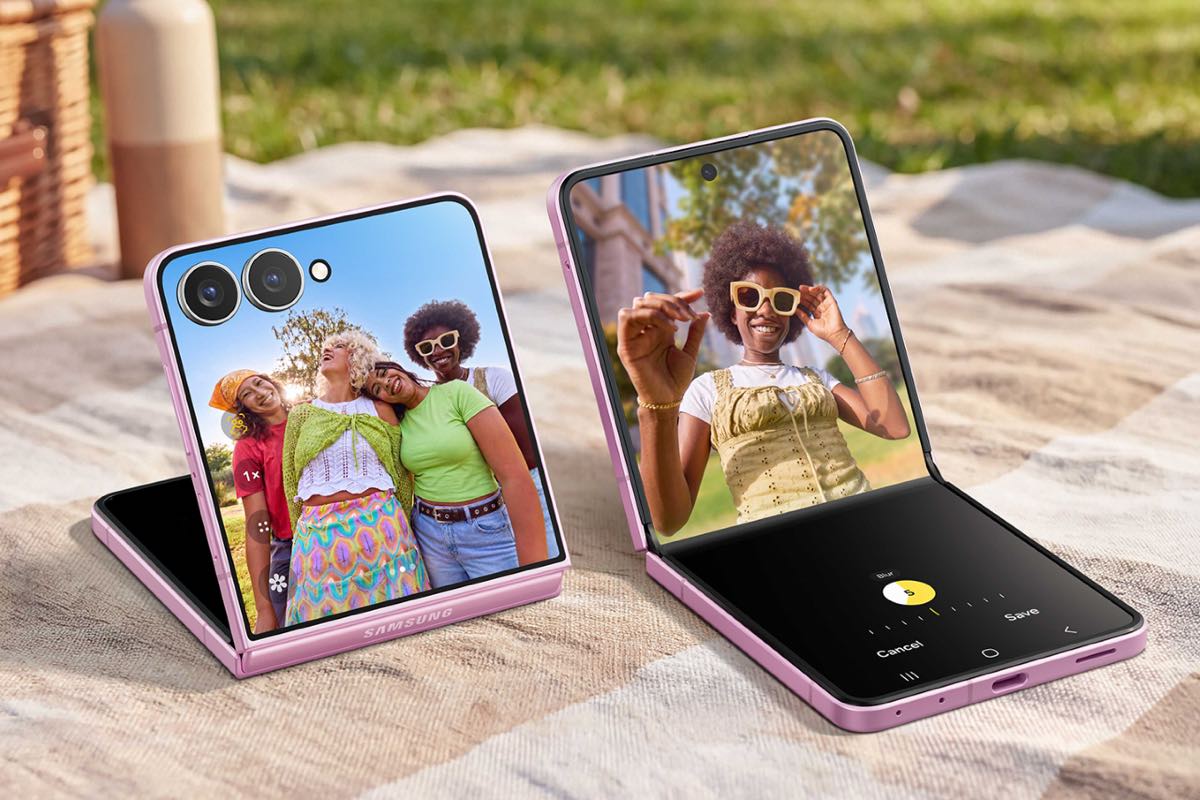
The rear hardware remains a 50MP f/1.8 wide camera with optical image stabilization and a 12MP f/2.2 ultra-wide camera. Both also use a 10MP f/2.2 front camera. Samsung still relies on sensor cropping for 2x “optical quality” zoom, and neither phone has a telephoto camera.
The Flip8 adds camera software such as Dual Recording, Flip Shot, stereo bokeh, and Horizon Lock for steadier video. A newer processor and ProVisual Engine can change image processing, especially for portraits and low-light video. That is different from receiving a larger sensor, a brighter lens, or true optical zoom.
These additions may help creators who specifically want dual-perspective recording or level handheld video. They do not solve the Flip7’s limited zoom range or deliver a clear generational jump in photo hardware. Some camera features may also reach older models through One UI updates, although Samsung has not confirmed the complete Flip7 rollout.
Both phones have a 4,300mAh battery, 25W wired charging, 15W wireless charging, and Wireless PowerShare. Samsung rates each model for up to 31 hours of local video playback.
Samsung says the Flip8 can reach about 55% in 30 minutes with a compatible 25W adapter, compared with 50% for the Flip7 under its launch test. That five-point difference is an optimization, not a charging-class upgrade. You still need the same charger and face the same 25W ceiling.
The newer processor could improve mixed-use endurance, but battery capacity and Samsung’s official playback rating are unchanged. Long-term tests are needed before treating efficiency as a reason to upgrade. If your Flip7 has poor battery life because its cell has degraded, compare the cost of a battery replacement with your net Flip8 upgrade cost. Do not upgrade expecting a much larger battery or meaningfully faster charging.
The Flip8 launches with Android 17 and One UI 9. FlexWindow gains a more accessible app tray, direct widget management, updated Now Brief actions, and deeper Gemini controls from the cover screen.
Quick Share also lets you use AirDrop with supported Android phones, which is useful in a household with iPhones. These are practical improvements, but many are software-based. Samsung has not confirmed which One UI 9 features the Flip7 will receive, so they should not be treated as permanent Flip8 exclusives.
The Flip8’s security support runs through July 2033. The Flip7 is covered through July 2032 and still has roughly six years remaining. One additional year matters to someone buying either phone now, but it is not enough by itself to replace a one-year-old Flip7.
The Flip8 starts at $1,199.99 in the U.S., which is $100 above the Flip7’s launch price. In India, the base price rises from ₹1,09,999 to ₹1,24,999, an increase of ₹15,000.
Do not compare only the advertised trade-in credit. Calculate the actual upgrade cost:
Flip8 price + taxes or fees + replacement accessories – trade-in credit – immediate discounts
Budget for a new case unless your existing one explicitly lists Flip8 compatibility, since the body dimensions have changed. Carrier bill credits also spread savings over time and may lock you into a plan, so they are not equal to an immediate discount.
Use the reason for upgrading, not the model number, to make the decision.
| Your reason for upgrading | Does the Flip8 solve it? | Recommendation |
|---|---|---|
| Faster gaming, video exports, or on-device AI | Yes, through a faster CPU, GPU, and NPU | Consider upgrading if the Flip7 already limits these workloads and the trade-in cost is low. |
| Better battery life | Not clearly; capacity and official playback rating are unchanged | Keep the Flip7, or replace its battery if it has degraded. |
| Faster charging | No; both remain at 25W wired and 15W wireless | Keep the Flip7. |
| Better camera zoom or new sensors | No; the camera hardware is unchanged | Keep the Flip7. |
| A larger or brighter display | No; both panels have the same core specifications | Keep the Flip7. |
| A thinner and lighter phone | Yes; 8g lighter and 0.6mm thinner when folded | Upgrade only if portability is worth the net cost. |
| A failing battery, hinge, or display | Potentially; the Flip8 replaces worn hardware, but damage may reduce trade-in value | Compare the repair quote with the full net upgrade cost. |
| Longer software support | Only one additional year | Do not upgrade for support alone. |
I would set a practical ceiling of about $200 or ₹20,000 after trade-in, discounts, taxes, and accessory costs. Above that, you are paying too much for the processor and chassis improvements while the display, camera hardware, battery, and charging system remain unchanged.
The final answer is straightforward: keep the Galaxy Z Flip7 if it is healthy and fast enough for your use. Upgrade to the Flip8 only for processor-heavy workloads, a damaged or battery-worn Flip7, or an unusually strong trade-in deal. Anyone waiting for better cameras, longer battery life, faster charging, or stronger dust protection should wait for a later generation.
Read More: