FaceTime Like a Pro
Get our exclusive Ultimate FaceTime Guide 📚 — absolutely FREE when you sign up for our newsletter below.

FaceTime Like a Pro
Get our exclusive Ultimate FaceTime Guide 📚 — absolutely FREE when you sign up for our newsletter below.


Learn how to lock Safari’s Private Browsing tabs with Face ID or Touch ID on iPhone, iPad, and Mac, plus extra privacy tips and troubleshooting fixes.


Safari’s Private Browsing is like a “stealth mode” for the internet. It lets you surf the web without saving history, cookies, or other browsing data on your device. But what if you step away from your device and someone tries to check your open tabs? That’s where locked Private Browsing comes in.
By requiring Face ID, Touch ID, or a passcode to reopen your private tabs, Safari makes sure your personal browsing stays protected even when you’re not around. In this guide, I’ll share how to lock Private Browsing tabs on Safari across your iPhone, iPad, and Mac.
Locking your private tabs takes Safari’s privacy game to the next level. When enabled, it offers:
So, when you are doing online banking, health research, or searching for anything you don’t want exposed, locked Private Browsing is your way to go.
Before you jump in, make sure your setup is ready. Here’s what you’ll need:
Note: Although Safari settings sync via iCloud, this lock feature works per device for added security.
Turning this on takes just a few taps:
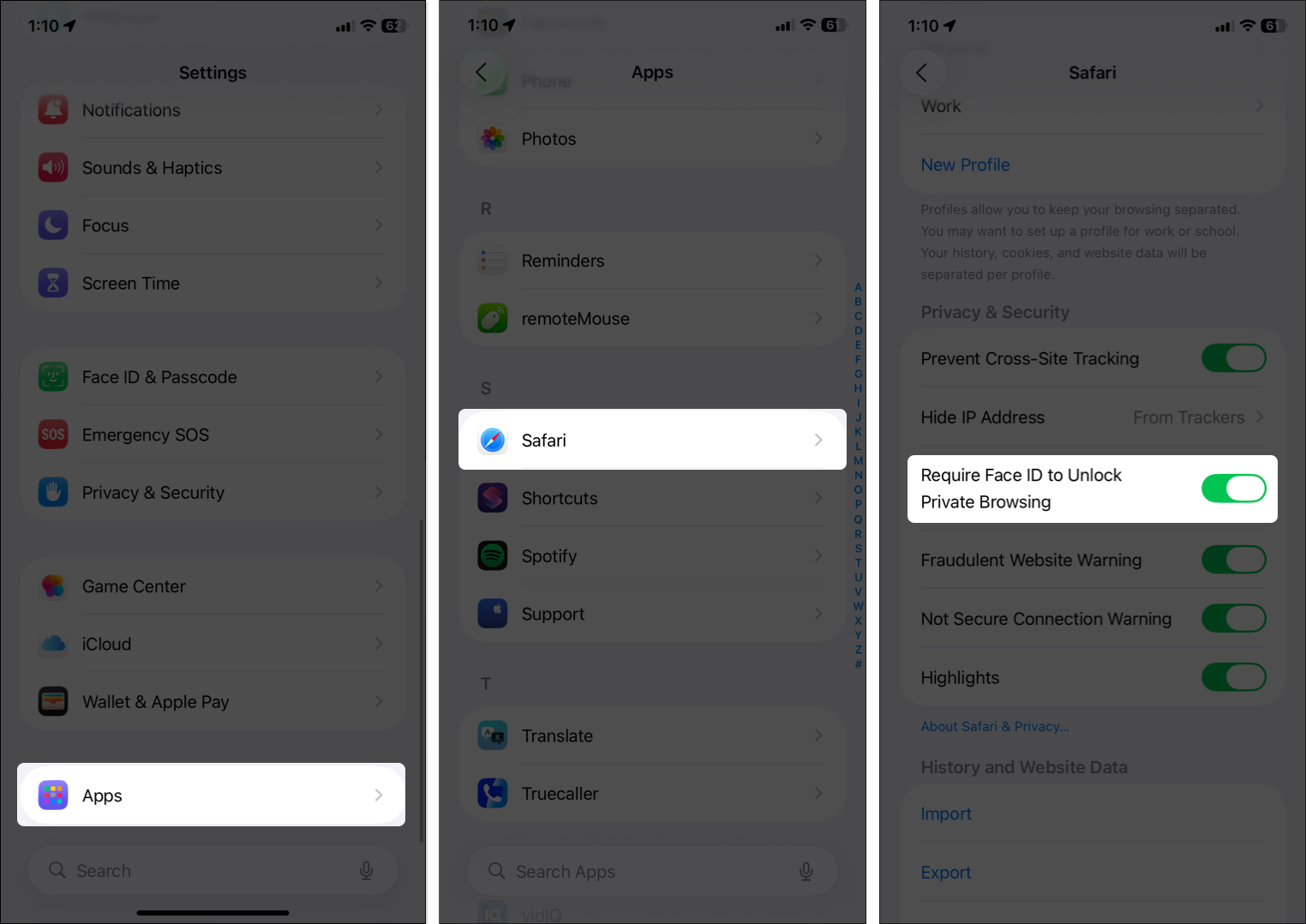
That’s it! You have successfully enabled the feature. But how does it actually work? Let’s find out.
Once it’s on, Safari gets a bit more vigilant. Here’s the breakdown:
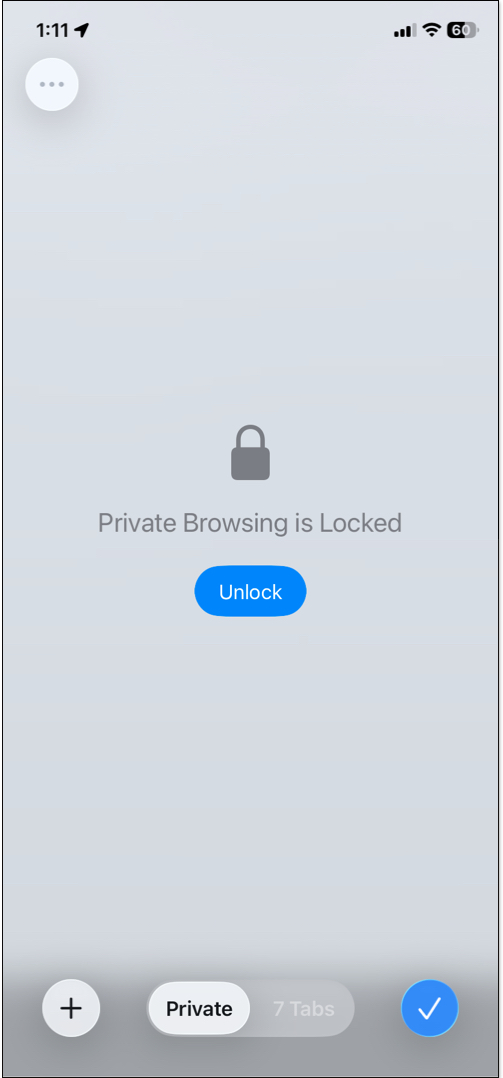
And don’t worry, your regular tabs stay unlocked for quick browsing.
On Mac, things work slightly differently. It is enabled by default on macOS Sonoma and later. But let’s check and adjust if necessary:
Now you’re set! Private windows will automatically lock when Safari isn’t active, when the screensaver starts, or when your Mac is locked.
Want more control? On Mac, you can manually lock your private sessions. Simply click Windows in the menu bar and select Lock All Private Windows.
If you’re in a hurry, you can also force a lock by force-quitting the Safari app (Option + Command + Esc) or locking your Mac screen (Control + Command + Q). It’s flexible for those times when you need to step away mid-browse.
Returned to your personal session? Unlocking is easy on all devices:
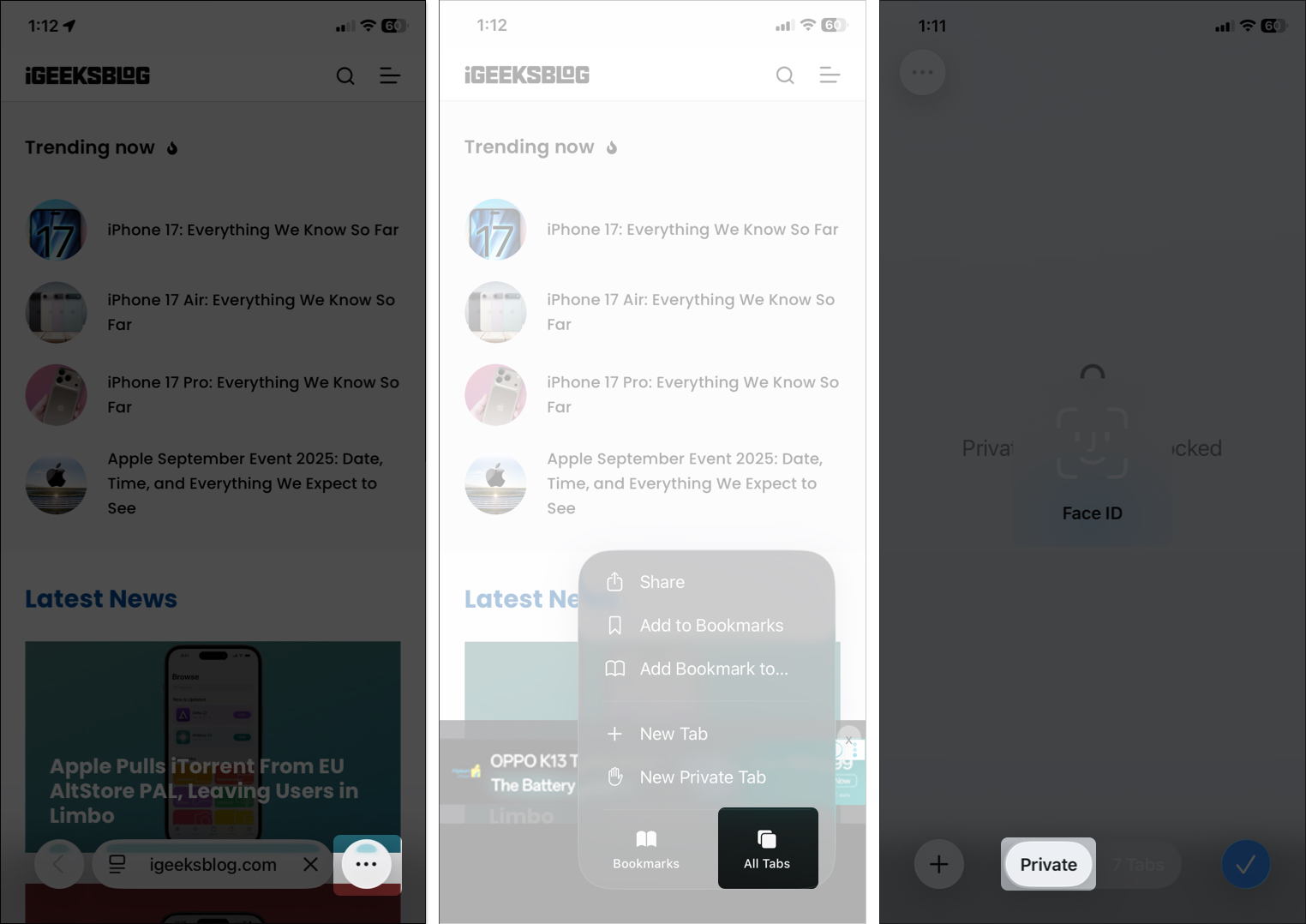
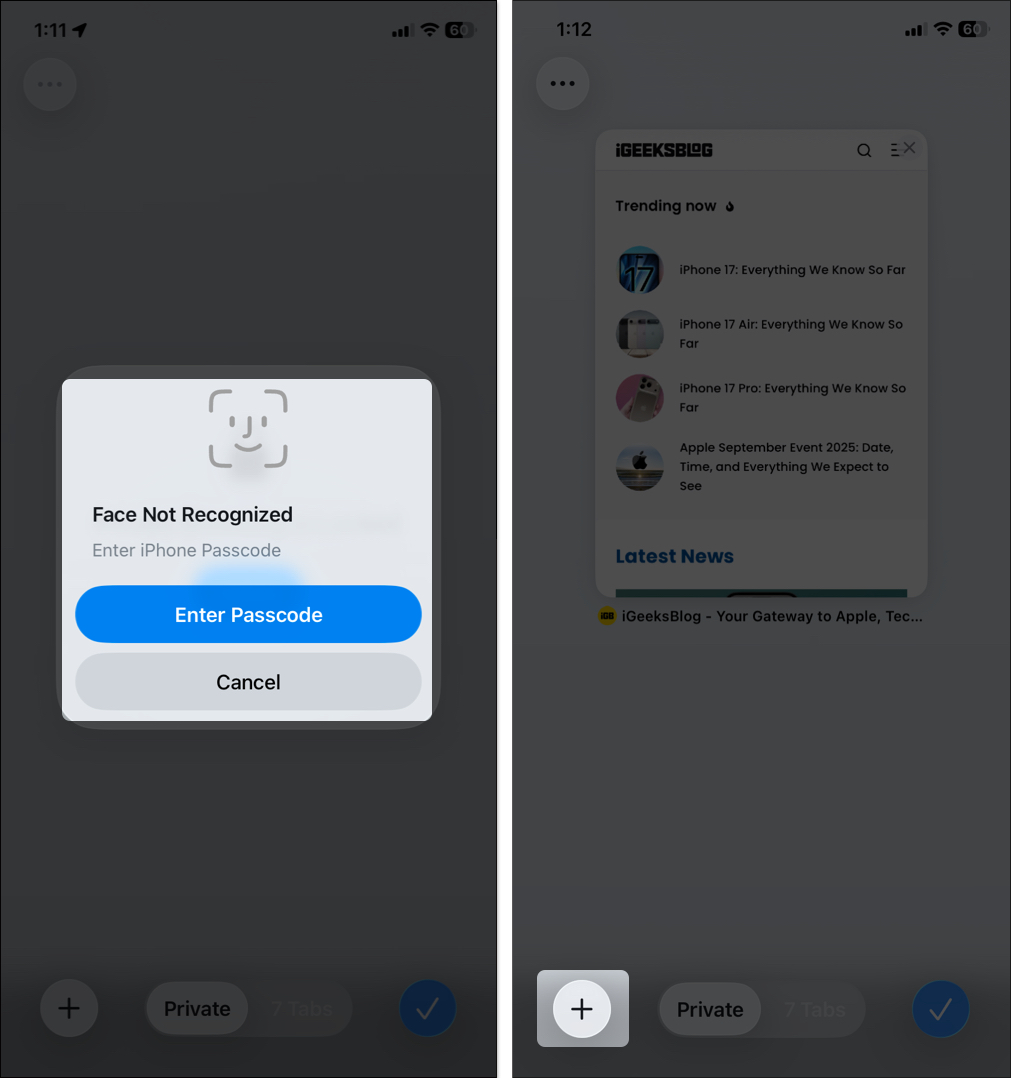
Reopen your previously opened Safari Private window from Dock. A prompt pops up that displays Private Browsing is Locked. Now, use Touch ID on your keyboard or type your Mac’s password in the text field.
Once the macOS verifies your Touch ID or password, it will let you surf the Private window again.
Pro tip: Keep your device updated, as glitches in older iOS/macOS versions could cause issues here.
Turning on Face ID or Touch ID lock for Safari Private Browsing is awesome, but layer on these for even better protection:
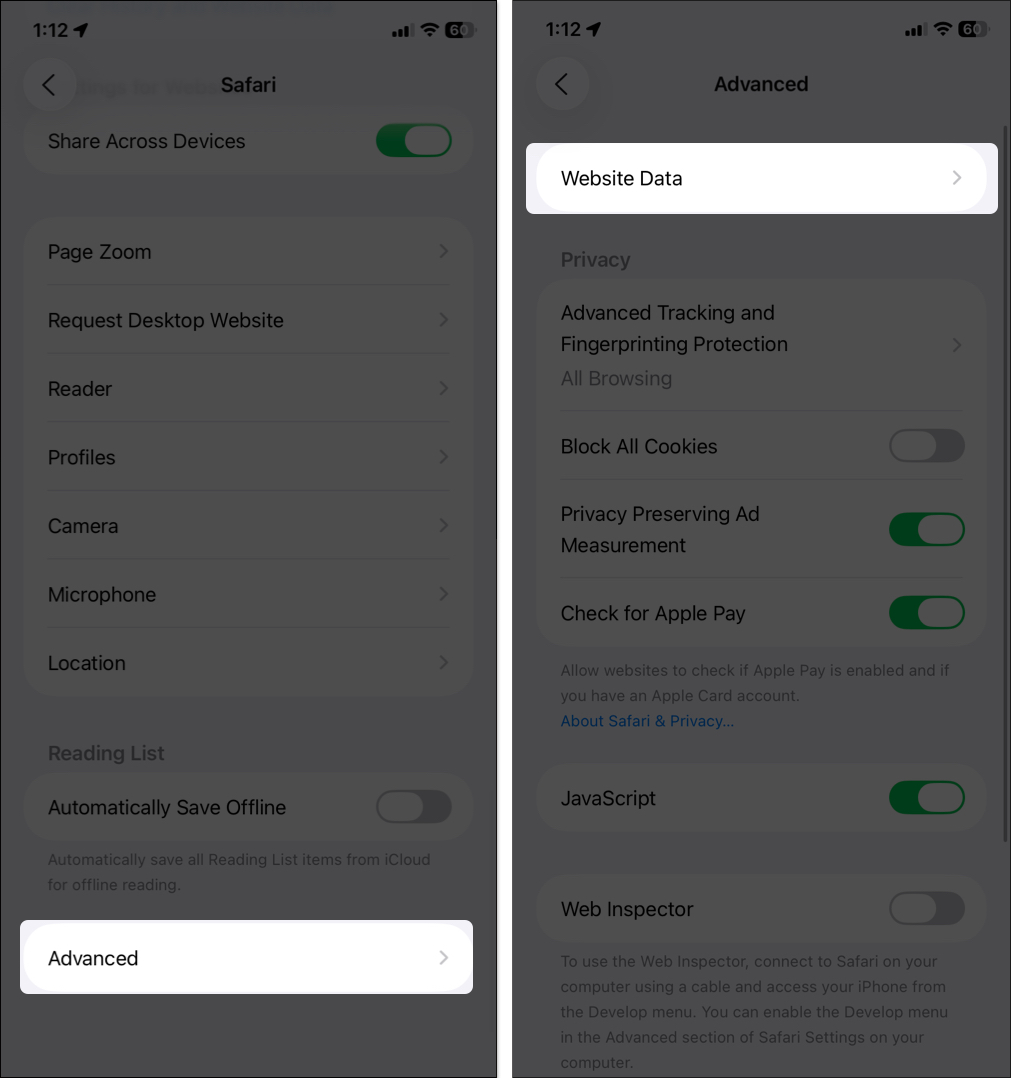
Running into hiccups? No sweat, here’s how to fix the usual suspects:
| Issues | Solutions |
| Feature not appearing | Ensure you’re on iOS 17+ or macOS Sonoma+. Update via Settings/System Settings > General > Software Update. |
| Toggle won’t stay on/off | This can happen due to Screen Time restrictions. Check Settings > Screen Time > Content & Privacy Restrictions > Allowed Apps, and toggle on Safari. |
| Biometrics not working | Restart your device or reset Face ID/Touch ID in Settings > Face ID & Passcode. Also, clean your sensor or camera. |
| Private Browsing greyed out | Often linked to Screen Time or parental controls. Toggle Screen Time off and on or adjust web content limits. |
| Password prompt every time on Mac | This might be a macOS glitch. Try toggling the setting off and on. |
| Not locking at all? | Force quit Safari and reopen. If issues continue, reset all settings or contact Apple Support. |
There you go! Securing Safari’s private tabs with Face ID or Touch ID is a win at maintaining your browsing life as private and secure as possible. Whether you’re protecting sensitive information or simply want some stress-free surfing, this feature hits hard without making things more complicated.
Try it out today and combine it with those additional tips for better-than-best privacy. If you have any problems, mention it in the comments section below. I’ll be more than happy to assist you!
Related articles worth reading: