FaceTime Like a Pro
Get our exclusive Ultimate FaceTime Guide 📚 — absolutely FREE when you sign up for our newsletter below.

FaceTime Like a Pro
Get our exclusive Ultimate FaceTime Guide 📚 — absolutely FREE when you sign up for our newsletter below.


Get rid of fake calendar invites and protect your iPhone from future spam.


Your iPhone Calendar app is meant to simplify your schedule, not bombard you with fake virus alerts, scam reminders, or too-good-to-be-true prize notifications. Unfortunately, cyber attackers have figured out how to abuse Apple’s calendar invitation system to push unwanted events straight onto your device once permission is accidentally granted through a misleading website or pop-up.
If your calendar is suddenly packed with alerts you never knowingly subscribed to, you are not alone. These so-called iPhone calendar viruses are a common scam tactic, and they can feel especially invasive because they bypass the traditional app-install process.
This post explains what iPhone calendar viruses are, how they get onto your device, and how to remove them permanently.
First things first, an iPhone calendar virus is not malware you need to be careful about. It’s simply an unwanted, accidental calendar subscription that sends spam events and notifications.
Since calendar subscriptions do not require an app installation, they bypass the App Store and show alerts directly through iOS notifications.
Related: How to Remove a Virus or Malware from iPhone or iPad
In most cases, this happens when you tap a deceptive link on a website, in a message, or in an email. Without making it obvious, the page prompts you to approve a calendar subscription either by claiming your iPhone is infected and asking you to confirm, or by showing a fake prize or CAPTCHA page that asks you to subscribe, which then adds a stream of spam events directly to your Calendar app.
As the calendar syncs via iCloud, the same spam can appear on all Apple devices associated with the same Apple ID.
Once you know the cause, cleaning up your Calendar spam is straightforward. Follow these steps to remove spam calendar events.
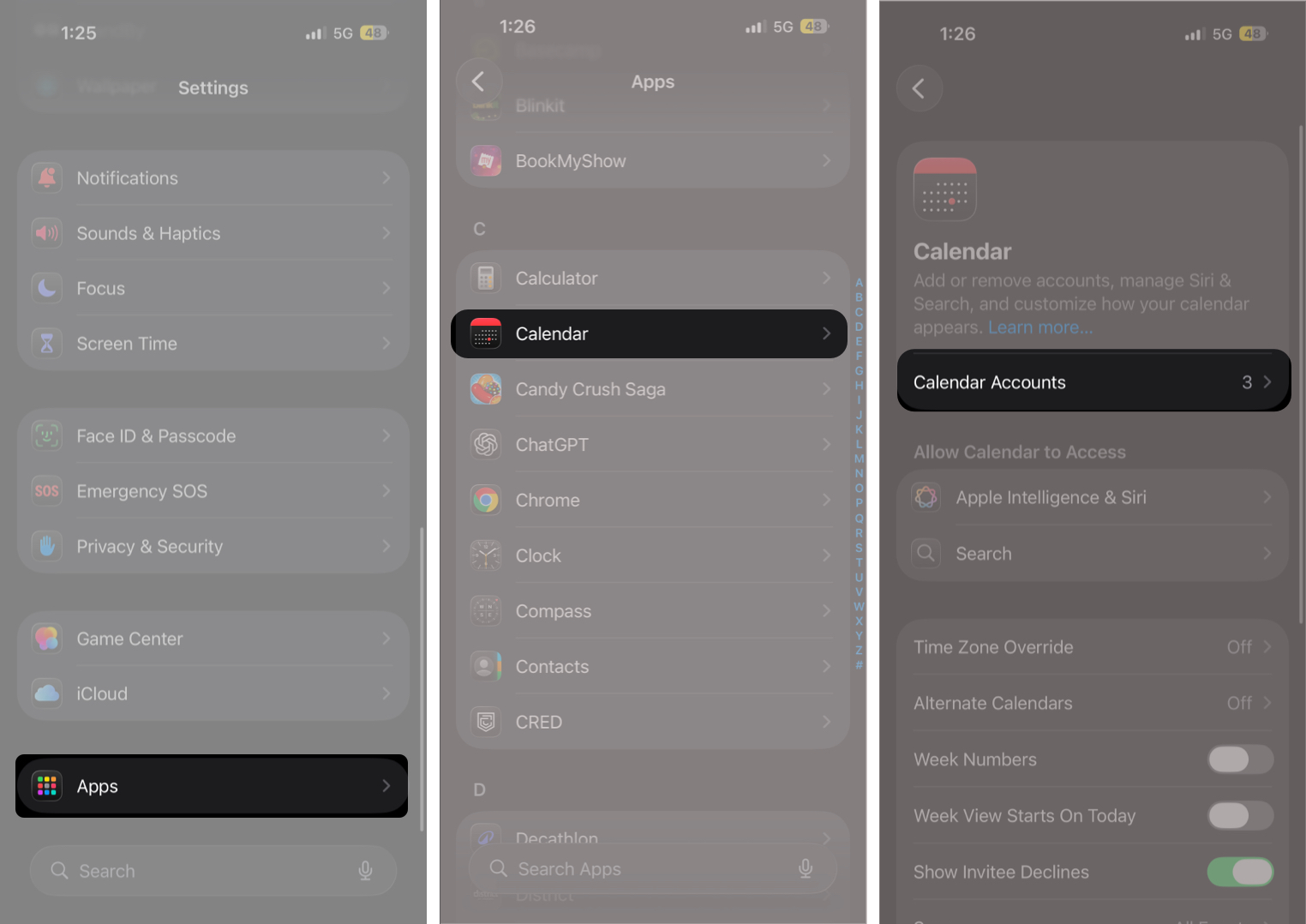
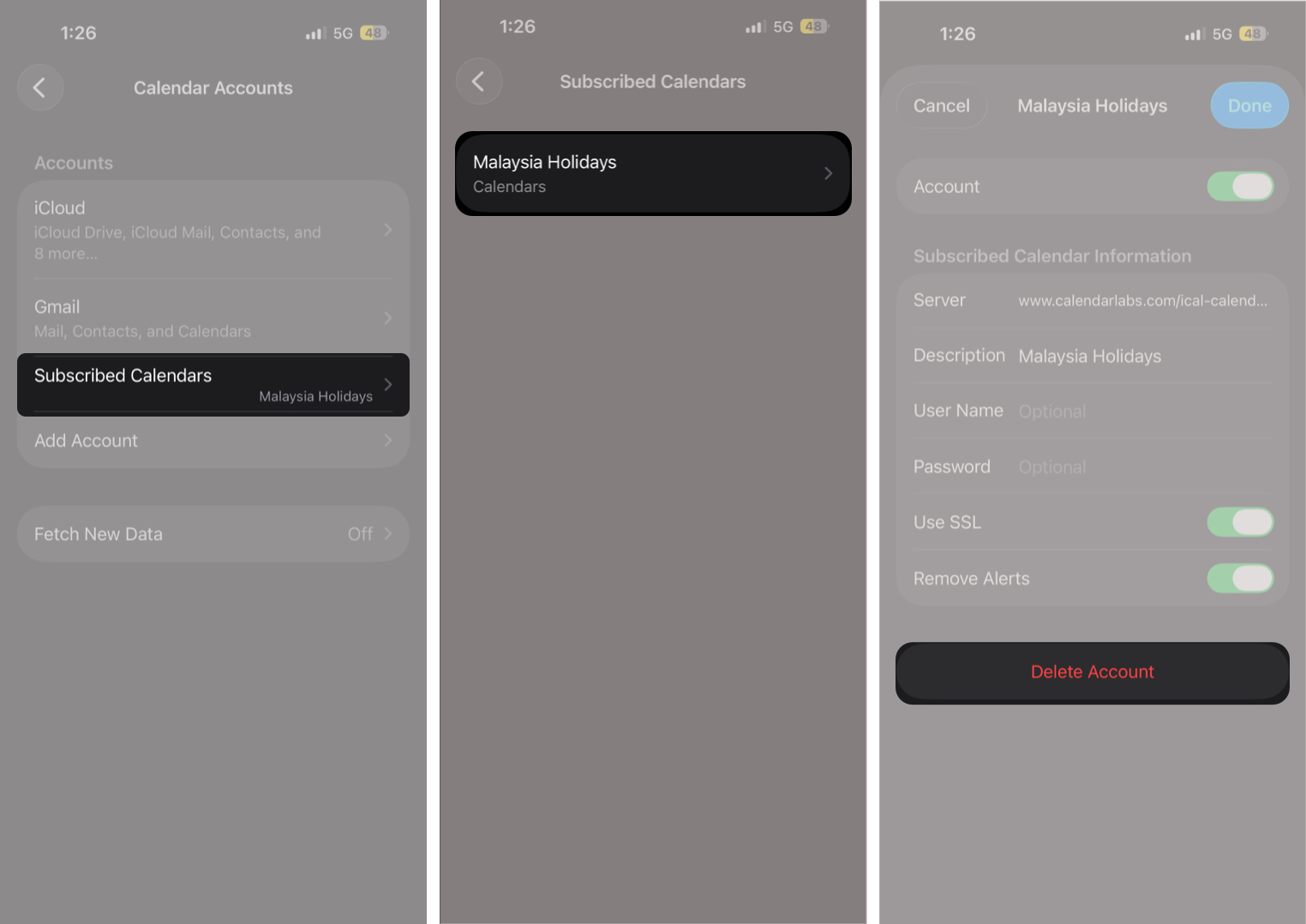
Since calendar spam almost always originates from an active subscription rather than individual events, checking for and removing such subscriptions is the most effective way to remove a calendar virus on iPhone. Here’s how you can:
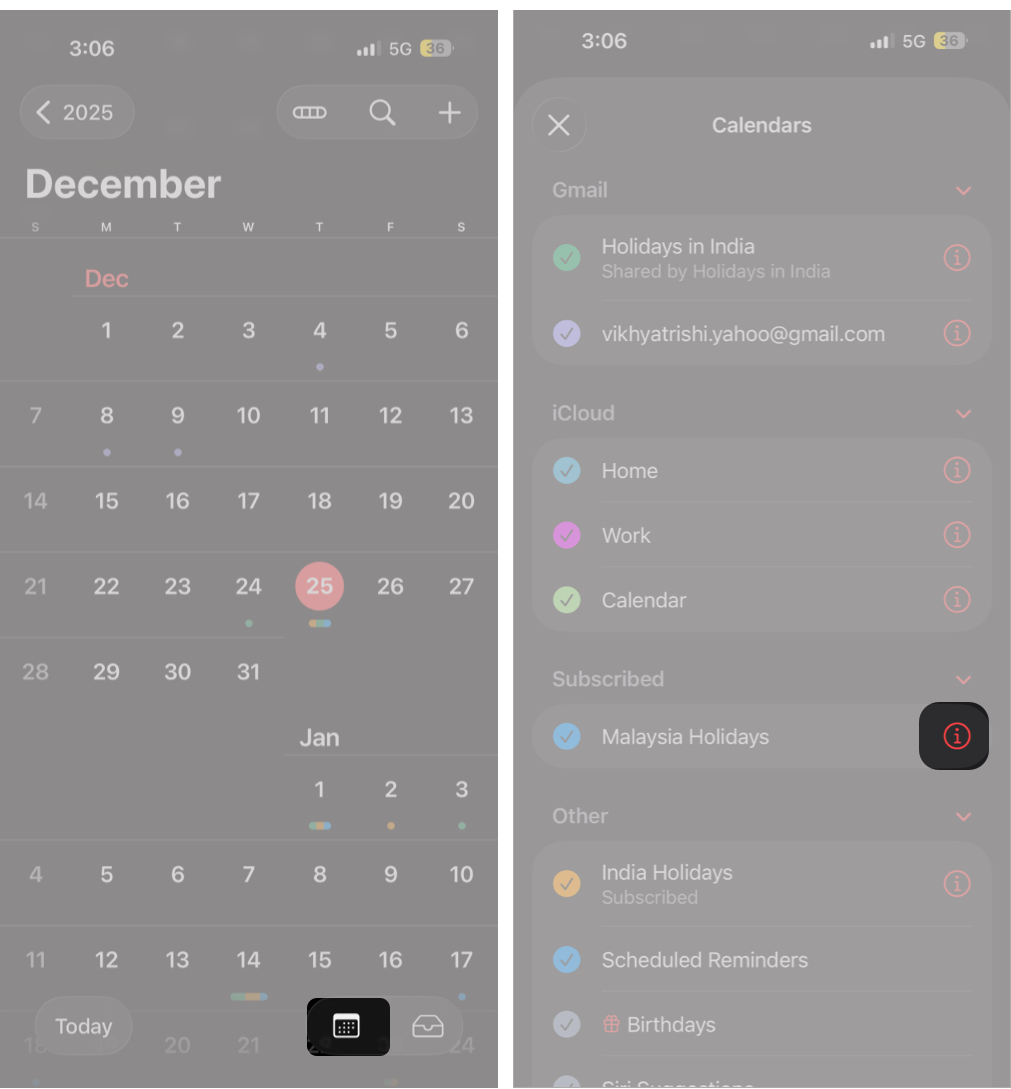
If you prefer to work directly in the Calendar app, you can remove subscriptions there as well.
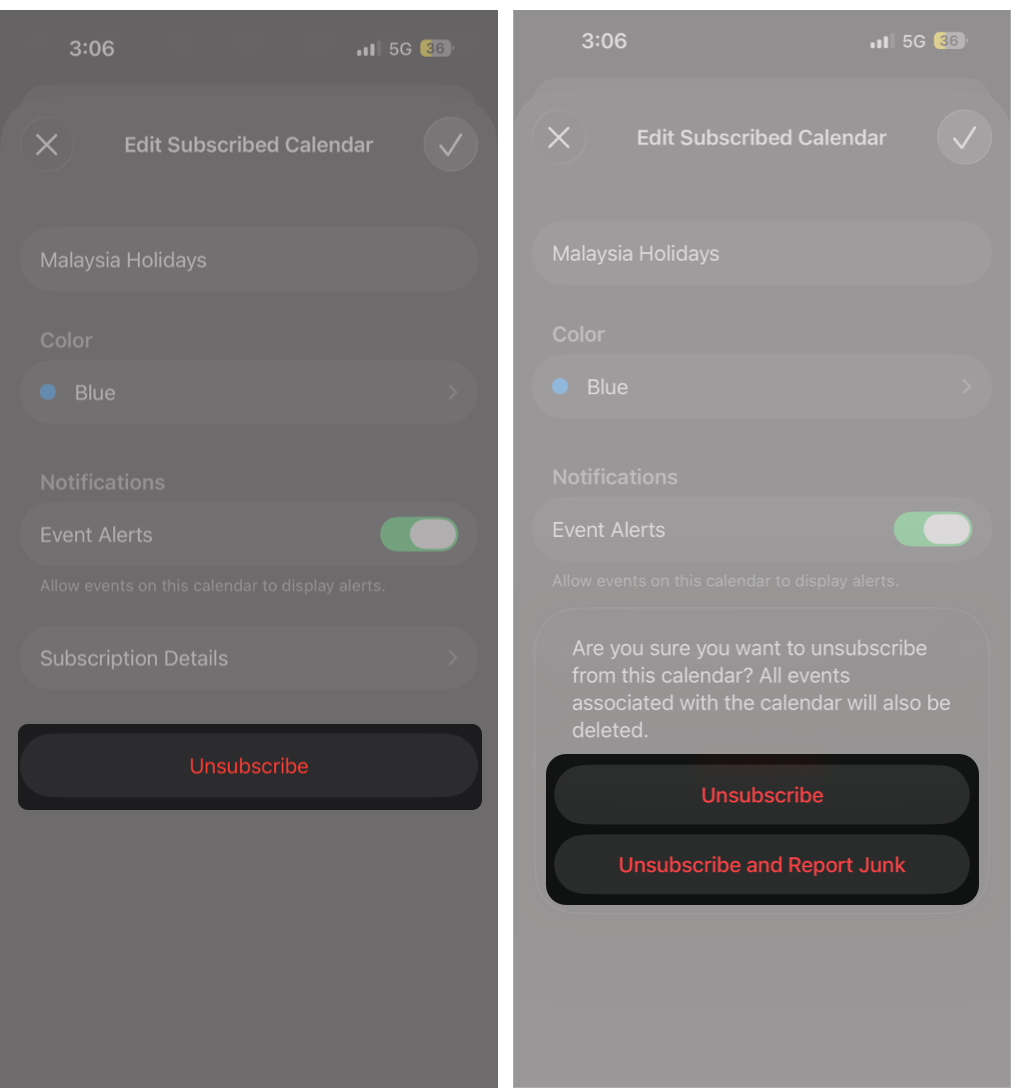
You might still receive spam calendar alerts even after removing the related subscription. This is because sometimes previously synced spam events linger briefly after unsubscribing. Removing them ensures a clean calendar view.
In rare cases, spam events are added individually rather than through a subscription. These must be removed one by one.
So, if needed, open each suspicious event in the Calendar app and delete it individually until no spam remains.
If the Calendar app continues to behave oddly, even after you’ve cleaned up everything, offloading and reinstalling the app might help, as it clears the app’s cache. Here’s how:
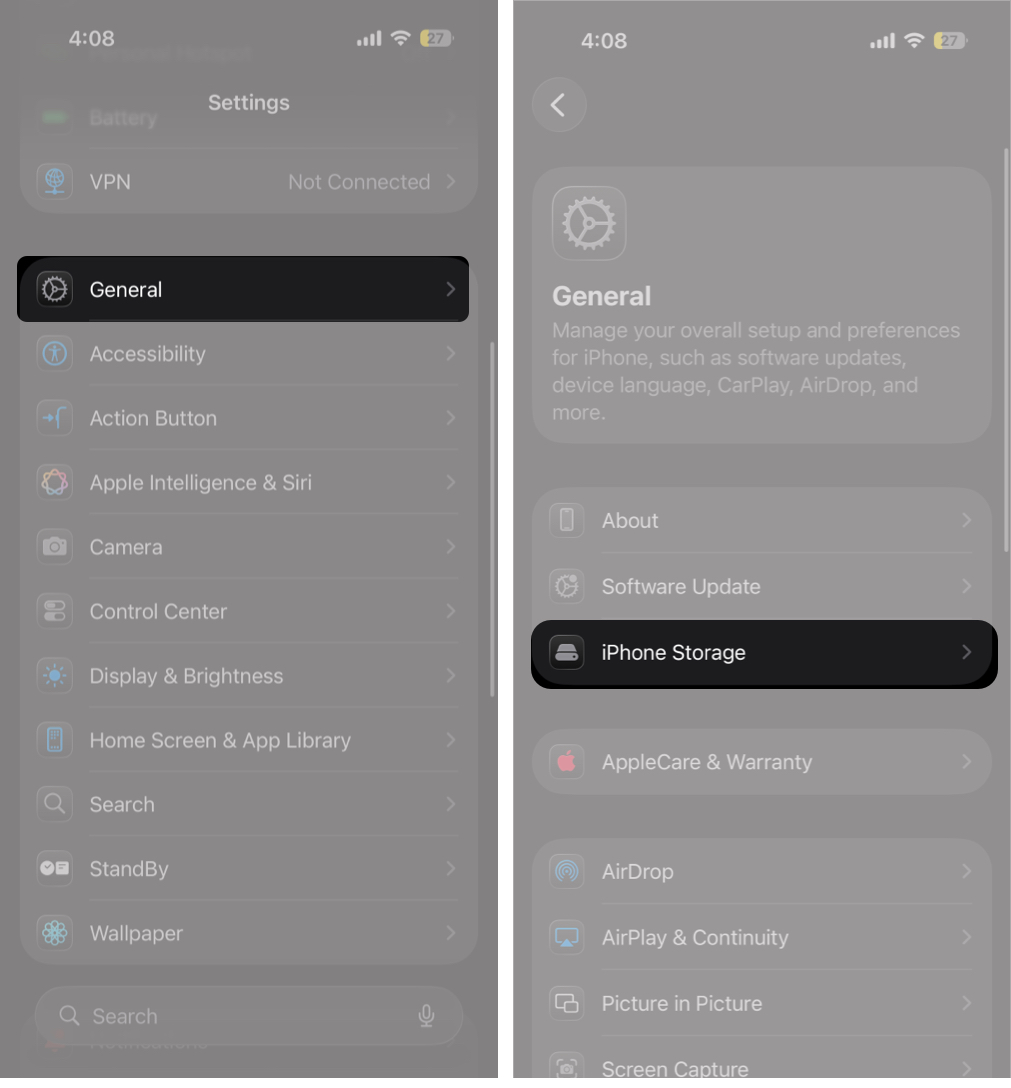
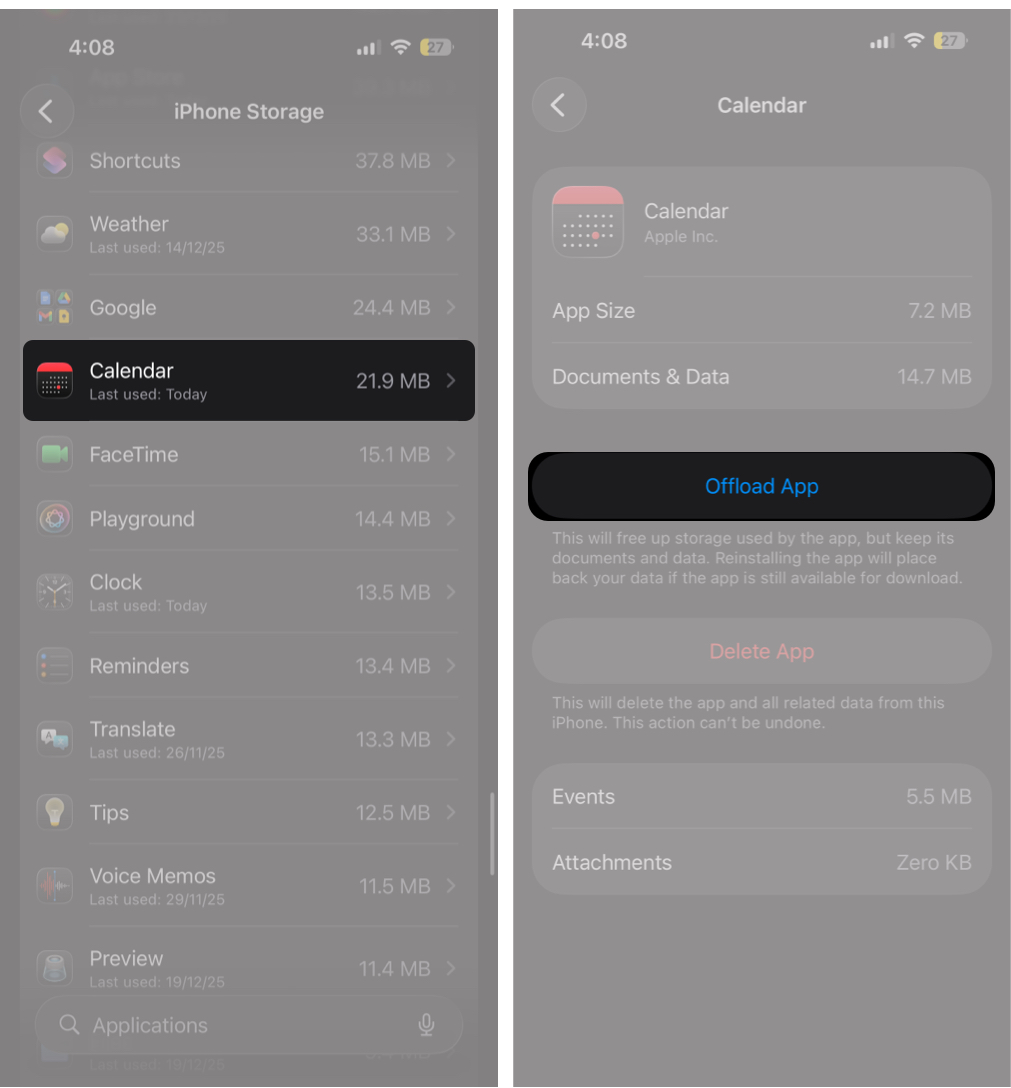
Rest assured, your calendar data remains intact.
If the spam alerts continue even after doing everything we’ve suggested so far, there is likely another active calendar source. In such cases, you must:
This is because persistent spam almost always traces back to an active subscription.
Knowing how to remove calendar viruses will not help if you keep accidentally subscribing to spam calendars. These simple habits reduce the risk of accidentally subscribing to spam calendars in the future and help keep your iPhone calendar clean:
Calendar permissions are powerful because they allow silent syncing and notifications. Always read permission prompts carefully and decline anything that feels urgent or unclear.
And that’s it. You now know that calendar spam is not malware and does not compromise your data, and the fastest way to remove it is to delete the unwanted calendar subscription. Once the subscription expires, spam stops immediately and does not return.
Have you dealt with calendar spam on your iPhone? Share which step worked for you in the comments to help other readers avoid the same issue.
FAQs
Calendar viruses are caused by accidentally approving spam calendar subscriptions through deceptive websites or links.
No. Calendar spam cannot access personal data, install apps, or control your device.
They’re not needed for calendar spam and won’t offer any extra protection. Built-in iPhone security already handles this issue.
Check out these helpful guides: