FaceTime Like a Pro
Get our exclusive Ultimate FaceTime Guide 📚 — absolutely FREE when you sign up for our newsletter below.

FaceTime Like a Pro
Get our exclusive Ultimate FaceTime Guide 📚 — absolutely FREE when you sign up for our newsletter below.


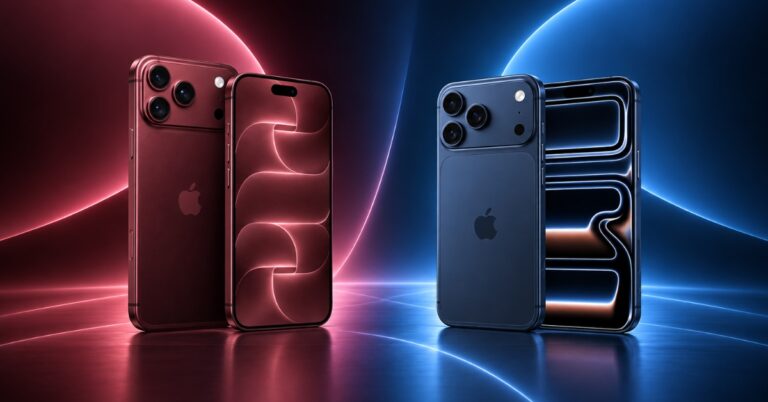
Compact and polished or big and feature-packed? I compare Apple’s latest Pro iPhone with Samsung’s Ultra flagship.
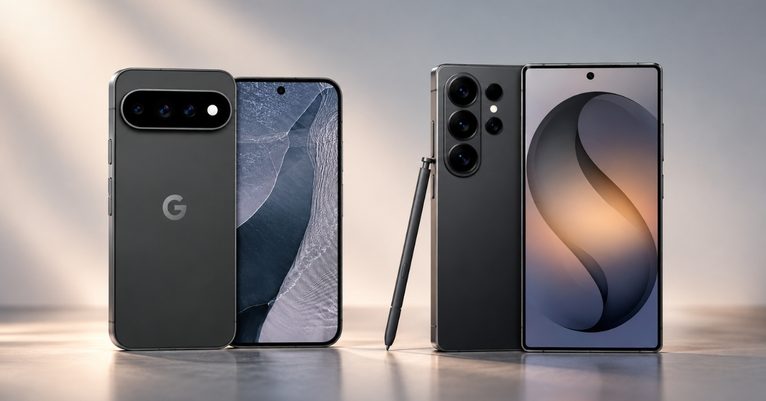
Apple has launched its next Pro model, the iPhone 18 Pro, bringing a new A20 Pro chip, camera upgrades, iOS 27, and several other improvements. But it enters a market where Samsung’s Galaxy S26 Ultra is already one of the most feature-packed flagship phones available.
So, how does Apple’s latest Pro iPhone compare with Samsung’s Ultra flagship? I’m putting the iPhone 18 Pro vs Samsung Galaxy S26 Ultra side by side to see how they compare in design, display, performance, cameras, battery life, AI features, software, and pricing and which one deserves your money.
Before getting into the experience of using these phones, here’s a quick comparison.
| Feature | iPhone 18 Pro | Samsung Galaxy S26 Ultra |
|---|---|---|
| Display | 6.3-inch OLED, up to 120Hz | 6.9-inch Dynamic AMOLED 2X, 120Hz |
| Processor | Apple A20 Pro | Snapdragon 8 Elite Gen 5 for Galaxy |
| RAM | 12GB | Up to 16GB |
| Storage | 256GB, 512GB, 1TB, 2TB | 256GB, 512GB, 1TB |
| Main camera | 48MP Fusion main + 48MP ultrawide + 48MP telephoto | 200MP main + 50MP ultrawide + 10MP 3x + 50MP 5x telephoto |
| Battery | Up to 36 hours | Up to 31 hours |
| Charging | Up to 60W wired and up to 25W wireless | Up to 60W wired and up to 25W wireless |
| Operating system | iOS 27 | Android 16 + One UI 8.5 |
| Stylus | No | Built-in S Pen |
| Biometric security | Face ID | Ultrasonic fingerprint + face unlock |
| Starting U.S. price | $1,199 | $1,299.99 |
On the surface, Samsung appears to throw more hardware at me. But I wouldn’t make a buying decision from this table alone.
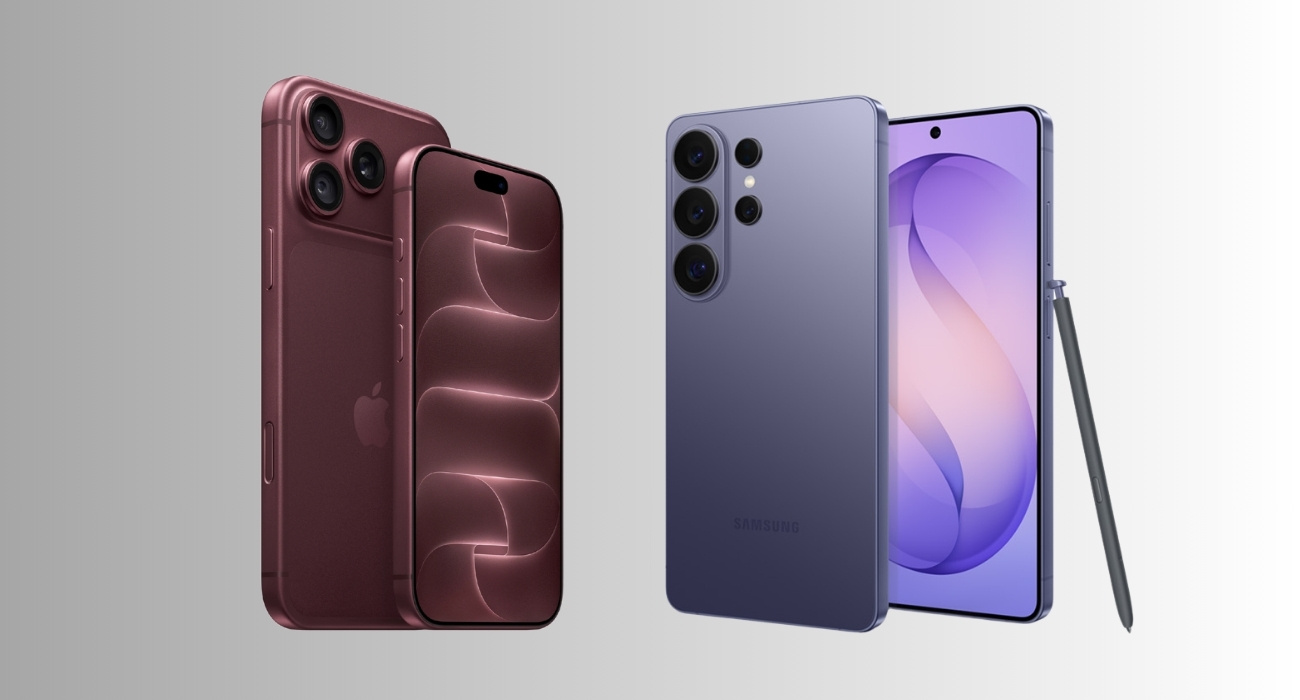
The first thing I’d notice switching between these phones is the size.
The iPhone 18 Pro is the easier phone to live with physically. Its 6.3-inch display makes it considerably more manageable than Samsung’s 6.9-inch Ultra. I can see myself comfortably using it one-handed, slipping it into a pocket and forgetting I’m carrying a Pro-level phone.
Apple offers the iPhone 18 Pro in black, silver, glacier, and the new burgundy finish. Galaxy S26 Ultra comes in four colours: Cobalt Violet, Sky Blue, White, and Black, along with two online exclusives: Shadow Silver and Pink Gold.
Another thing that caught my attention is the difference in thickness and weight. The Galaxy S26 Ultra measures just 7.9mm thick and weighs 214g, while the iPhone 18 Pro is 8.75mm thick and weighs 211g. In other words, the Samsung flagship is 0.85 mm thinner, but it’s just 3 g heavier than Apple’s smaller Pro model.
When it comes to protection, both phones use premium glass. The iPhone 18 Pro uses Ceramic Shield, which Apple designed to improve durability and help protect the phone from everyday drops and scratches. As for the Samsung flagship, the back of the phone is made from Corning Gorilla Glass Victus 2.
My verdict: iPhone 18 Pro for comfort. Galaxy S26 Ultra for its slimmer design and larger form factor.
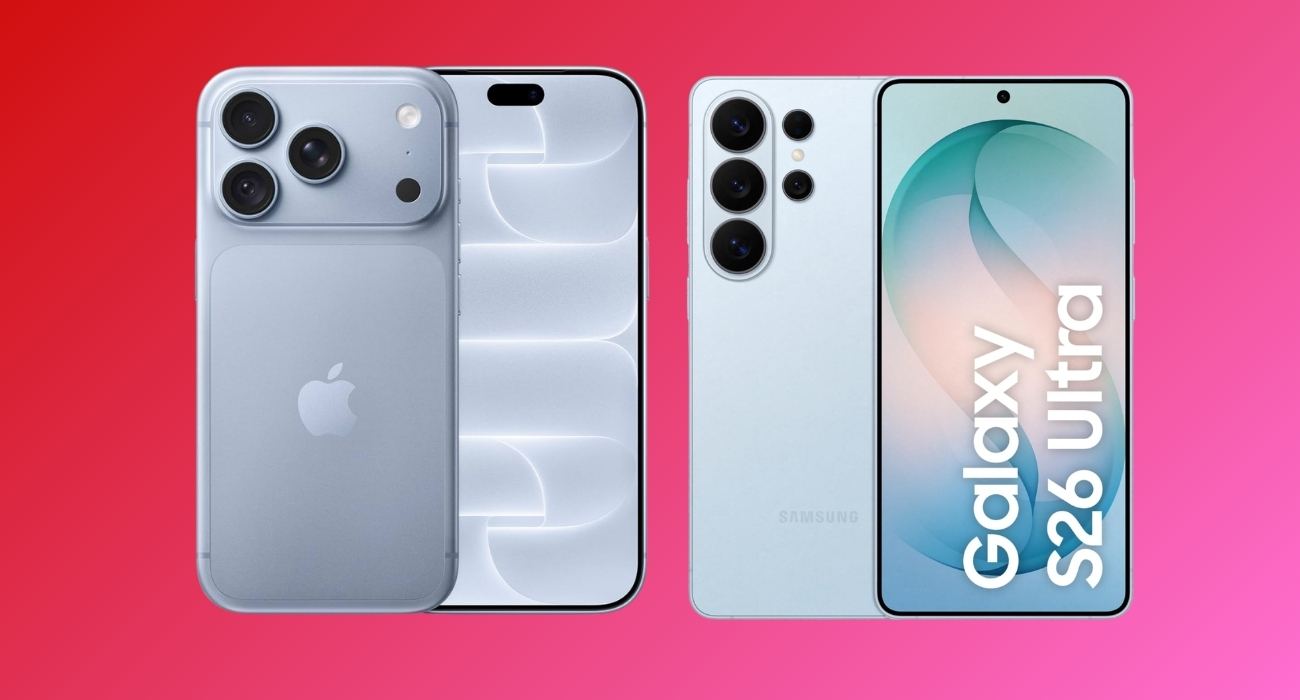
The display is one of the first things I notice when switching between two flagship phones, and both Apple and Samsung have opted for premium panels here. However, they take very different approaches.
| Feature | iPhone 18 Pro | Galaxy S26 Ultra |
|---|---|---|
| Display type | Super Retina XDR OLED | Dynamic AMOLED 2X |
| Resolution | 2622 × 1206 | 3120 × 1440 |
| Brightness | 1000 nits max brightness (typical); 1,600 nits peak brightness (HDR); 3,000 nits peak brightness (outdoor); 1 nit minimum brightness | 2600 nits (peak) |
The iPhone 18 Pro has a 6.3-inch OLED display with a 120Hz refresh rate. Its compact size is actually what I like about the device. The display is brighter, and the adaptive refresh rate makes scrolling and animations feel smooth. And it’s also easier to hold while typing or handling the device with just one hand.
The Galaxy S26 Ultra, on the other hand, is the one I’d pick for watching movies, gaming, browsing, or getting work done. Its 6.9-inch QHD+ display gives me noticeably more screen space, and Samsung’s Dynamic AMOLED 2X panel delivers the kind of punchy colours and deep blacks I expect from an Ultra phone.
Samsung also has another interesting advantage: Privacy Display. It can make the screen harder for people around me to see from an angle, which could be genuinely useful when I’m checking private messages or working on sensitive information in a crowded place.
My display verdict: Galaxy S26 Ultra wins.
This is the section where I would tell readers not to get obsessed with benchmark charts.
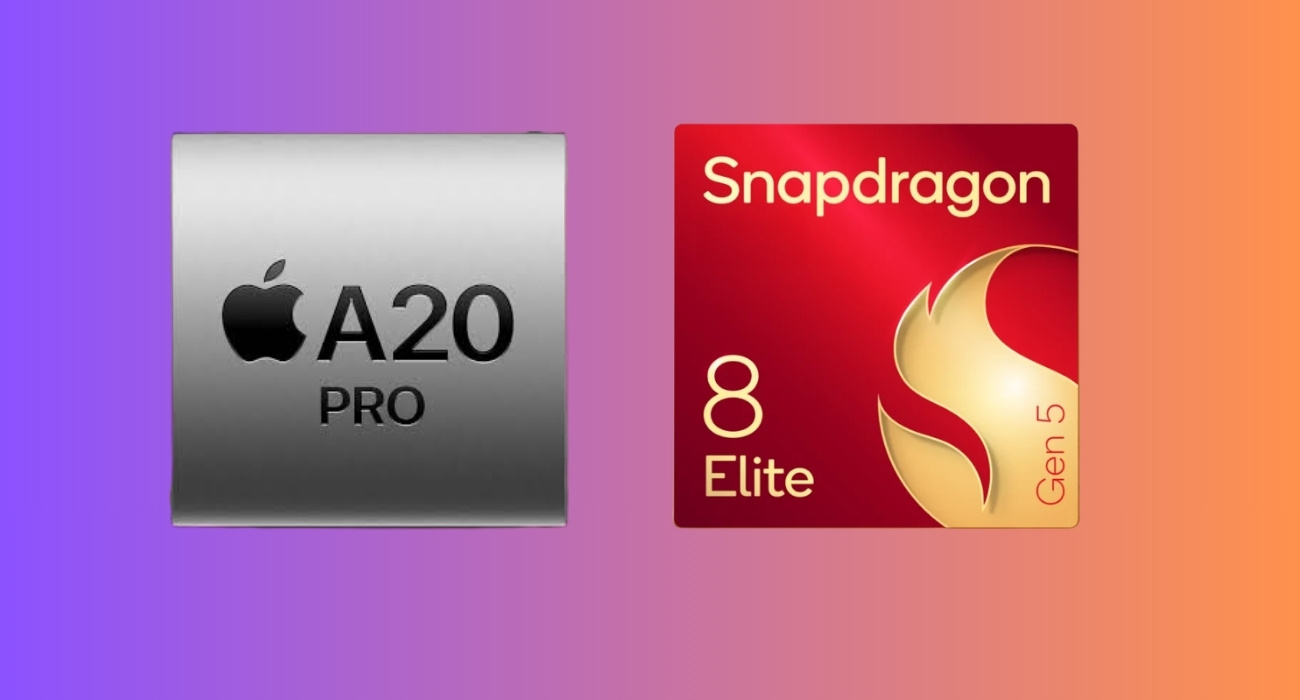
The iPhone 18 Pro is powered by Apple’s A20 Pro, while Samsung uses the Snapdragon 8 Elite Gen 5 for Galaxy.
The A20 Pro is particularly interesting because it is built using a 2nm process. It has a 6-core CPU with two new Super cores and four efficiency cores, along with a 7-core GPU with Neural Accelerators. Compared to the A19 Pro, the new Super cores can be up to 20% faster, while the GPU can deliver up to 40% faster graphics performance.
Apple has also given the A20 Pro a Dual 16-core Neural Engine to handle demanding on-device AI tasks and computational photography. What I find more interesting is that Apple isn’t only chasing peak performance. The iPhone 18 Pro has a new vapour-chamber cooling system to keep the A20 Pro running at high performance for longer periods.
Unlike Apple’s 6-core CPU, Snapdragon uses an octa-core CPU, with two high-performance Oryon cores and six performance cores. It is built on a 3nm process and is paired with Qualcomm’s Adreno 840 GPU.
Samsung has also tuned the chip specifically for the Galaxy S26 Ultra to deliver up to a 19% CPU performance improvement, 24% greater graphics processing and 39% faster NPU performance compared with the previous generation. I also like that Samsung gives the S26 Ultra up to 16GB of RAM,
That combination makes the S26 Ultra particularly interesting for gaming, multitasking and AI-heavy workloads.
The early benchmark results give the A20 Pro a clear lead in CPU performance.
| Geekbench 6 | iPhone 18 Pro | Galaxy S26 Ultra |
|---|---|---|
| Single-Core | 4,719 | 3,770 |
| Multi-Core | 12,677 | 11,470 |
The difference is particularly noticeable in single-core performance, where the A20 Pro is roughly 25% ahead of the Snapdragon 8 Elite Gen 5 for Galaxy based on these results. Multi-core performance is much closer, but the iPhone still has the lead.
I wouldn’t say one is simply “faster.”
The A20 Pro benefits from Apple’s tight control over the hardware and software stack. That matters for things such as:
My verdict: I would choose the A20 Pro for optimised performance and Apple’s ecosystem.
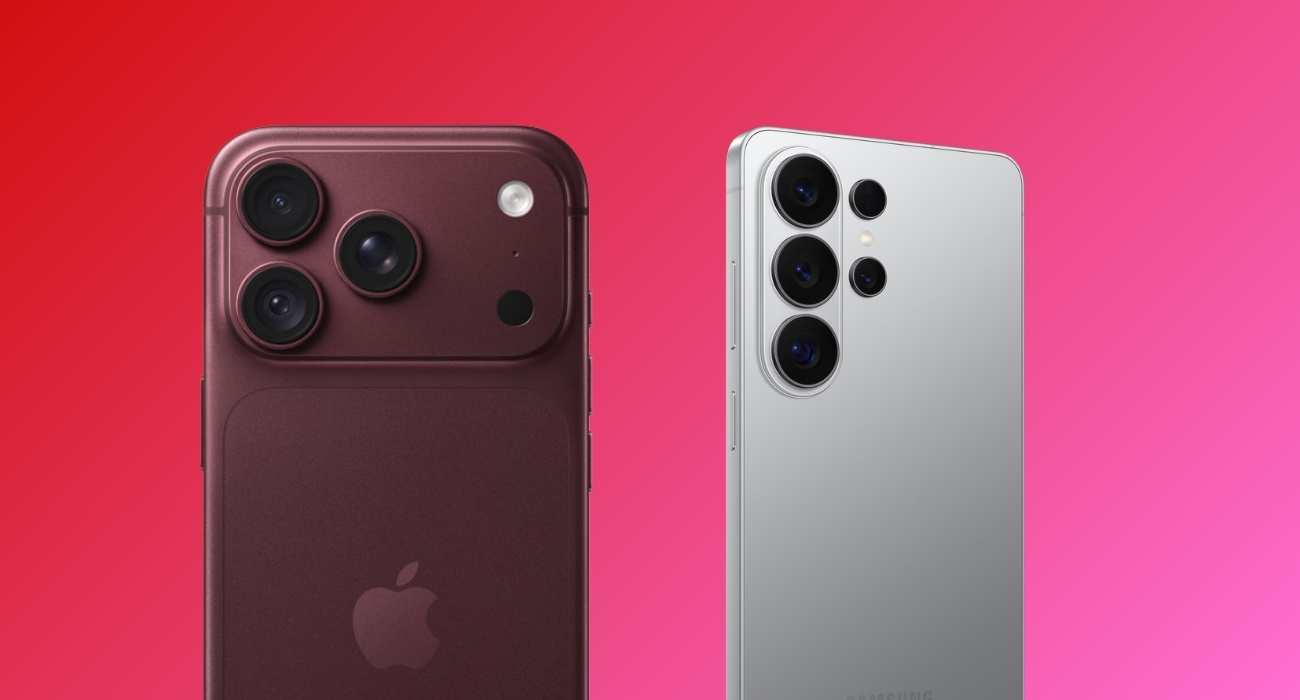
This is where the iPhone 18 Pro vs Galaxy S26 Ultra comparison gets really interesting.
Samsung is still playing the hardware and versatility game. Apple is taking a more computational and creator-focused approach.
The iPhone 18 Pro gets a new 48MP Fusion Main camera with variable aperture, which is one of the biggest camera changes Apple has made in years. The aperture can move between f/1.48 and f/4.0, giving the camera more control over light and depth of field. The phone also gets new Pro camera controls.
The system includes:
I particularly like the variable-aperture approach because it gives the camera a physical control that smartphone photography has largely avoided.
Samsung takes the “give me everything” approach.
The S26 Ultra includes:
And this is where Samsung has the advantage for me. If I’m travelling, shooting a concert, photographing architecture from a distance, or simply want more flexibility when framing a subject, those dedicated zoom cameras matter.
The 3x and 5x telephoto cameras give me options that a single telephoto system can’t replicate as effectively. However, more megapixels do not automatically mean better photos.
Samsung S26 Ultra has the obvious hardware advantage here with a 5,000mAh battery. It also supports up to 60W wired charging and reverse wireless charging, which can be useful for topping up Galaxy Buds or another compatible device.
Apple takes a different approach. Rather than competing directly on battery capacity, it combines its silicon, operating system, and battery architecture to maximise efficiency.
The iPhone 18 Pro delivers major battery-life improvements, with the A20 Pro and updated battery design working together to deliver up to 36 hours of video playback. However, Samsung lists only up to 31 hours of video playback for the S26 Ultra.
My verdict: If I’m gaming for hours, navigating with GPS, recording lots of video and streaming content, I’d be more comfortable choosing the iPhone 18 Pro.
When you are buying a $1,200-plus smartphone, you are often buying into an ecosystem, not just buying a phone.
The iPhone 18 Pro ships with iOS 27, which brings the new generation of Apple Intelligence and Siri AI. One feature I find particularly interesting is Siri mode in the Camera app. I can point the camera at something, ask Siri about what I’m seeing, and get information or take an action based on it.
But for me, Apple’s biggest advantage remains the ecosystem.
If you already own:
Then an iPhone is just a more intuitive and sensible choice. AirDrop, Handoff, iCloud, Messages, FaceTime, and cross-device continuity create an experience that’s difficult for Samsung to duplicate. This is the very reason why I would recommend this device to existing Apple users.
Samsung takes the opposite approach. One UI is designed for people who want more control.
I can:
Samsung has also committed to seven years of OS and security updates for the Galaxy S26 series.
My verdict: iOS 27 wins for simplicity and ecosystem integration. One UI wins for customisation and power users.
AI has become one of the biggest selling points of flagship phones, but I think this is one area where buyers should be careful. I don’t care how many AI features appear in a launch presentation. I care whether I actually use them.
Apple’s iPhone 18 Pro introduces the next generation of Apple Intelligence, including a new Siri AI designed to understand personal context, recognise what’s on screen and perform actions across apps. Apple is also emphasising privacy through on-device processing and Private Cloud Compute.
Other meaningful additions include:
Samsung’s Galaxy AI is more aggressively integrated into the phone’s everyday workflows.
The S26 Ultra brings the new Bixby as a more conversational device agent. Instead of remembering the exact name of a setting, I can describe what I want in normal language, and Bixby can identify the appropriate setting or action. It can also search the web for up-to-date information directly within Bixby.
Also, Photo Assist lets you make multiple AI-powered photo edits without saving each version individually; you can then review the editing history and choose which versions to keep.
Samsung is also leaning heavily into AI-powered productivity and cross-app actions and integrating services such as Gemini and Perplexity. And that’s where I give Samsung the edge.
My verdict: Galaxy S26 Ultra wins for breadth and practical AI tools.
At this price, both phones have everything I expect from a modern flagship.
Both offer:
But the extras are where Samsung starts pulling away.
The S26 Ultra gives me:
The S Pen is still one of Samsung’s biggest differentiators. This allows me to take down my handwritten notes, edit my photos, annotate documents, and navigate precisely. I don’t have to buy a separate accessory and remember to carry it.
Apple’s biggest extras are ecosystem-related:
So I see the difference this way: Samsung gives me more features on the phone itself, whereas Apple gives me a better-connected collection of devices.
My verdict: Galaxy S26 Ultra wins for individual features. iPhone wins if I already live inside Apple’s ecosystem.
The iPhone 18 Pro begins at $1,199 for 256 GB in the US. Apple also provides promotional offers from eligible carriers, trade-in credits, and its Apple Upgrade leasing option. Eligible carrier deals can provide up to $1,200 in credits for certain iPhone 14 or newer trade-ins, depending on eligibility.
Samsung’s regular U.S. pricing starts at $1,299.99 for the 256GB Galaxy S26 Ultra, with 512GB and 1TB versions going higher. Samsung is also advertising trade-in incentives.
The iPhone 18 Pro is cheaper at standard pricing. But the Galaxy S26 Ultra becomes compelling once discounts are applied.
After looking at the two phones category by category, I don’t think there is a universal winner. And that’s actually a good thing. These phones are aimed at slightly different people.
I’d buy the iPhone 18 Pro if I:
The iPhone 18 Pro is the phone I’d recommend to someone who says, “I want a Pro iPhone, but I don’t want a giant phone.” That’s where Apple’s strategy makes perfect sense.
You should buy the Galaxy S26 Ultra if you:
The Galaxy S26 Ultra is the phone I’d recommend to someone who wants a powerhouse.
If I had to spend my own money today, I’d pick the Galaxy S26 Ultra as the better overall flagship. It gives me a larger and more versatile display, more flexible camera hardware, S Pen, stronger productivity features, a large battery, and an extensive set of AI tools.
But I wouldn’t call the iPhone 18 Pro a worse phone. I’d call it the better choice for a specific kind of buyer.
If you already owned a MacBook, Apple Watch, and AirPods, the iPhone 18 Pro would be my pick. The ecosystem advantage is too significant to ignore. Buy the iPhone 18 Pro if you want a compact Pro iPhone, excellent video capabilities, and seamless Apple ecosystem integration.
The most important takeaway from this comparison: the best flagship isn’t necessarily the phone with the most impressive spec sheet. It’s the phone that fits the way I already live.
More interesting reads: