FaceTime Like a Pro
Get our exclusive Ultimate FaceTime Guide 📚 — absolutely FREE when you sign up for our newsletter below.

FaceTime Like a Pro
Get our exclusive Ultimate FaceTime Guide 📚 — absolutely FREE when you sign up for our newsletter below.


I tested official, budget, magnetic, and high-capacity models to find the ones that actually keep Samsung's flagship powered all day.
The Galaxy S26 Ultra comes with a big battery, but in real life, it’s surprisingly easy to drain it. Between using Galaxy AI features, editing videos, navigating with GPS, and playing games, I often found myself reaching for a charger before the day was over. The worst part? Although there was a power bank on me at all times, it charged rather slowly and did not help much.
So I decided to test several popular power banks, from Samsung’s own model to budget picks and high-capacity monsters. Some promised 45W charging but never activated Samsung’s Super Fast Charging. Others were too bulky to carry around. One even got uncomfortably warm during extended use.
After all that testing, I finally found the ones worth buying. Here is the best power bank I ended up choosing, why it stood out from the rest, and the other options that are still a good alternative if you own a Galaxy S26 Ultra.
The Galaxy S26 Ultra is surprisingly picky about charging accessories. I learned that the hard way.
Many brands advertise “fast charging,” but unless a power bank supports USB Power Delivery (PD), you’re not getting Samsung’s fastest charging speeds. On paper, two 45W power banks can look identical. In reality, one charges the phone noticeably faster than the other.
Then there’s portability. A huge battery sounds great, but having to carry an extra pound every day is not desirable. Add poor build quality, inefficient battery conversion, no temperature control, or slow recharging, and what looked like a bargain quickly becomes frustrating.
After trying several models, I stopped chasing the biggest numbers on the box and started focusing on real-world performance.
Before buying another S26 Ultra charger, I made a checklist.
I also preferred a built-in USB-C cable and a battery display instead of four tiny LEDs. Once you’ve used a percentage display, it’s hard to go back.
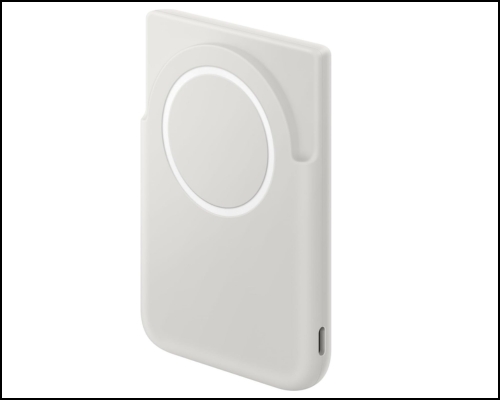
If you already own several Samsung accessories, this feels like the safest purchase. Everything just works without any setup.
It offers super-fast wired and Qi2-certified wireless charging for the S26 Ultra. During my testing, the magnetic alignment made quick top-ups incredibly convenient. The cutout design fits the back of the S26 Ultra well. Note that you need a magnetic case to attach it.
Moreover, the built-in kickstand was also surprisingly useful during video calls. The downside is simple: 5,000mAh isn’t enough for heavy users. If I’m traveling all day, I usually want more capacity. Also, using it outdoors generated quite a bit of heat.
Pros
Cons
My verdict: I’d buy this only if you already live inside Samsung’s ecosystem. It’s beautifully made, but you’re paying extra for convenience rather than raw battery life.
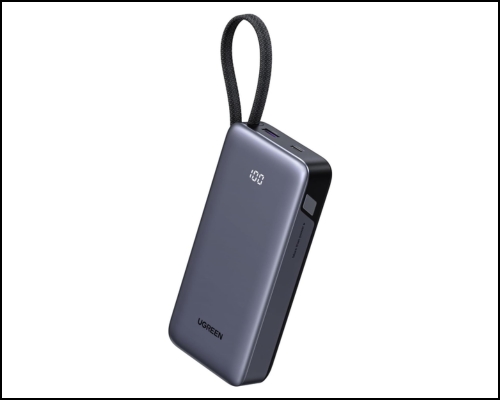
If I could recommend only one power bank to most iPhone and Galaxy S26 Ultra owners, this would probably be it.
UGREEN Nexode consistently delivered fast 45W wired charging thanks to Super Fast Charging 2.0 protocol. The Intelligent Temperature Monitoring and multi-protection system kept the battery cool under load. I also appreciated having enough capacity to recharge my phone multiple times or juice up three devices simultaneously.
The integrated braided USB-C cable helps to charge my S26 Ultra anytime, anywhere, even if I forget the cable. Also, the battery pack has a flexible cable loop that doubles as a handy carrying strap. Overall, UGREEN Nexode hits the sweet spot between size, performance, and price.
Pros
Cons
My verdict: This became my everyday power bank. It’s best for most Galaxy S26 Ultra owners looking for the best overall value.
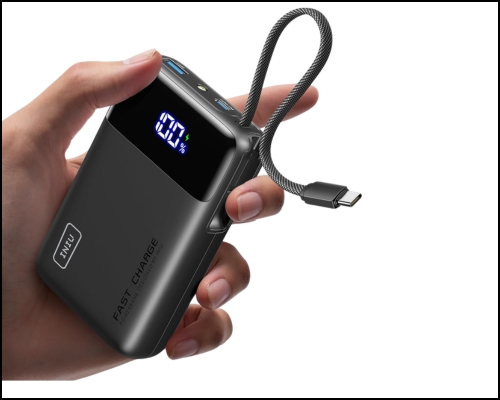
Budget power banks usually make compromises somewhere. Surprisingly, this one doesn’t make many.
I didn’t expect much before testing the INIU portable charger, but it consistently outperformed several competitors. Despite packing a 20,000mAh battery, it’s compact enough to fit comfortably in my pocket. It’s made possible due to the industry-first high-density TinyCell battery. You can get super-fast 45W charging with the USB-C PD and QC support.
Additionally, the power bank supports charging up to three devices at once, making it useful when I’m carrying my S26 Ultra accessories or traveling with someone else. The built-in flashlight will help out in emergencies. Therefore, it’s proof that you don’t have to spend a fortune to get dependable charging.
Pros
Cons
My verdict: The biggest surprise of my testing. It performs far better than its price suggests. Ideal for students, casual users, and anyone shopping on a tight budget.
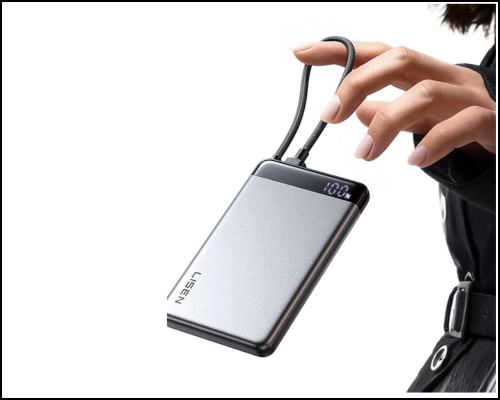
Some days, I don’t need maximum capacity. I just need something that disappears into my pocket. That’s exactly what the LISEN delivers.
It’s slim enough (only 0.5-inch thick) to carry everywhere without feeling like an extra brick. The built-in USB-C cable eliminates the need to carry an extra charging cable. For office days or short trips, it became the charger I reached for most often. The aluminum unibody looks sleek and premium.
Although it’s thin, LISEN has integrated an NTC AI-driven temperature and current control chip. My only concern is that the power bank provides up to 22.5W fast charging, which charges my S26 Ultra slower than the others.
Pros
Cons
My verdict: Not the most powerful, but easily the one I carried the most every day. If you’re a daily commuter or minimalist, go for it.
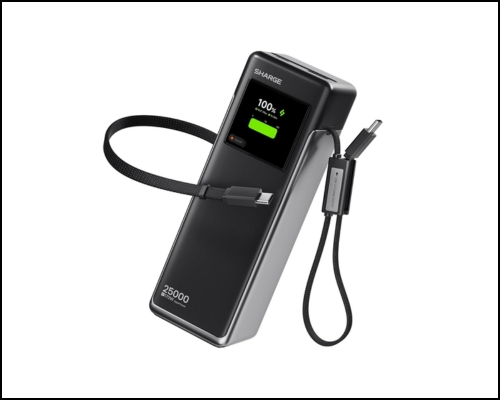
This thing is a beast. On a two-day trip, I brought only this battery in my travel accessories kit. It easily handled charging my phone, earbuds, smartwatch, and even a tablet at once. What impressed me most is that it supports 170W total output and up to 100W from a single USB-C port. So, the power bank can fast-charge a laptop as well.
The built-in USB-C cables are incredibly convenient because I don’t have to pack extra charging cables, and the smart display lets me monitor the remaining battery, charging speed, and power output in real time. And worry not, it’s airline-friendly. However, the power bank is larger and pricier than others, so I would recommend it for power users only.
Pros
Cons
My verdict: Massive, heavy, and completely worth it for travelers, photographers, and content creators.
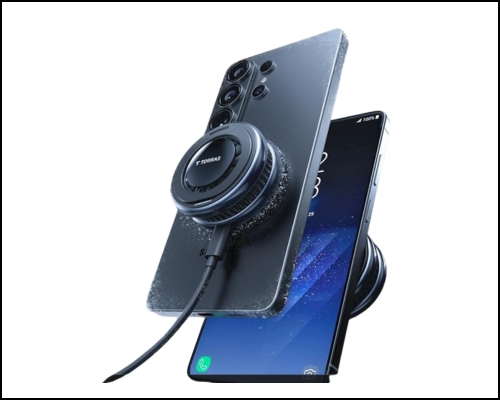
Normally, I like wired charging since it’s faster, but this particular magnetic S26 Ultra accessory actually changed my mind. The magnetic alignment snaps the phone into position instantly. There’s no fumbling with cables, especially when I’m working at my desk or watching videos.
The standout feature is the built-in cooling system. Most wireless chargers got noticeably warm in longer charging tests, especially during navigation, gaming, or video streaming. The PolarCircle’s active cooling keeps temperatures under control, helping it maintain consistent charging speeds instead of slowing down because of heat.
The 25W Qi2.2 wireless charging, thanks to the included Torras IceNano 45W plug, also feels much quicker than traditional wireless chargers. Another feature I ended up using more than expected is the 360-degree rotating stand. It lets me switch between portrait and landscape mode while charging.
Pros
Cons
My verdict: The most convenient charger I tested. It won’t replace wired charging, but it’s the one I grab when working at the desk.
Testing these power banks taught me a few lessons I wish I’d known from the beginning.
Finally, buying from trusted brands saved me the most frustration. Cheap no-name power banks often exaggerated their capacity and delivered inconsistent charging speeds.
It depends on how you use your phone.
Personally, after testing both sizes, I’d choose a quality 20,000mAh model every time. The extra capacity gives me peace of mind without adding too much weight.
After weeks of testing, one thing became obvious: not every “45W” power bank is actually designed for Samsung phones.
The right power bank isn’t the one with the biggest number on the box—it’s the one you’ll actually carry every day. For me, that’s what finally made the difference. Which power bank will you choose? Let me know in the comments below.
FAQs
Yes, but only if the power bank supports USB Power Delivery in a wired connection. Without Super Fast charging support, your phone may charge at a slower speed even if the power bank advertises 45W output.
Use a high-quality USB-C to USB-C cable rated for 5A and 100W charging. Samsung’s official cable or a certified cable from trusted brands like UGREEN, Anker, or INIU will help ensure you get the fastest and most stable charging speeds.
In case you missed: