FaceTime Like a Pro
Get our exclusive Ultimate FaceTime Guide 📚 — absolutely FREE when you sign up for our newsletter below.

FaceTime Like a Pro
Get our exclusive Ultimate FaceTime Guide 📚 — absolutely FREE when you sign up for our newsletter below.


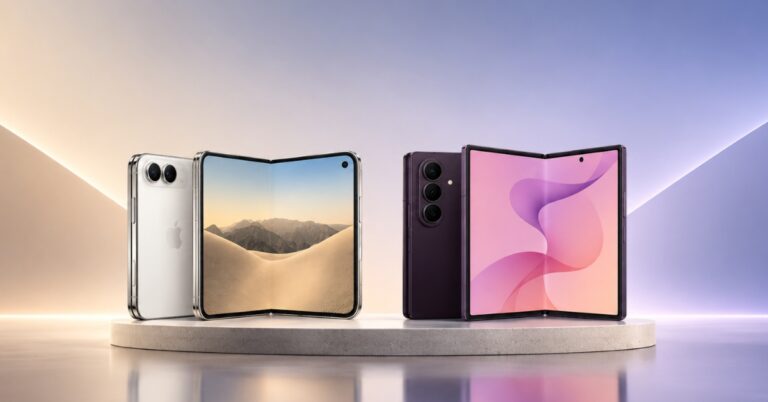
Here's the head-to-head comparison of Pixel 11 Pro Fold vs Galaxy Z Fold 8 to find the best Android foldable phone to buy.
Google has launched the Pixel 11 Pro Fold, its latest foldable phone, and it goes head-to-head with Samsung’s Galaxy Z Fold 8. I’ve always found foldable phones exciting, but spending nearly $2,000 on one makes the choice a lot harder.
Both flagships offer a large internal display, flagship processors, sophisticated AI, premium cameras, and years of software support. On paper, they look like two variations of the same idea. They aren’t. After comparing the two, one stands out as the foldable I’d actually buy.
Here I’ll break down the Pixel 11 Pro Fold vs Galaxy Z Fold 8 based on their display, camera, performance, battery life, software, and price to see which premium foldable is better and actually feels worth the money.
The two phones start at essentially the same price in the U.S., but their philosophies are very different.
| Spec | Google Pixel 11 Pro Fold | Samsung Galaxy Z Fold 8 |
|---|---|---|
| Starting price | $1,899 | $1,899.99 |
| Cover display | 6.5-inch Super Actua OLED, 1–120Hz | 5.5-inch Dynamic AMOLED 2X |
| Inner display | 8-inch Super Actua Flex OLED, 1–120Hz | 7.6-inch Dynamic AMOLED 2X, 120Hz |
| Peak brightness | Up to 3,600 nits | Up to 3,000 nits |
| Processor | Google Tensor G6 | Snapdragon 8 Elite Gen 5 for Galaxy |
| RAM | 16GB | 12GB / 16GB |
| Storage | 256GB / 512GB / 1TB | 256GB / 512GB / 1TB |
| Rear camera | 48MP main + 10.5MP ultrawide + 10.8MP telephoto | 50MP main + 50MP ultrawide |
| Front camera | 10MP + 10MP | 10MP cover + 10MP HID main on inner display |
| Battery | 4,806mAh typical | 4,800mAh |
| Wired charging | 30W wired +Up to 25W Qi2.2 wireless | 45W wired + Up to 20W wireless |
| Water/dust resistance | IP68 | IP48 |
| Software | Android 17 | Android 17 / One UI 9 |
| Weight | 238g | 201g |
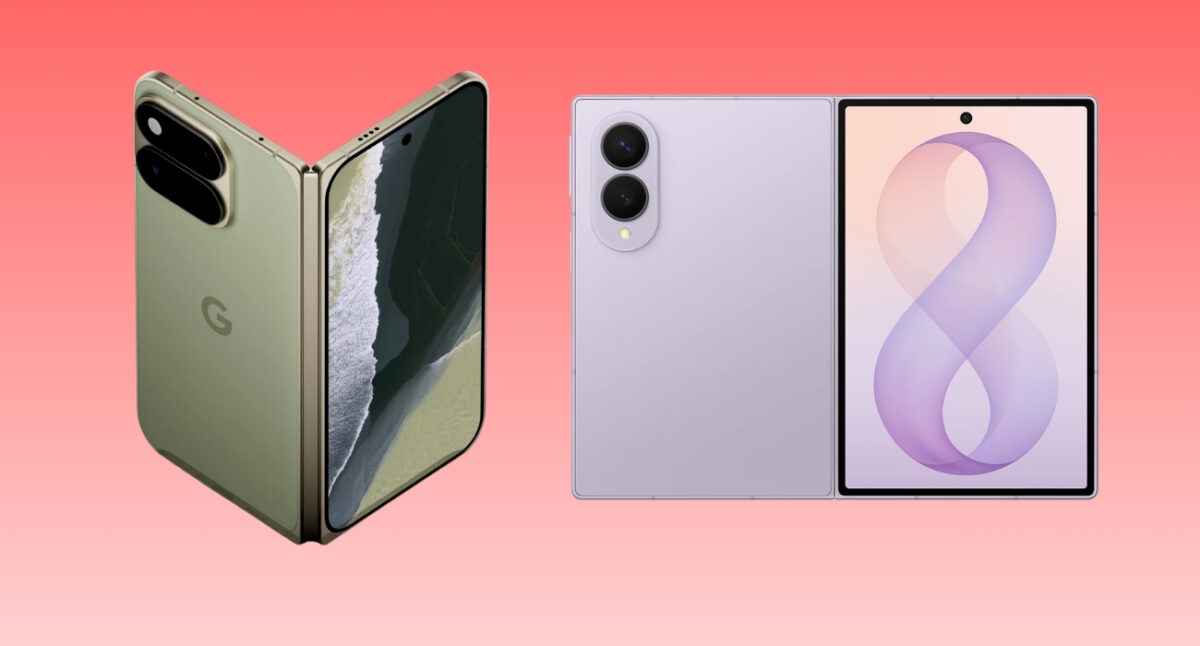
This is where Samsung surprised me. The old criticism of Galaxy Z Fold phones was simple: they were technologically impressive but physically awkward. The Z Fold 8 finally feels like Samsung listened.
At 201 grams, the Galaxy Z Fold 8 is dramatically lighter than the Pixel 11 Pro Fold, which weighs 238 grams. Samsung also gave its foldable lineup the biggest design makeover, with a wider cover screen, and honestly, it makes my content-watching more fun. Moreover, I can unfold it smoothly thanks to the Armor FlexHinge and a widened gap in the inner bezel.
This time, Samsung focused on durability as well. Dual-layer Flex Titanium beneath the inner display strengthens it. In addition, the frame uses Armor Aluminum, while Gorilla Glass Ceramic 3 is used on the folded front and Gorilla Glass Victus 2 on the back. Galaxy Z Fold 8 comes in Pistachio, Lavender, Graphite, and Cream, and they truly look beautiful in person.
The Pixel 11 Pro Fold takes a different approach. Google says it is almost 10% lighter and about 1mm thinner than its predecessor, with a new gearless hinge, a more compact camera bar with the HiLight notification system, a redesigned hinge, and a lighter, 3x more durable body.
The exterior combines glass-ceramic cover glass, Gorilla Glass Victus 2 on the back, an aluminum frame, and an ultra-durable composite matte back in only two colors. It also carries an IP68 rating.
For me, Samsung wins on the new design. The Galaxy Z Fold 8 feels noticeably more refined and compact, with a reassuringly premium construction. The Pixel 11 Pro Fold is still the one I’d consider if a taller form factor and a more understated matte finish matter more to you.
My pick: Galaxy Z Fold 8 if you like a compact design; Pixel 11 Pro Fold for a bigger, more understated feel.
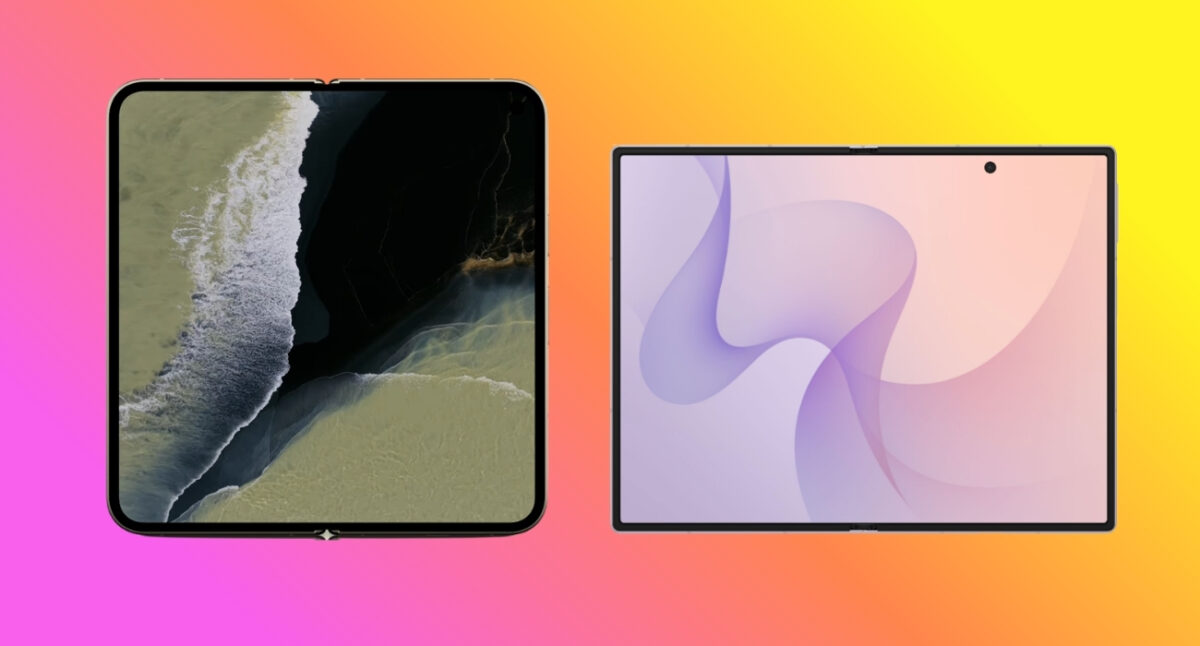
The display is probably the first thing I noticed when comparing the Pixel 11 Pro Fold and Galaxy Z Fold 8. Both have excellent screens, but Google and Samsung are clearly taking different approaches.
The Pixel 11 Pro Fold goes big. Its inner display measures 8 inches and uses a foldable LTPO OLED Super Actual Flex panel with a 120Hz refresh rate, HDR10+, and up to 3,600 nits peak brightness. The square-ish 1:1 aspect ratio also gives me plenty of room for reading, browsing, and working on two apps side by side.
I particularly like the 6.5-inch Super Actua cover display. With a 1080 x 2342 resolution, 120 Hz, and 3,600 nits peak brightness, it feels much closer to using a regular flagship phone when the Pixel is folded.
The Galaxy Z Fold 8, meanwhile, is smaller at 7.6 inches, while the cover display is only 5.5 inches. But Samsung’s trick is the aspect ratio. The Fold 8’s outer display uses a wider 10:16 ratio, while the unfolded display uses a 4:3 ratio. The cover screen feels more like a small tablet, which I find particularly useful for multitasking, gaming, and reading.
Although smaller, the Dynamic LTPO AMOLED 2X display, with a 120Hz refresh rate, HDR10+, and up to 3,000 nits of peak brightness, makes text and images look incredibly sharp. In addition, the Gorilla Glass Ceramic 3 protection and anti-reflective treatment are also nice touches for everyday use.
For me, the Pixel wins if you want the biggest screen, while the Galaxy wins for the more polished foldable display experience.
My pick: Pixel 11 Pro Fold for size, Galaxy Z Fold 8 for overall display experience.
Performance is where I think the Galaxy Z Fold 8 has the clear advantage. The Pixel 11 Pro Fold uses Google’s new Tensor G6, built on a 3nm process, while Samsung’s foldable runs on Qualcomm’s Snapdragon 8 Elite Gen 5, also built on 3nm.
The Pixel’s Tensor G6 uses a 7-core CPU configuration with 50% more TPU compute power, 20% greater power efficiency, and around 15% faster app launch speeds. Graphics are handled by the PowerVR CXTP-48-1536 GPU. Google’s focus here is on powering AI features and making everyday tasks feel smarter, rather than chasing benchmark numbers.
And honestly, for normal use, that’s sufficient. Apps open quickly, switching between apps feels smooth, and Google’s on-device AI features truly shine in day-to-day life. If you are mostly browsing, messaging, taking photos, and using Gemini, I don’t think you’ll feel shortchanged.
But the Galaxy Z Fold 8 is the phone I’d choose when performance really matters. Its Snapdragon 8 Elite Gen 5 uses an octa-core CPU with two Oryon V3 Phoenix L cores and six Oryon V3 Phoenix M cores. It also gets the Adreno 840 GPU running at 1.3GHz.
That extra performance headroom makes a difference for demanding games, video editing, and heavy multitasking, especially when I’m using the large inner display with several apps open. For me, the Pixel is fast enough, but the Galaxy feels more future-proof.
My pick: Galaxy Z Fold 8. If you’re spending this much on a foldable, I’d rather have the extra performance available when I need it.
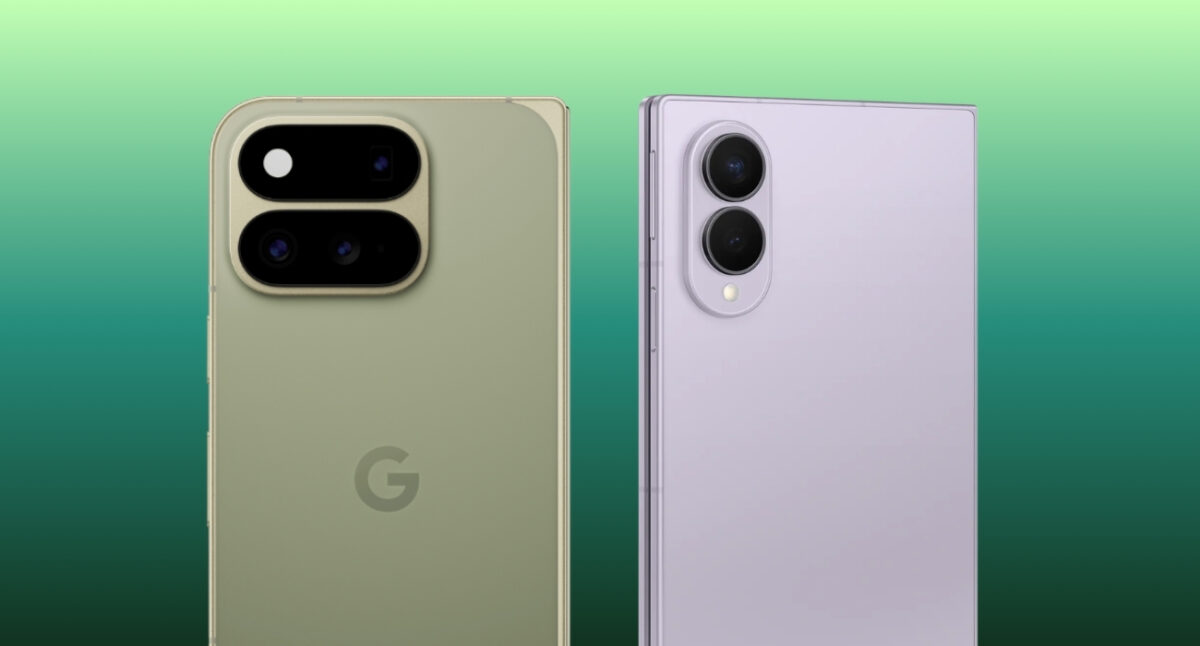
This is where I would hesitate before declaring a winner.
The Pixel 11 Pro Fold has a 48MP main camera with an f/1.7 aperture, dual-pixel autofocus and OIS. But the camera I find most exciting is the 10.8MP telephoto, which provides true optical zoom rather than digital cropping. There’s also a 10.5MP ultrawide camera with a 127-degree field of view.
Google is known for its computational photography, and the Pixel 11 Pro Fold is no exception. I really liked Magic Capture, which automatically captures, crops, and edits photos and videos. Its new 30x Super Zoom keeps distant subjects sharper, while the larger sensor captures 56% more light for better Night Sight photos and clearer low-light video.
The Galaxy Z Fold 8 has a 50MP f/1.8 main camera and a surprisingly capable 50MP ultrawide with a 120-degree field of view and multi-directional autofocus. However, there’s no dedicated telephoto camera, so Samsung relies on digital zoom for longer-range shots. That sounds like a clear Pixel victory, and for still photography, I think it is.
Where Samsung pulls ahead is video. The Fold 8 can record up to 8K at 30fps, while the Pixel tops out at 4K at 60fps. Samsung also offers My FanCam to track a subject in group videos and Dual Recording from the front and main cameras, making the Galaxy a more appealing option if I plan to shoot a lot of video.
Overall, if I were taking travel photos, family photos, or spontaneous night shots, I would choose the Pixel, whereas for creating social media content, filming other people, or even editing video footage on the phone, I would go for the Galaxy.
Winner: Pixel 11 Pro Fold for photography; Galaxy Z Fold 8 for video versatility.
The Pixel 11 Pro Fold runs Android 17 with Google’s Pixel software and Gemini Intelligence deeply integrated into the experience. Google has added foldable-specific features such as Split Screen, Drag and Drop, Instant View, tabletop mode to watch content, and optimized app bubbles. I love its proactive assistance in daily tasks and improved Circle to Search.
There are also smart privacy and security features. Call Screen and Scam Detection have saved me multiple times, whereas the built-in VPN and emergency services via satellite come in handy in critical situations. The Pixel approach is simple: Make the phone understand what I am trying to do.
Samsung’s approach is more like: Give me every tool I could possibly need. One UI 9 on the Galaxy Z Fold 8 is built around Multi Window, App Continuity, Taskbar functionality and three-way split-screen workflows. I also tried DeX mode, which effectively lets the Fold 8 behave more like a lightweight desktop computer when connected to the right setup.
Then there is Galaxy AI. The Fold 8 gets Now Nudge, Photo Assist, and My FanCam, along with Gemini-powered features. Both bundles a six-month Google AI Pro trial with expanded Gemini access and 5TB of cloud storage.
Winner: Galaxy Z Fold 8 for power users, Pixel 11 Pro Fold for everyday use.
The batteries are almost identical on paper.
But charging is where Samsung pulls away.
The Pixel supports 30W wired charging and up to 25W Qi2.2 wireless charging. Google says it can reach 50% in around 30 minutes and offers more than 24 hours of battery life. Whenever I needed an ultra-fast battery boost, I enabled Extreme Charging Mode, which pauses background activity and non-essential apps.
Samsung supports 45W wired charging, 20W wireless charging, and Wireless PowerShare. Samsung’s charging architecture is designed to distribute power more efficiently across the battery system while managing heat. The Galaxy is also rated for up to 26 hours of video playback.
However, note that foldable phones are screen-hungry devices. When testing the inner display heavily, I had to charge both phones frequently. And being able to top up quickly matters more than winning a theoretical battery-capacity contest.
Winner: Galaxy Z Fold 8
This is one category where neither phone gives me a reason to worry.
The Pixel 11 Pro Fold gets seven years of OS, security, and Pixel Drop updates. Samsung matches it with seven generations of Android OS upgrades and seven years of security updates for the Galaxy Z Fold 8. That’s excellent news for a $1,800-plus smartphone.
But long-term ownership isn’t only about software updates. It’s also about durability, repairability, accessories, and the cost of replacing the device.
Samsung’s foldable ecosystem is more mature, and its new Fold 8 design benefits from years of hinge and foldable-display development. Google has made impressive durability improvements with the Pixel 11 Pro Fold, including its gearless hinge and IP68 protection.
I’d still give Samsung the slight edge simply because the Fold line has been evolving for longer.
Winner: Galaxy Z Fold 8
Both phones start at about $1,900. Samsung’s Galaxy Z Fold 8 starts at $1,899.99, with 512GB at $2,099.99 and 1TB at $2,499.99. Only the top-tier 1TB option comes with 16GB RAM. And Samsung’s trade-in, financing programs, $200 store credit, and free app subscription bundles can make the effective price even more attractive.
On the other hand, you will get the Pixel 11 Pro Fold 256GB for $ 1,899 and 512 GB for $2,019. Google also offers up to $1,000 off eligible trade-ins and the Pixel Watch 5 for free until 27/08.
Winner: Galaxy Z Fold 8 for most buyers; Pixel 11 Pro Fold for Pixel loyalists and photography fans.
Here is the part where I stop comparing spec sheets.
I’d buy the Galaxy Z Fold 8.
Not because the Pixel 11 Pro Fold is bad. Quite the opposite. The Pixel might actually be the more exciting phone. Its displays are bigger, the camera system is more interesting, AI feels more naturally integrated into every task, better Qi2 wireless charging, and IP68 protection plus seven years of updates make it a seriously compelling long-term device.
But the Galaxy Z Fold 8 is the better foldable.
The wider cover screen makes the phone more interesting. The 201g weight makes it easier to carry. Snapdragon performance gives it more headroom. One UI 9 is packed with foldable-specific multitasking tools. DeX gives power users another dimension. Samsung’s 45W charging is faster. And the camera system is more versatile for video creation.
Most importantly, Samsung has spent years learning what people actually do with a foldable. The Fold 8 feels like the product of those lessons.
And if you are asking me, should you buy the Pixel 11 Pro Fold or the Galaxy Z Fold 8? Galaxy Z Fold 8. No hesitation.
The Pixel 11 Pro Fold and Galaxy Z Fold 8 are proof that foldable phones are finally becoming less about surviving the engineering challenge and more about perfecting the experience.
The Pixel 11 Pro Fold is the phone I’d choose if I wanted the camera, AI, and Google software experience above everything else. Its 6.5-inch outer display, 8-inch inner screen, 5x telephoto, and 3,600-nit displays make it an unusually strong alternative to Samsung’s formula.
However, the Galaxy Z Fold 8 is the phone I would actually purchase, as it is lighter, faster, charges faster, has a more functional cover display, offers better multitasking options, and its software is built around the idea that you’re holding a phone that can become a tablet. And that’s ultimately what I want from a foldable.
Must read: