FaceTime Like a Pro
Get our exclusive Ultimate FaceTime Guide 📚 — absolutely FREE when you sign up for our newsletter below.

FaceTime Like a Pro
Get our exclusive Ultimate FaceTime Guide 📚 — absolutely FREE when you sign up for our newsletter below.


I switched from the Pixel Watch 4 to the Galaxy Watch 8 expecting only small differences, but the experience changed more than I expected. Here’s which smartwatch came out on top.
When I bought the Galaxy Watch 8, I thought it would be my smartwatch for years. It delivered excellent fitness tracking, lightweight comfort, and one of the best Wear OS experiences available. But then the Pixel Watch 4 arrived, bringing Google’s latest software features, AI-powered health coach, Satellite SOS, and tighter integration with Pixel phones.
So, I decided to compare my Galaxy Watch 8 with the Pixel Watch 4 to see if Google’s newest wearable was actually an upgrade in real-world use. Some improvements were immediately obvious, while other areas made me appreciate what Samsung got right.
If you’re looking for the best smartwatch for Android, here’s what I learned after making the switch and which one I think is the better buy.
Here are the key differences in specs:
| Feature | Pixel Watch 4 | Galaxy Watch 8 |
|---|---|---|
| Processor | Qualcomm Snapdragon W5 Gen 2, Cortex-M55 co-processor | Exynos W1000 (3nm, 5-core) |
| Display and design | Round Actua 360 display | Squircle (round screen) Super AMOLED display |
| Sizes | 41mm and 45mm | 40mm and 44mm |
| Colors | Polished silver, matte black, champagne gold, satin moonstone | Graphite, Silver |
| Battery life | Durability and water-resistant | Up to 40 hours with Always On Display off |
| Health features | Fitbit-powered health tracking, loss of pulse detection, ECG, skin temperature monitoring | Samsung BioActive Sensor, skin antioxidant tracking, vascular load tracking, and sleep apnea risk detection |
| AI features | Gemini integration | AI-powered wellness and health insights and Gemini |
| Durability and water resistant | 5ATM + IP68 | MIL-STD-810H certification + 5ATM + IP68 |
| Price | $310 – $440 | $350 – $430 |
To make this comparison as fair as possible, I used both the Pixel Watch 4 and Galaxy Watch 8 as my primary smartwatch for everyday tasks rather than relying solely on benchmark numbers or manufacturer claims.
During the testing period, I wore each watch throughout the day and overnight, tracking workouts, sleep, notifications, calls, navigation, and health metrics. I also tested battery life in different situations and paid close attention to the software experience.
My aim was not to compare which smartwatch offered the most features. Instead, I wanted to determine which smartwatch actually felt better to live with every day and whether switching from the Galaxy Watch 8 to the Pixel Watch 4 was worth it.
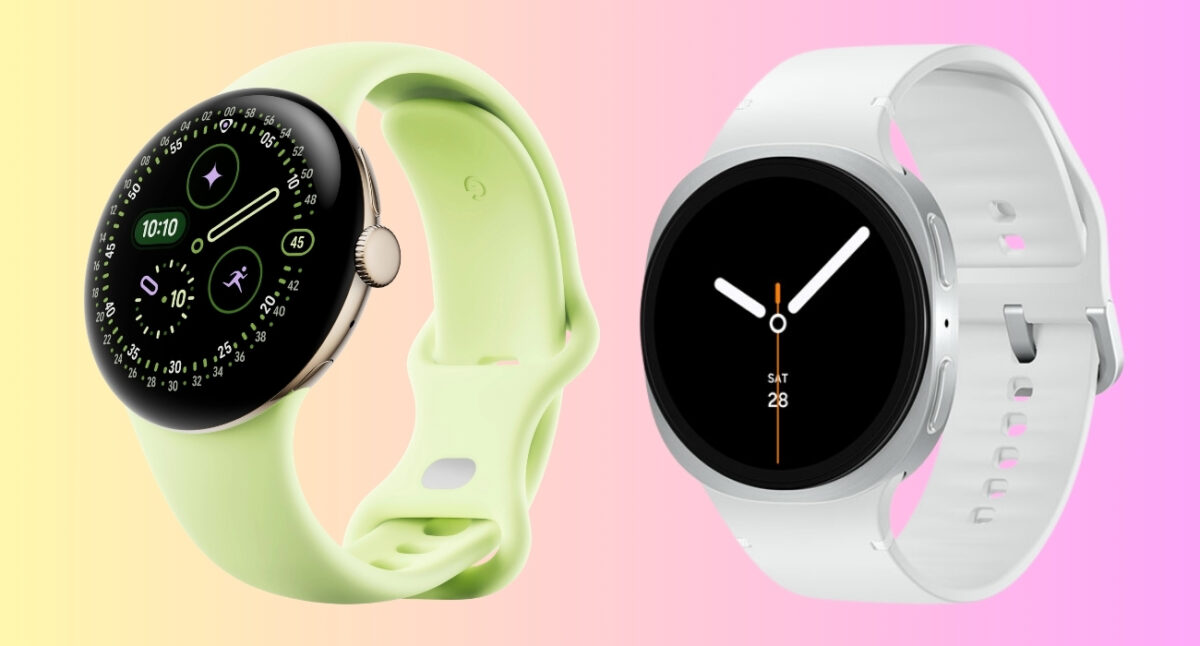
I expected the Galaxy Watch 8 to win this category.
Samsung’s redesign made the watch noticeably thinner than previous generations, and the flat-sided squircle look (“cushion design” in Samsung’s terms) gives it a more modern appearance. It feels premium, durable, and closer to a traditional watch than most smartwatches I’ve tested.
The Pixel Watch 4 takes a completely different approach. Google has stuck with its signature domed design with no visible frame. The curved bubble-like glass blends into the body, giving a minimalist all-screen look. It also made the screen easier to see from every angle. However, Pixel Watch 4 is a few grams heavier.
After wearing both for a few weeks, I found myself reaching for the Galaxy Watch 8. It looks slightly more substantial and professional, especially when paired with a metal band. Moreover, the dynamic lug system taken from Galaxy Watch Ultra made the dial move comfortably on your wrist. I almost forgot I was wearing it at times.
If you prefer a lightweight smartwatch for wearing all night, Samsung’s design is the better fit.
My winner: Galaxy Watch 8
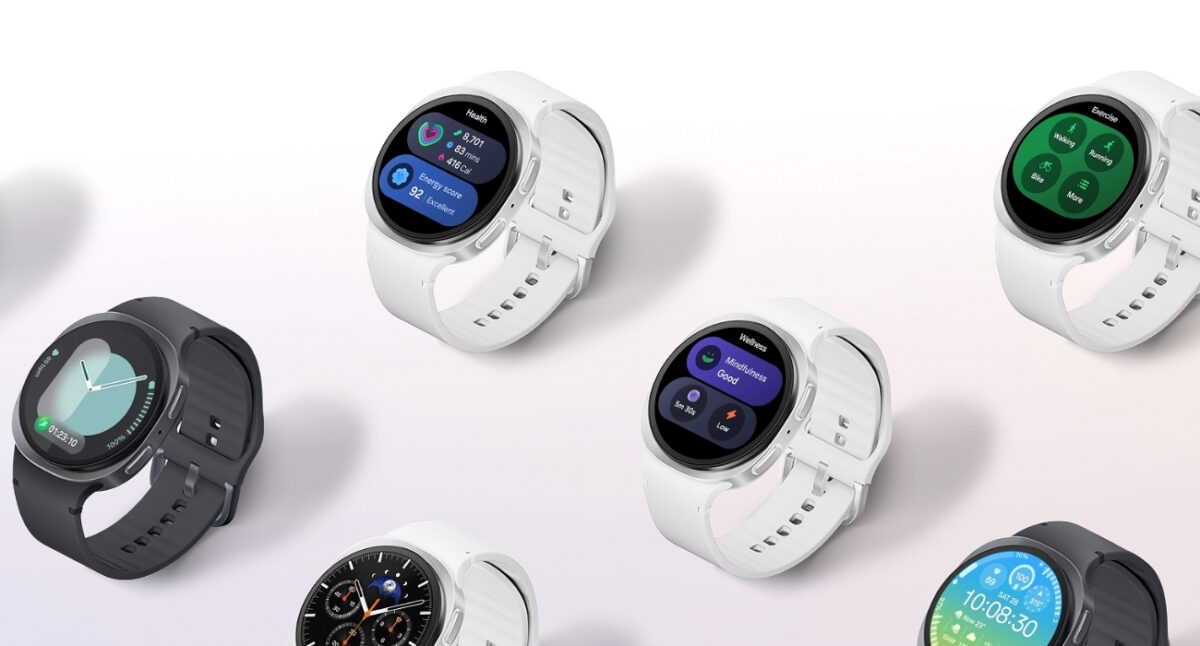
If there’s one area where I noticed a difference every single day, it was the display and overall responsiveness.
Both these watches feature superb AMOLED displays with up to 3,000 nits peak brightness. So, they are bright enough for outdoor use. The Galaxy Watch 8 uses Samsung’s proven Super AMOLED display, which delivers rich colors, deep blacks, and excellent visibility in direct sunlight. Text looks sharp, animations are smooth, and everything feels polished.
The Pixel Watch 4, however, impressed me more in daily use. Google’s brighter Actua 360 display made notifications, maps, and workout stats easier to read at a glance. Moreover, the edge-to-edge design offered more space on the screen despite the compact size of the watch.
Performance was equally close. The Galaxy Watch 8 felt incredibly fast when navigating thanks to the pinch gestures similar to Apple Watch’s Double Tap gesture. Moreover, I really loved the Universal Gestures to use the watch hands-free. Samsung’s One UI 8 also lets me stack multiple tiles on a single screen so I can check my metrics without opening all the apps.
Winner: Galaxy Watch 8
After several weeks of health tracking testing, the gap between the Pixel Watch 4 and Galaxy Watch 8 was much smaller than I anticipated. Both watches cover the basics, like ECG, temperature monitoring, and blood oxygen.
The Galaxy Watch 8 comes loaded with Samsung’s BioActive Sensor suite, giving it access to sleep monitoring, stress tracking, skin analysis, body composition scale, and a growing list of wellness and lifestyle insights. I was genuinely impressed by the amount of data. Moreover, the Galaxy AI acts as a running and sleep coach. And all of these are free to use.
The Pixel Watch 4 takes a different approach. Instead of overwhelming numbers, Google leans heavily on Fitbit’s health ecosystem. The new Google Health app focuses on presenting information in a way that’s easier to understand and act upon. Plus, the AI coach was like a personal trainer for me. But it needs Fitbit Premium ($9.99/month), similar to Apple Fitness+.
During my testing, both smartwatches showed almost identical results in terms of heart rate monitoring. As usual, the step counting also showed no significant differences, and GPS tracking proved reliable on both devices.
Winner: Galaxy Watch 8
Battery life was the first thing I paid attention to when comparing the Galaxy Watch 8 and Pixel Watch 4. Both have a 325mAh battery in the smaller version. But the 45mm Pixel Watch 4 has a 455mAh cell, whereas Samsung provided a 425mAh battery in the 44mm Galaxy Watch 8.
In my testing, both watches were capable of getting through a full day, even with sleep tracking enabled. My typical routine included notifications, message replies, workout tracking, GPS usage, music controls, and the Always On display. The Pixel Watch 4’s biggest improvement is that it goes up to 48hours with battery saver mode.
Charging speed also matters. The Pixel Watch 4 comes with an upgraded dock that charges the watch in an upright position as opposed to lying flat. I was still able to view the time, the remaining battery percentage, and my set alarms. It also charged noticeably faster in my testing. Starting at 5% battery, it reached 100% in just 43 minutes.
Samsung sticks with the traditional magnetic charging puck on the Galaxy Watch 8. It works perfectly well, but it doesn’t offer the same convenience or visibility while charging. Also, it took 64 minutes to reach a full charge.
Winner: Pixel Watch 4
The Galaxy Watch 8 runs Wear OS 6 with Samsung’s One UI 8 Watch interface layered on top. It packs extensive customization options, advanced health dashboards, deeper settings, and strong integration with Galaxy phones. You can also access Gemini for hands-free interactions via a customizable button.
The Pixel Watch 4 takes the opposite path. Google’s software feels cleaner, lighter, and more focused and cohesive. It integrates beautifully with Google Assistant, Maps, Calendar, and more. The biggest advantage of the Pixel Watch 4 is the raise-to-talk with Gemini and safety features like loss-of-pulse alerts and emergency satellite connectivity.
You can make calls and contactless payments, and download apps from the Play Store for everyday convenience on both watches.
Winner: Pixel Watch 4
The biggest surprise after moving from the Pixel Watch 4 wasn’t a specific feature. It was how differently I interacted with my smartwatch throughout the day.
With Galaxy Watch 8, I often found myself exploring features, checking health metrics, customizing watch faces, and tweaking settings. Samsung’s software encourages that kind of engagement because there’s always another feature to discover or another data point to analyze. However, it needs to be charged more frequently than the Pixel Watch 4.
The other major change was how often I used AI features. On previous smartwatches, voice assistants and AI coaches felt like a nice bonus. With Gemini and Galaxy AI, I found myself using voice interactions several times a day for reminders, quick questions, navigation, and fitness assistance.
You may like to read: Samsung Galaxy Watch 9 vs Apple Watch Series 11
After spending weeks with both watches, my answer is surprisingly simple.
Here’s the uncomfortable truth for Google fans: The Pixel Watch 4 is easier to admire, but the Galaxy Watch 8 is easier to live with. And in the long term, usability wins every time.
Seriously, I wanted the Pixel Watch 4 to win. It’s prettier, smarter in some ways, cleaner looking, and carries the stock Android feel of Google.
But after weeks of real usage, I’d still spend my own money on the Galaxy Watch 8. Samsung has built an incredibly polished wearable with excellent hardware, reliable health tracking, strong battery life, and one of the most mature smartwatch ecosystems available on Android.
Which Android smartwatch is your favorite? Let me know in the comments below!
Read More: