FaceTime Like a Pro
Get our exclusive Ultimate FaceTime Guide 📚 — absolutely FREE when you sign up for our newsletter below.

FaceTime Like a Pro
Get our exclusive Ultimate FaceTime Guide 📚 — absolutely FREE when you sign up for our newsletter below.


This guide explains how to use Live Speech across Apple devices. Learn how to set it up on your iPhone, Mac, and Apple Watch to turn typed text into spoken words.
 ByVikhyat
Designed primarily for individuals with speech impairments or conditions that affect vocal ability, Live Speech also works as a reliable communication tool in many everyday situations. It can help while recovering from surgery, managing temporary voice strain, speaking in loud environments, or ensuring clarity during important calls and meetings.
In short, Live Speech bridges the communication gap that arises when speaking is difficult, limited, or temporarily not possible by allowing you to type what you want to say and have your device speak it instantly. This post explains what Live Speech is and how to use it on iPhone, Mac, and Apple Watch.
Live Speech is an accessibility feature that lets you type what you want to say and have your device speak it aloud in real time. Instead of relying on your voice, you enter text into a dedicated interface, and your iPhone, Mac, or Apple Watch converts it into speech instantly.
Live Speech works system-wide, so you can use it during:
The feature also integrates with Personal Voice, which lets users create a digital voice that sounds like their own. Once set up, that personalized voice can be used within Live Speech for more natural communication.
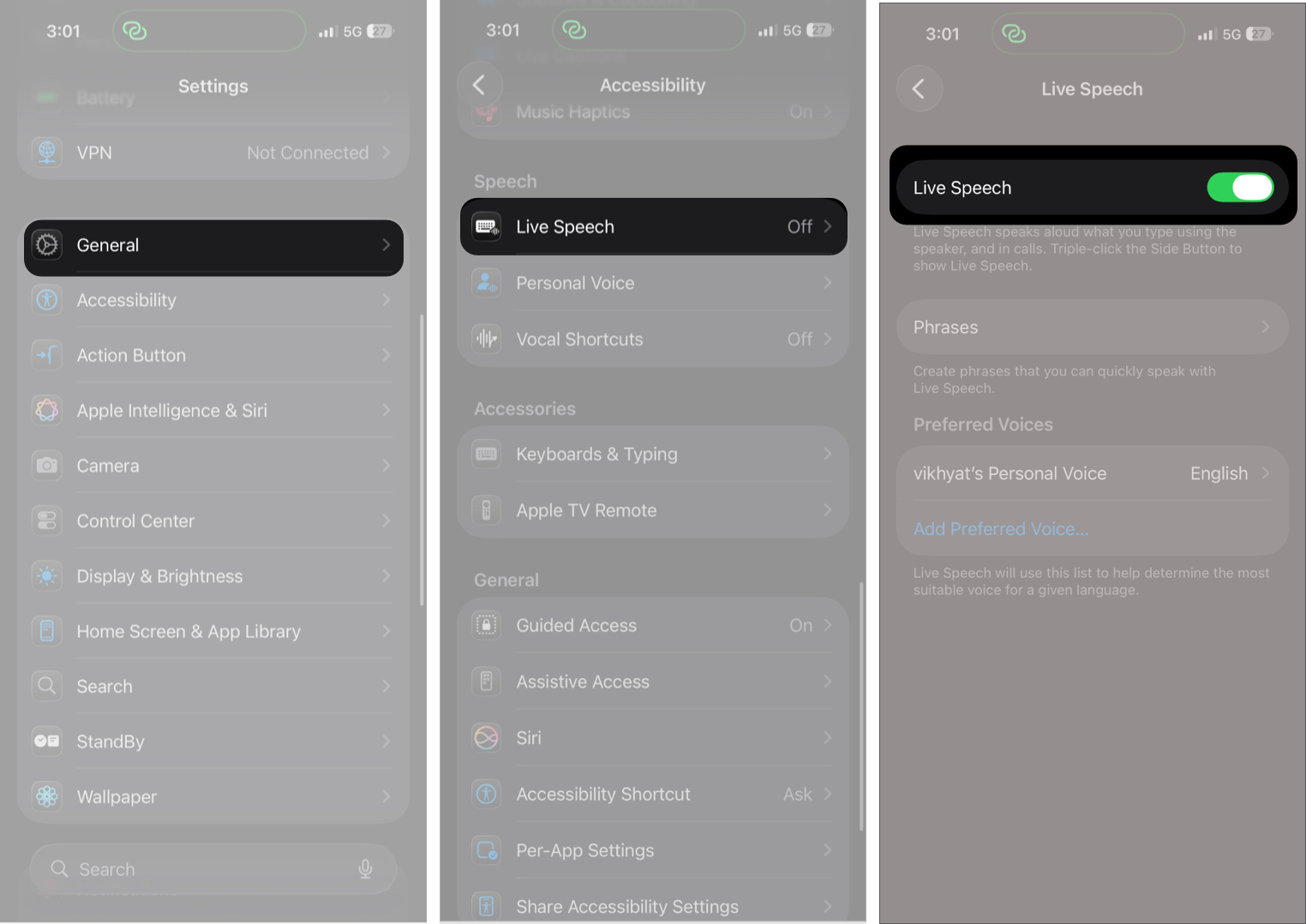
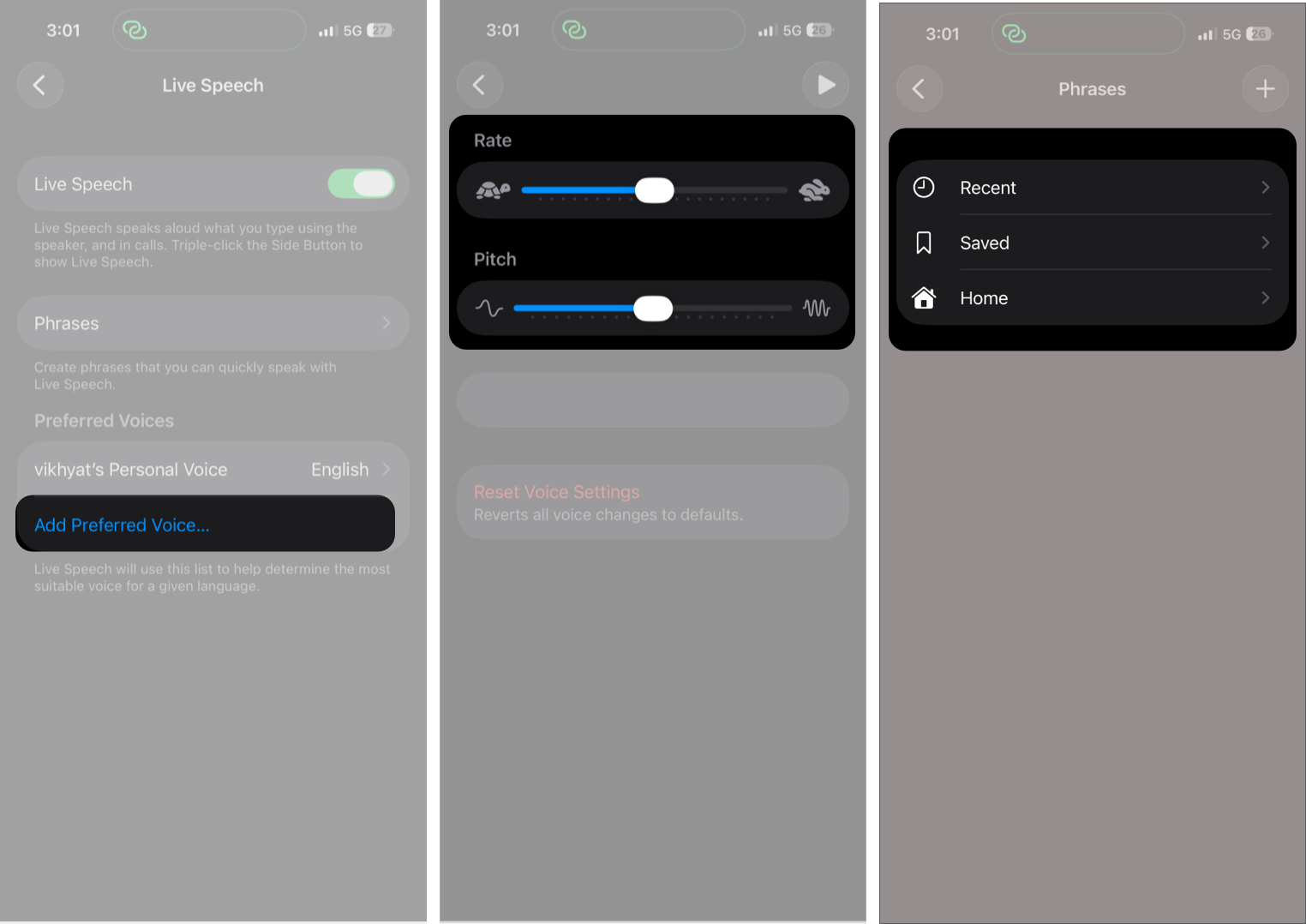
It works. The setup and usage process can be broken down into three clear stages: enabling the feature in Accessibility settings, activating it through a shortcut, and typing your message to have it spoken aloud.
After initial setup, Live Speech becomes a quick, on-demand communication tool that you can use during calls, FaceTime conversations, or in-person interactions. Here’s how:
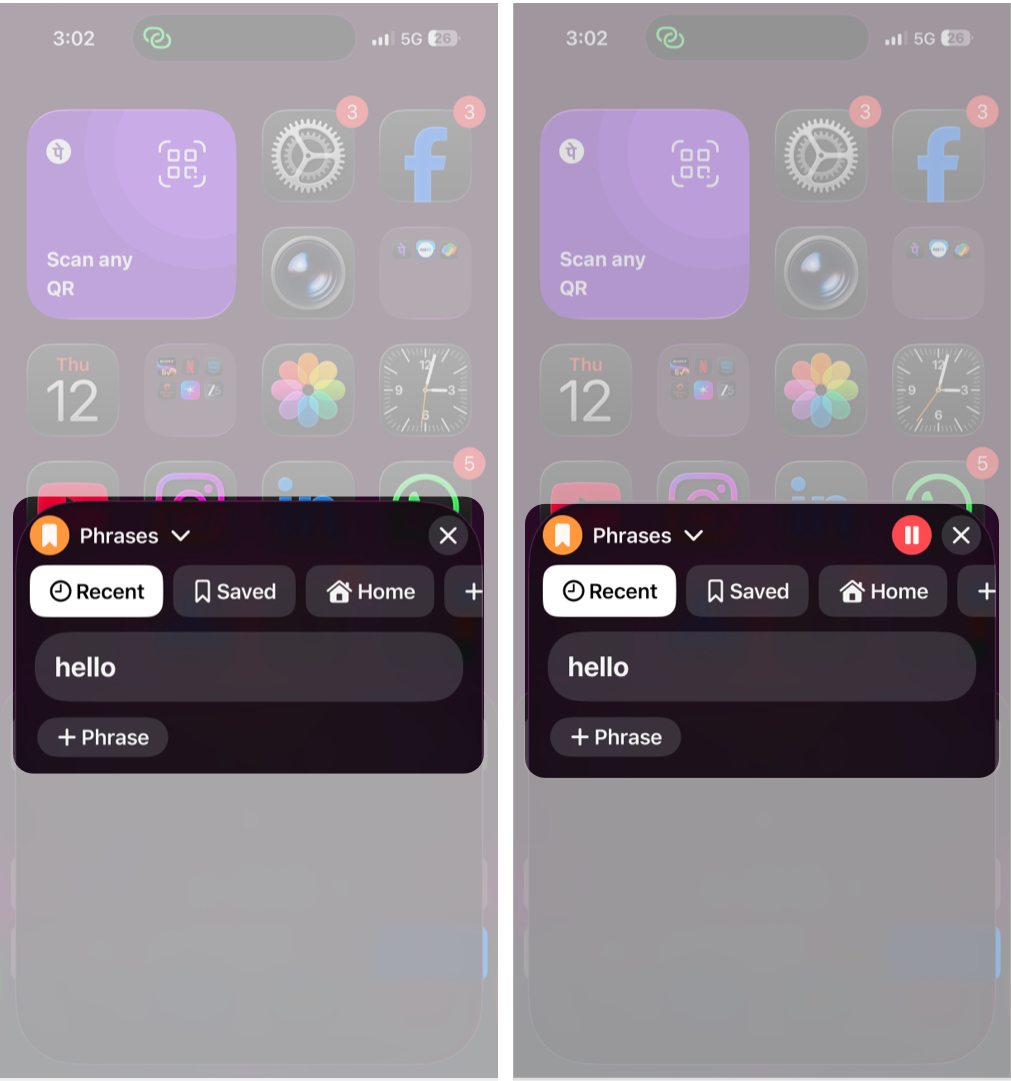
Triple-press the Side button, and the Live Speech panel overlay will appear on your screen.
Once you understand how Live Speech works on iPhone, using it on Mac feels familiar. The overall flow remains the same: enable the feature in Accessibility settings, trigger it with a shortcut, and type your message to have it spoken aloud. The difference lies in how you access it and how it integrates with macOS apps.
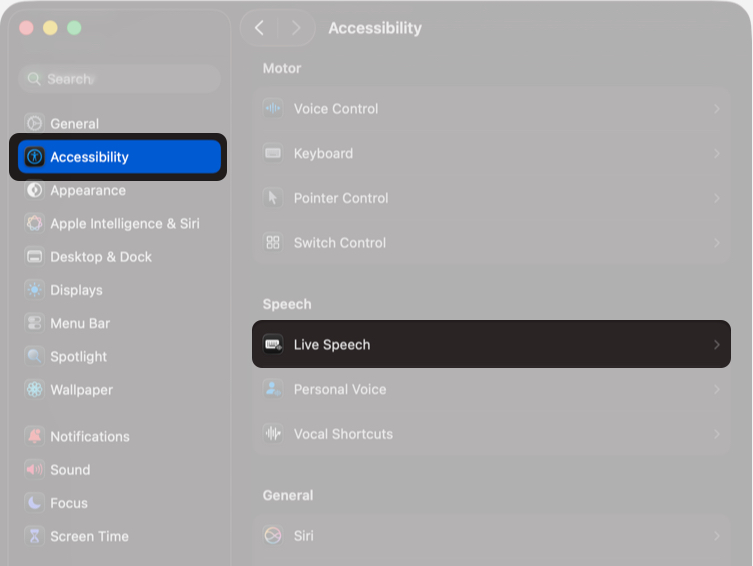
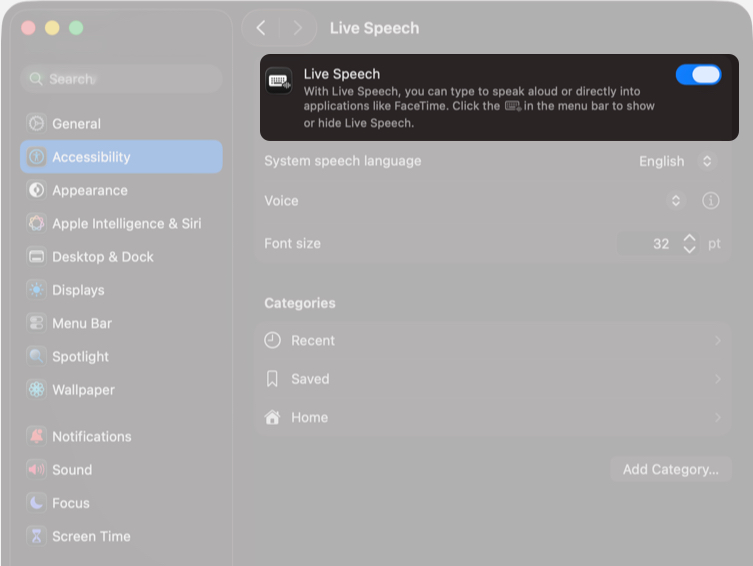
On a Mac, no additional shortcut is required to activate Live Speech. Once you enable it in System Settings, the Live Speech panel automatically appears at the top center of your screen.
It remains visible and ready to use until you manually turn off Live Speech in Accessibility settings.
If you are already comfortable using Live Speech on iPhone, the experience on Apple Watch will feel intuitive. The interface is adapted for the smaller screen, and the core functionality remains consistent.
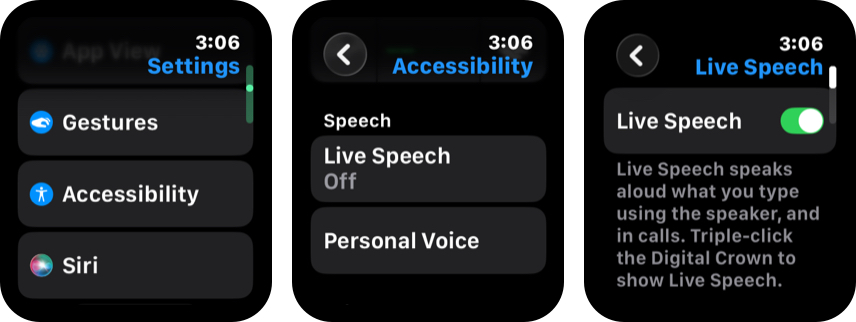
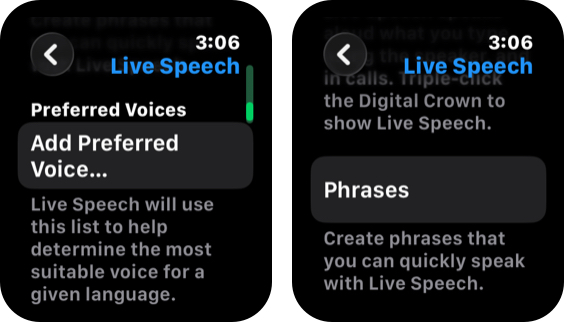
Alternatively, you can also use the Watch app on your iPhone to enable and set up Live Speech on your Apple Watch.
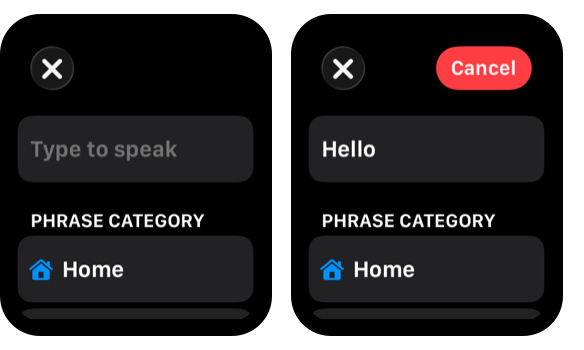
Now that you’ve enabled and set up Live Speech on your Apple Watch, here’s how you can activate and use it:
If you are not satisfied with the available system voices, Personal Voice lets you create a digital voice that closely resembles your own. This gives your Live Speech output a more natural tone, making communication feel more authentic.
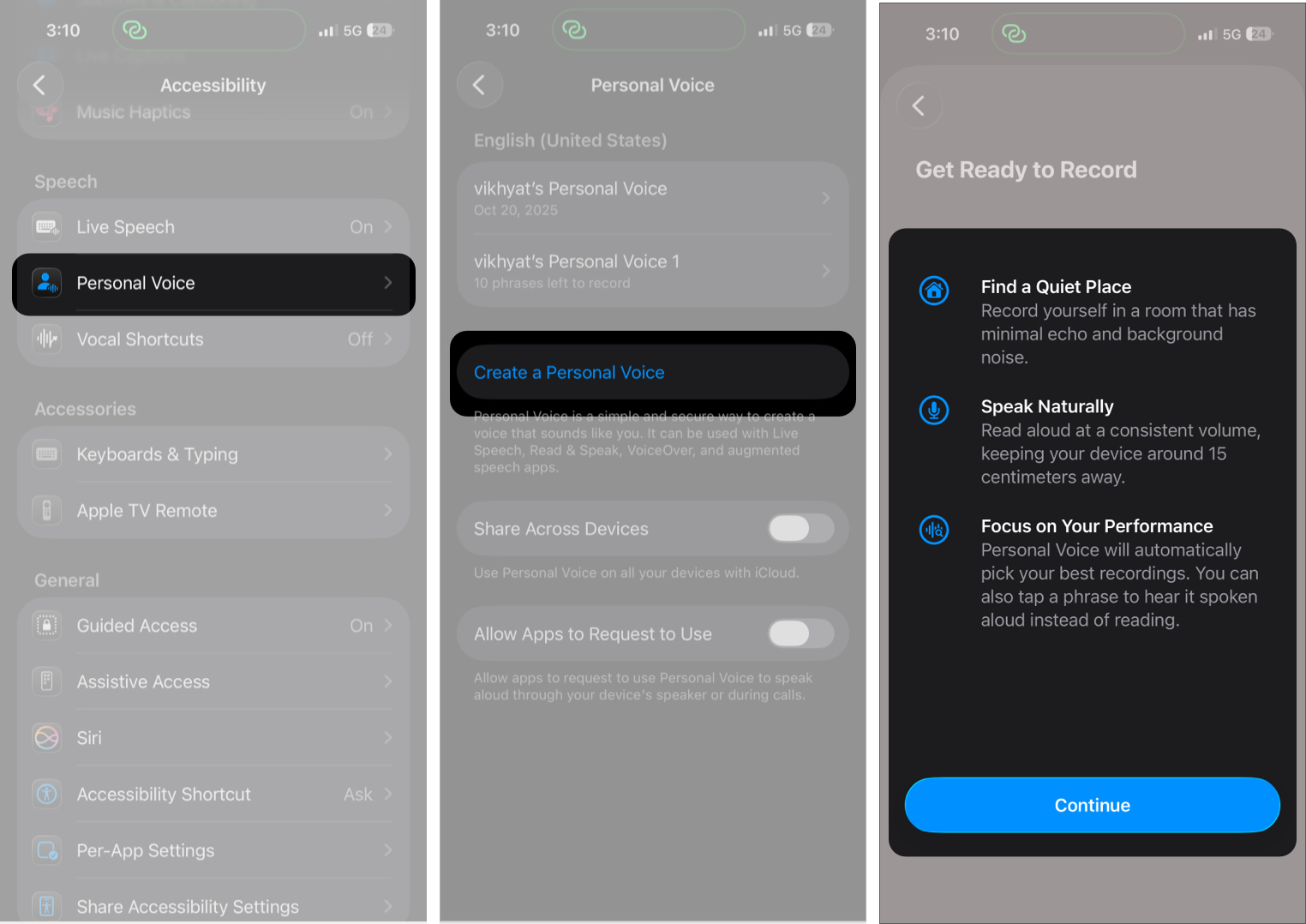
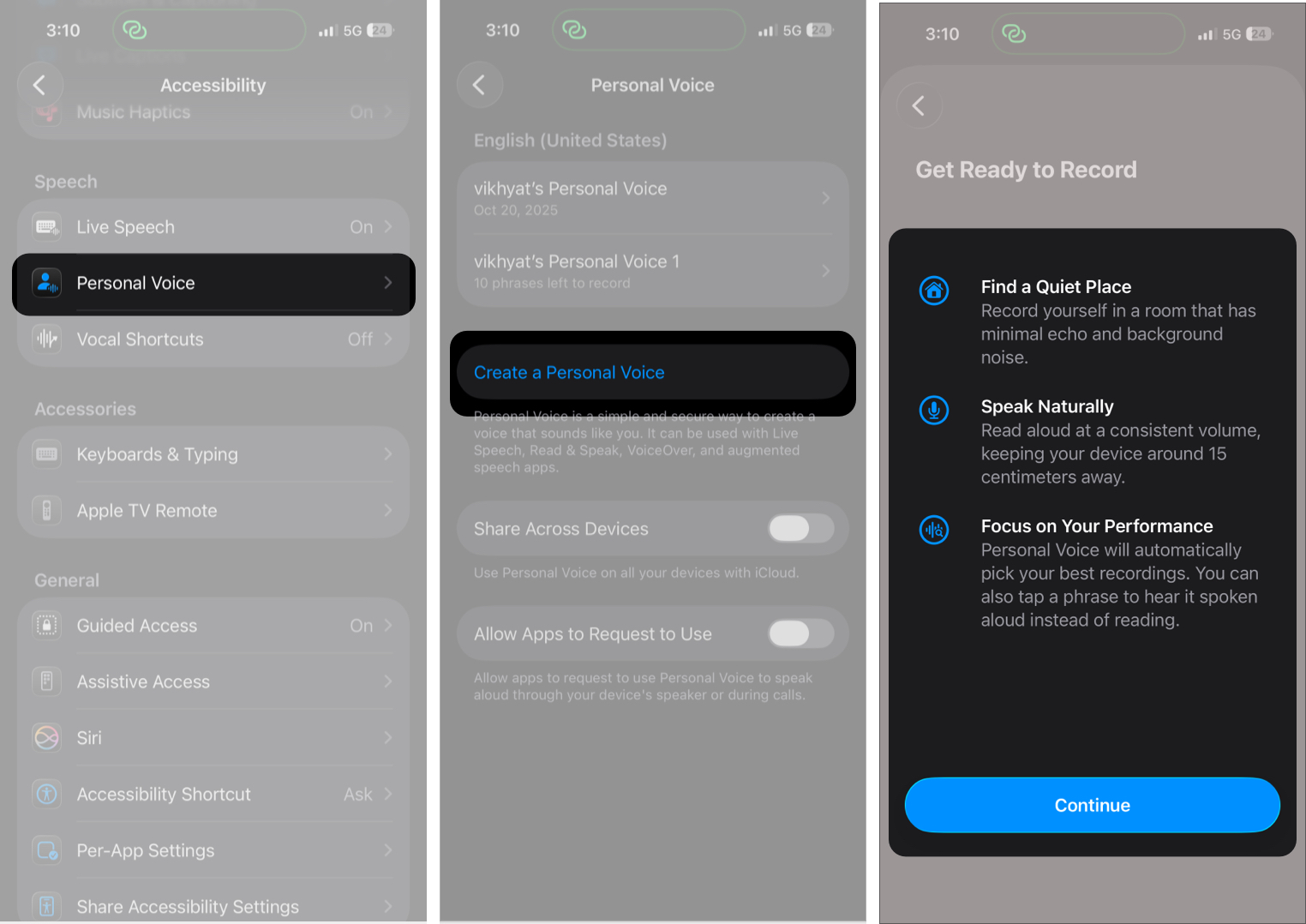
Once created, you can select your Personal Voice within Live Speech settings.
Live Speech is helpful in:
While Live Speech is reliable and practical, there are a few limitations you should be aware of before relying on it regularly:
That’s pretty much it; this was everything you needed to know about Live Speech on Apple devices. The feature works seamlessly across iPhone, Mac, and Apple Watch, allowing you to participate in conversations with confidence and clarity. And when paired with Personal Voice and saved phrases, it becomes a lifeline for communication.
Have you tried Live Speech on your Apple device? Share your experience or questions in the comments below.
Read more: