FaceTime Like a Pro
Get our exclusive Ultimate FaceTime Guide 📚 — absolutely FREE when you sign up for our newsletter below.

FaceTime Like a Pro
Get our exclusive Ultimate FaceTime Guide 📚 — absolutely FREE when you sign up for our newsletter below.


The Siri users have wanted for years is finally here and Apple is reserving it for a surprisingly short list of iPhones.
For years, Apple promised a smarter, more capable Siri. The company previewed a major Siri overhaul at WWDC 2024, but several of the most ambitious features were delayed as Apple continued working on its next-generation artificial intelligence system.
That wait is now over. With the release of iOS 27, iPadOS 27, macOS 27 and watchOS 27, Apple has officially begun rolling out Siri AI, a completely reimagined version of its voice assistant powered by the next generation of Apple Intelligence.
But there’s an important catch: not every Apple device that supports the latest software can use Apple Intelligence and Siri AI. Here’s the list of compatible iPhone, iPad, and Mac models that support Siri AI.
The new Siri AI is much more than a voice assistant refresh.
The assistant can understand personal context, allowing it to find relevant information across messages, emails, photos and other parts of your device. It also has on-screen awareness, meaning it can understand what you’re currently viewing and take actions based on that information.
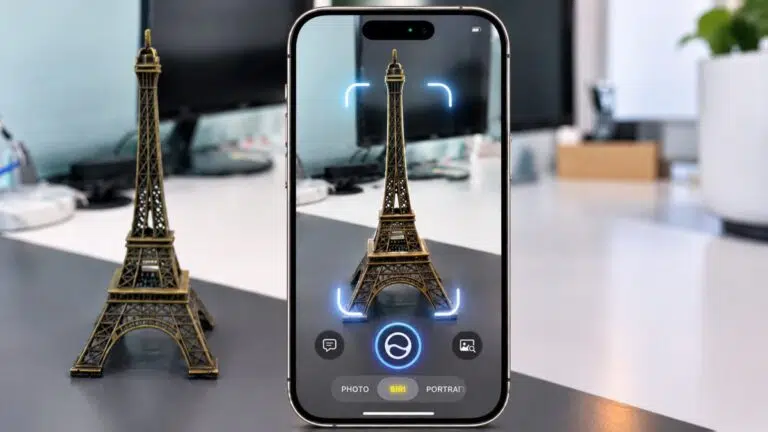
You can also ask it to perform actions across Apple’s apps. Siri is also integrated into the Camera app through Siri mode, allowing users to ask questions about objects or information in front of the camera.
This is the Siri that Apple showed off two years ago and then repeatedly delayed. Now it’s finally arriving with the iOS 27, iPadOS 27, macOS 27, and visionOS 27 releases. However, Apple is rolling out Siri AI as a beta, initially in English. French, Japanese, Korean, Portuguese and Spanish support is scheduled to expand in October.
Availability also depends on region. Apple says Siri AI will not initially be available in the European Union on iOS, iPadOS and watchOS, while Apple Intelligence and Siri AI are also unavailable in China as Apple works through regulatory requirements.

Here’s where the story gets interesting.
The new Siri requires significantly more on-device processing power than traditional Siri, particularly for the large language and generative AI models involved. It also relies on Apple’s AI infrastructure, which requires newer chips such as the A17 Pro and later models.
As a result, Apple’s compatibility list is much narrower than the list of devices capable of running iOS 27 or the latest Apple operating systems.
Apple’s current Apple Intelligence compatibility list includes the following iPhone models.
That means owners of the standard iPhone 15, iPhone 14 lineup, iPhone 13 lineup, and older devices will miss out on Apple’s most advanced AI assistant even if they support iOS 27.
Base-model iPads (like the iPad 11th Gen) running standard A-series chips do not support Siri AI.
Apple also says that its most powerful on-device model and certain features, like expressive, naturalistic Siri voices and advanced dictation, require iPad models with the M4 chip or later and at least 12GB of unified memory.
This means that simply owning an M1 iPad does not necessarily guarantee access to every Apple Intelligence feature.
Apple Intelligence is supported on Macs powered by Apple silicon:
However, Apple’s most powerful on-device model and certain related features require M3 or later Macs with at least 12GB of unified memory.
Apple’s latest watchOS 27 update brings Apple Intelligence-powered Siri AI to Apple Watch.
Compatible models include:
Note: You need to pair the Apple Watch with a nearby Apple Intelligence-enabled iPhone model to use Siri AI on the watch.
Apple also mentioned that CarPlay got some Siri AI features. Similar to Apple Watch, it requires an Apple Intelligence-enabled iPhone model connected to your vehicle.
For many years, camera quality was the main motivation to buy a new iPhone. This became battery life and displays, and now Apple is hinting that AI will be the most important difference between generations.
If Siri AI becomes as useful as Apple claims, with personal context awareness, app actions, and conversational intelligence, many users may feel pressured to upgrade sooner than expected.
That’s a major shift in how Apple sells the future of the iPhone.
Apple finally delivered the Siri overhaul users have been waiting for. The assistant is smarter, more capable, and far closer to modern AI chatbots than anything Apple has shipped before.
But the compatibility list tells an equally important story.
Siri AI isn’t just a software feature; it’s becoming a hardware privilege. And for millions of iPhone owners, Apple’s most important AI upgrade may also be the clearest sign that their current device is no longer part of the company’s long-term AI future.
What do you think about the new Siri overhaul? Share your thoughts in the comments below!