FaceTime Like a Pro
Get our exclusive Ultimate FaceTime Guide 📚 — absolutely FREE when you sign up for our newsletter below.

FaceTime Like a Pro
Get our exclusive Ultimate FaceTime Guide 📚 — absolutely FREE when you sign up for our newsletter below.


Google Maps kept ignoring the route I carefully picked, until I discovered one simple trick that gave me control back.
I always assumed that if I selected a route in Google Maps and shared it with someone, they would see the exact same route. But that wasn’t always the case. Google Maps would sometimes suggest a completely different path, ignoring the shared route.
It was most irritating when I was planning a scenic drive and wanted to avoid certain roads.. After experimenting with different options, I found a simple trick that stops Google Maps from changing my route.
Here’s how to keep Google Maps on a specific route.
Here’s the biggest misconception I had: choosing a route isn’t the same as locking a route. When Google Maps shows multiple ways to reach a destination, it lets you select the one you prefer. Naturally, I assumed that the selection would only be shown when I shared it.
But Google Maps is fundamentally designed for dynamic navigation. It continuously evaluates traffic, road conditions, closures, and other factors that might make another route more efficient. So when someone opens a shared Google Maps route, the app can still recalculate the journey.
Normally, that’s actually useful. If there’s a major accident ahead, I don’t want Google Maps blindly following an outdated plan just because I selected that road three hours ago. But things become problematic when the route is important.
Imagine planning a scenic road trip. You deliberately choose a beautiful route through small towns and viewpoints. Google Maps then decides that a boring highway will save 12 minutes. Technically, Google Maps did its job. But it completely missed the point.
The same thing happens when you:
Google Maps is excellent at answering, “What’s the fastest way to get there?” But sometimes that’s not the question I’m asking.
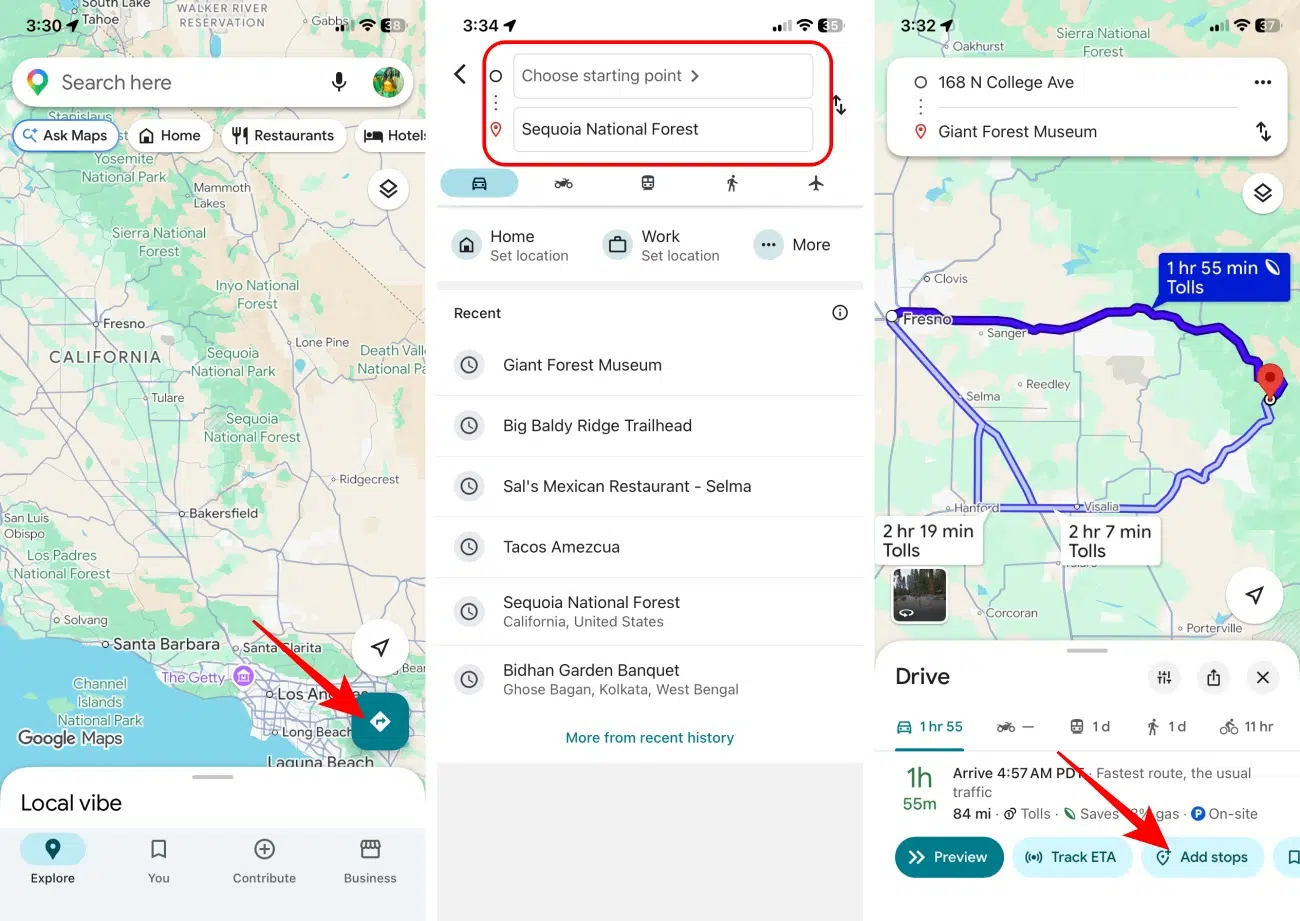
The solution was surprisingly obvious once I understood how Google Maps thinks. Instead of creating a route with the starting and final destination points, you need to create something more like this: Start → Stop 1 → Stop 2 → Final Destination. Those extra stops act as strategic waypoints.
Google Maps now has to calculate a journey that reaches those locations. It still has the freedom to choose roads between them, but it has significantly less freedom to suddenly send the entire trip in a completely different direction. We will see how to customize and lock a Google Maps route in the next section.
Let’s say you are planning a trip between two cities but specifically want to avoid the toll highway. In that case, I will add one or two towns along that custom route as intermediate stops, rather than endlessly trying to force Maps onto the preferred route.
Now the navigation can’t simply ignore those places and send you straight down the highway. The route has to pass through them. The best part is that the stops don’t necessarily have to be places where you plan to spend time. Sometimes, they’re simply guideposts.
If you add a stop point every few kilometers, your route becomes unnecessarily complicated. The goal isn’t to micromanage Google Maps into following every turn. It’s to give it just enough direction to keep it close to your intended route.
I’ve found that the best waypoints are the ones placed at decision points. These are the places where Maps is most likely to betray my original plan.
For example, I look for:
My simple rule is to add the minimum number of stops needed to influence the journey. If you are confused, you can use the Gemini AI-powered Ask Maps feature for route-planning tips.
Once you start using waypoints, making Google Maps follow a specific route becomes pretty straightforward.
Here’s the process I use:
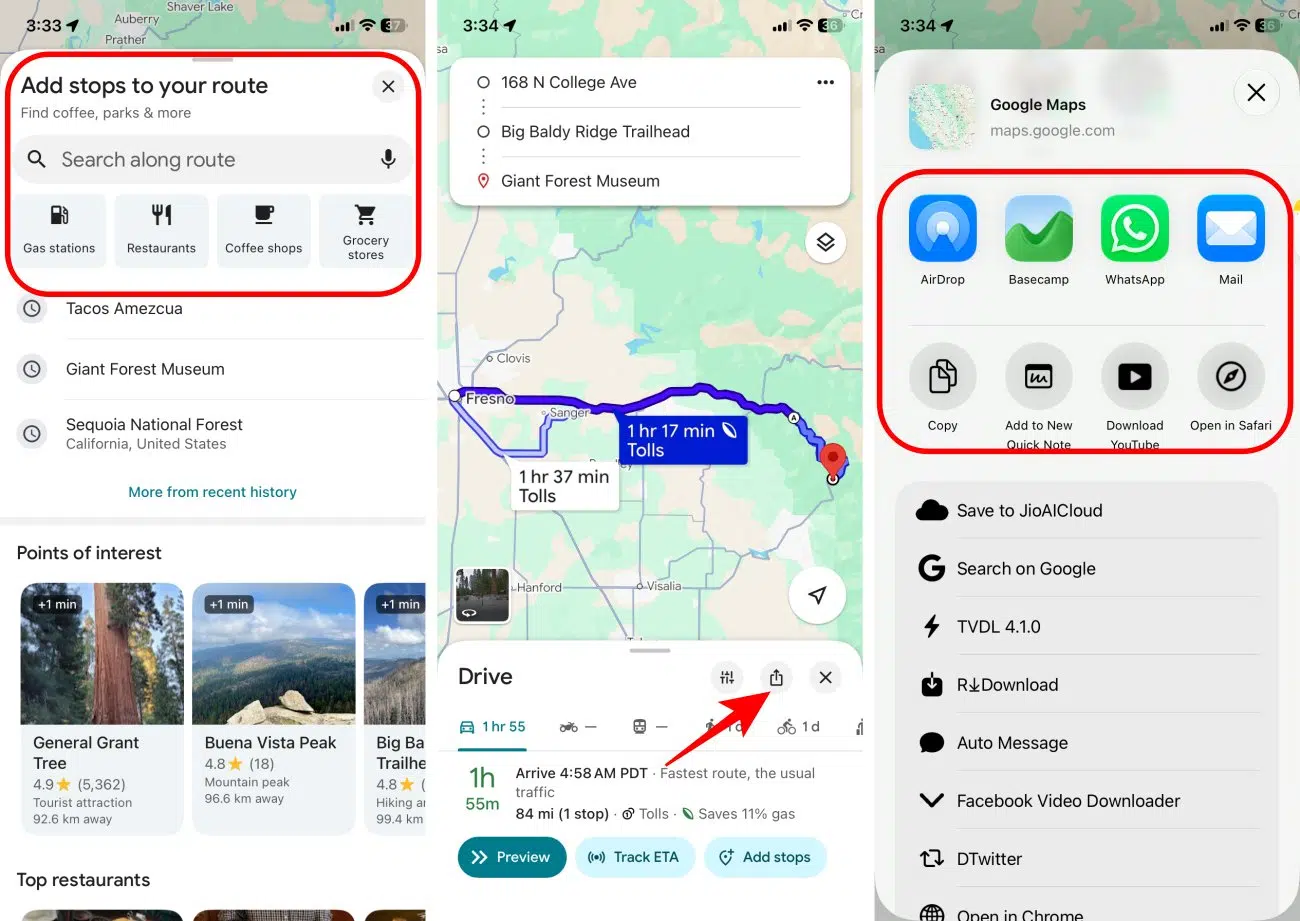
When they open the link, Google Maps will show the multi-stop route you created.
I want to be very clear about one thing: adding stops does not permanently lock Google Maps onto every road you choose. And honestly, you wouldn’t want it to. If a road suddenly closes, it will be a no-brainer for Google Maps to stubbornly insist on driving into a barricade just because you planned that route yesterday.
Navigation needs flexibility. So, even with intermediate stops, Google Maps can still respond to:
But because the app still needs to reach my chosen waypoints, the overall journey is much more likely to stay close to my original plan.
I don’t use waypoints for every Google Maps journey. If you’re commuting somewhere familiar or simply want the fastest route, follow Google Maps rerouting suggestions.
But I absolutely use this trick when the journey matters as much as the destination.
Google Maps is great at finding the fastest route, but the fastest route isn’t always the one you want to take. I learned that simply selecting a route doesn’t guarantee that it will stay the same when I share it.
Adding a few strategic stops along the way is a simple workaround that gives you more control over the journey. It doesn’t completely lock the route, but it makes it much harder for Google Maps to take the trip in a completely different direction.
Have you ever had Google Maps completely change a route you carefully planned? I’d love to know how you dealt with it.
You might also like: